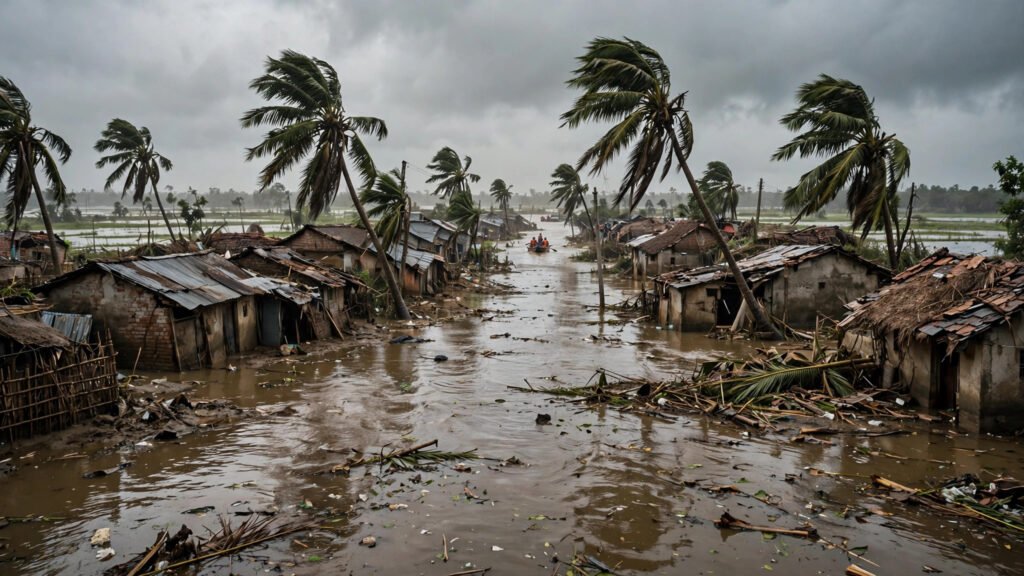
At least six people have been killed in Andhra Pradesh in the aftermath of Cyclone Arnab, as heavy rain and flooding left about 300 villages marooned in neighbouring Odisha and forced authorities to begin air evacuations on Thursday, October 29, 2026. The storm, classified by the India Meteorological Department as a very severe cyclonic storm, completed its landfall on the Andhra Pradesh coast on Wednesday, with sustained winds of 125 to 135 kilometres per hour and gusts of up to 150 kilometres per hour.
The deaths in Andhra Pradesh were caused by falling trees, electrocution and wall and house collapses, officials said. The official toll was six, but other reports put it higher — a reminder that the full picture is still emerging as assessment teams reach the affected districts. Some reports put the toll at seven, while one newspaper, citing local officials, put it at nine. Officials said the figure was still being verified as teams fanned out across the affected districts.
Key Takeaways
- At least six people have died in Andhra Pradesh from cyclone-related incidents, though some reports put the toll higher and verification is still under way.
- About 300 villages in Odisha’s Ganjam district are marooned by flooding, and authorities are preparing helicopter evacuations.
- More than 180,000 people were evacuated in Andhra Pradesh and Odisha before the storm arrived, and power restoration is now under way.
What happened in Andhra Pradesh
Andhra Pradesh bore the brunt of the storm. Hundreds of villages across more than 10 districts, including Eluru, West Godavari and Vizianagaram, were hit by strong winds and heavy rain, with 200 millimetres of rainfall recorded in low-lying areas. The storm damaged at least 15,000 electricity poles, disrupting power supply across affected areas, and destroyed at least 180 houses, according to a letter from Chief Minister N. Chandrababu Naidu to Union Home Minister Amit Shah.
Naidu has asked for a central team to assess the damage to crops and infrastructure. He directed officials to restore power everywhere, and said supply had been restored in most districts except Konaseema and West Godavari. He also asked district collectors to complete damage assessments, release compensation excluding crop losses under a government order already issued, clear fallen trees and debris, and guard against breaches in tanks and canals.
Transport was also disrupted. Fallen trees and damaged power infrastructure temporarily blocked National Highway 16, though the route was reopened after debris was cleared. Operations at three airports in Andhra Pradesh were suspended, the Civil Aviation Ministry said, and submerged railway tracks were reported near Srikakulam. A Marshall Islands-flagged cargo vessel with 20 crew members on board, which had grounded off the Andhra Pradesh coast, remained stalled on Thursday because of rough seas, officials said.
The official toll was six, but other reports put it higher — a reminder that the full picture is still emerging as assessment teams reach the affected districts.
Odisha: 300 villages marooned in Ganjam
In Odisha, the emergency has shifted from wind to water. Around 300 villages in Ganjam district have been marooned by three days of extremely heavy rain and flash floods. The state is coordinating with the Union Home Ministry to deploy an Indian Coast Guard helicopter, with 120 people to be airlifted in the first phase, though officials warned that low cloud and continuing rain could delay the flights.
Sorada is among the worst-hit areas, with the Rushikulya river overflowing and inundating nearby towns and villages. At Aska, the river is flowing close to its danger level. Transport Minister Bibhuti Bhushan Jena said most of the marooned people are in villages of Sanakhemundi and Aska blocks. Odisha Chief Minister Mohan Charan Majhi said preparations and evacuations had helped the state achieve its zero-casualty objective, and no deaths have been reported in Odisha.
Flight operations at Bhubaneswar airport were largely normal, its director said, although a nine-seater service on the Bhubaneswar-Jeypore-Visakhapatnam route was cancelled. Nepal also remained on high alert for the storm system through October 29 to 31, a reminder that Arnab’s effects stretched well beyond the two worst-hit Indian states.
- Official death toll in Andhra Pradesh: six, with some reports of seven or nine, still being verified.
- About 300 villages marooned in Odisha’s Ganjam district; 120 people to be airlifted in the first phase.
- More than 180,000 people evacuated in Andhra Pradesh and Odisha before landfall.
- At least 15,000 electricity poles damaged; power restored in most districts except Konaseema and West Godavari.
- Storm weakened from a very severe cyclonic storm to a severe cyclonic storm after landfall.
Why the evacuations mattered
The scale of the evacuation is the clearest reason the toll, while tragic, was not far higher. More than 180,000 people had been moved to safety in Andhra Pradesh and Odisha ahead of the cyclone’s arrival, with relief camps and centres opened across both states. Advances in forecasting also helped the government identify the areas likely to face the greatest impact and limit loss of life and property, Naidu said in a statement.
The storm weakened after moving inland, from a very severe cyclonic storm to a severe cyclonic storm, and was expected to weaken further into a cyclonic storm and then a deep depression by Thursday evening. That weakening does not end the danger, however, because the heaviest rain often follows the wind: rivers keep rising, low-lying areas stay waterlogged, and damaged power lines and weakened structures remain hazards until they are cleared and repaired.
What to Watch Next
What happens next will be decided by the weather window for the air evacuations, the restoration of power in Konaseema and West Godavari, and the central team’s assessment of damage to crops and infrastructure. River levels at Aska and around Sorada will show whether more villages in Ganjam face flooding, and the verified death toll will become clearer as assessment teams reach the affected districts. The storm’s weakening into a deep depression will also show whether the rain eases enough for relief work to reach every marooned village.