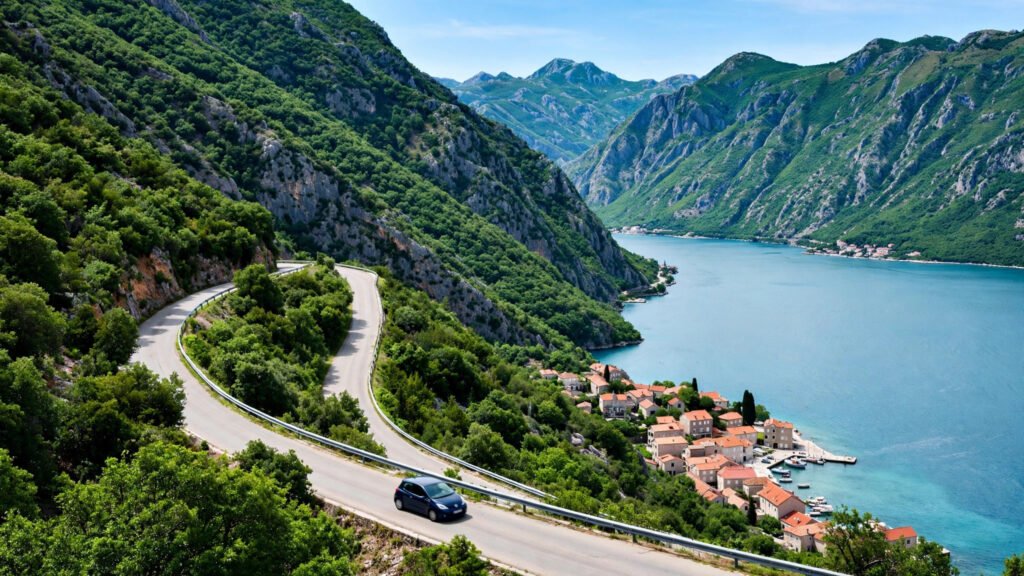
In Montenegro, a trip along the Adriatic coast rarely begins with turning the key. It usually begins with a phone. Before leaving home, many Montenegrins check the route, the weather, and the traffic — not because the journey is long, but because the coast itself makes every journey a little unpredictable. A narrow road hugs the shoreline, mountains rise steeply on one side, and the sea opens out on the other. One slow stretch, one sudden shower, or one busy border crossing can change the whole day.
That quick phone check has become part of the routine, especially for people who drive the coast often. Families heading to the beach, workers commuting between coastal towns, and drivers crossing into neighbouring countries all want the same thing before they set off: to know what the road ahead actually looks like. The phone gives them that answer in seconds.
Key Takeaways
- Montenegro’s Adriatic coastal road is narrow and winding, so traffic, weather, and roadworks can change a journey quickly.
- Checking a phone before leaving helps drivers choose the best departure time, route, and stopping points.
- The habit is about preparation, not distraction — the checks happen before the journey, so the drive itself stays safer.
Why the Coastal Road Demands a Check First
The Adriatic road in Montenegro, known to many drivers as the Jadranska magistrala, runs through a string of well-known places: Herceg Novi, Kotor, Budva, Bar, and Ulcinj, among others. In places it is a single carriageway in each direction, with bends, tunnels, and villages sitting right beside the road. In summer, when visitors arrive in large numbers, the same road carries far more traffic than it does in winter.
That is why a phone check matters. A driver who glances at a map app before leaving can see where traffic is building up and decide whether to leave earlier, take a different inland route for part of the journey, or simply allow extra time. Someone heading to a ferry crossing, such as the short crossing across the Bay of Kotor between Kamenari and Lepetane, may also want to know whether queues are forming. As with travellers elsewhere who check travel and weather updates before setting out, the point is not to worry more — it is to worry less, because the unknown parts of the trip are already visible.
Weather Changes Fast Between Mountain and Sea
Montenegro’s geography makes its weather unusually local. A sunny morning in Podgorica or on the coast can sit alongside rain over the mountains inland, and a strong wind can pick up along the shore while nearby valleys stay calm. For drivers, that matters: wet bends, low cloud over a mountain pass, or a gusty stretch of open coast all call for slower, more careful driving.
Checking the forecast on a phone lets a driver plan around that. A family might choose to leave after a shower passes, or pick a coastal stop where they can wait it out. A driver heading over a mountain road inland, rather than staying on the coast, will want to know what conditions are like at higher altitude too. Mountain travel brings its own reasons to check first, as people travelling through mountain regions elsewhere also check weather and road alerts before they go.
A driver who glances at a map app before leaving can see where traffic is building up and decide whether to leave earlier, take a different route, or simply allow extra time.
Summer Traffic, Ferries, and Border Crossings
In the busy season, the coast fills with visitors, and the road fills with them too. Parking near popular beaches can be hard to find, and a short drive can take much longer than expected. Phones help here in practical ways: a driver can look for a less crowded beach, find a car park before arriving, or message family and friends about a change of plan.
Border crossings add another reason to check. Montenegro shares borders with Croatia, Bosnia and Herzegovina, Serbia, Kosovo, and Albania, and many coastal trips end with a crossing into Croatia or Albania. Queues at a crossing can be long at peak times, so a quick check of traffic reports or messages from other drivers can help a traveller decide when to go. Island and coastal travellers face similar questions, and people planning inter-island travel elsewhere also check their phones before leaving for the same reason: a short delay at the start can save a long wait later.
The Phone Is a Travel Companion, Not Just a Map
For many Montenegrins, the phone does more than show a route. It holds the booking for a room, the ticket for a ferry, the number of a restaurant, and the photos from the last trip along the same road. It lets a driver share a live location with family, so others know roughly when to expect them. It also helps visitors, who may not know the road at all, find fuel stations, pharmacies, and places to stop along the way.
That is also why the checks happen before the journey rather than during it. The safest habit is to sort the route, the weather, and the stops while still at home, then put the phone away and concentrate on the road. Hands-free navigation can help during the drive, but the planning itself belongs to the time before departure.
- The coastal road is narrow, winding, and busy in summer — a quick check reveals traffic before it becomes a problem.
- Weather can differ sharply between the coast and the mountains, so a forecast check helps drivers prepare.
- Ferry queues and border crossings are easier to plan when travellers check conditions first.
- Phones also carry bookings, contacts, and stopping points, making the whole trip simpler to organise.
What to Watch Next
The habit of checking before a coastal trip is unlikely to fade. As maps, weather forecasts, and traffic reports become more detailed, drivers will have even better information before they leave — and coastal journeys will become easier to plan. The road itself will stay narrow and winding, and the sea will stay beside it, but the uncertainty that once came with every trip will keep shrinking. For Montenegrins, the phone check before a coastal drive is simply the modern version of an old habit: looking at the sky, asking a neighbour about the road, and then setting off prepared.