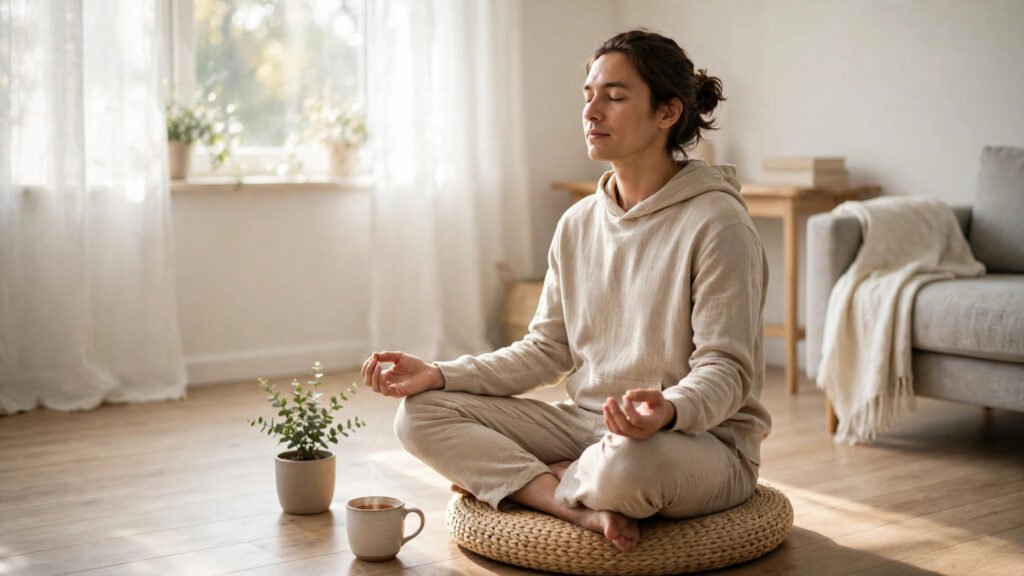
Learning how to start meditating does not require a quiet retreat, special equipment, or hours of free time. Five minutes a day, in a chair or on a cushion at home, is enough to build a habit that feels calm and manageable. This guide walks you through a simple routine you can begin today, even if your mind feels busy and you have never meditated before.
Meditation, in its simplest form, is just sitting quietly and paying attention. You notice your breath, you notice when your mind wanders, and you gently bring your attention back. That is the whole practice. There is no perfect way to do it, and a wandering mind is not a failure. It is part of the exercise.
Key Takeaways
- Five minutes a day is enough to start meditating, and a short daily habit beats a long session you never repeat.
- Pick the same time and spot each day, sit comfortably, and use your breath as a gentle anchor for attention.
- When your mind wanders, notice it without judgement and return to your breath — that return is the practice itself.
How to Start Meditating in 5 Minutes a Day
Start by choosing a time you can repeat. Many beginners find the morning easiest, before the day fills up, but any quiet five minutes will work. Link it to something you already do, such as after brushing your teeth or before your first cup of tea. A fixed anchor makes the habit much easier to keep.
Next, pick a comfortable spot. Sit in a chair with your feet on the floor, or on a cushion with your back supported. You do not need to sit cross-legged, and you do not need to be uncomfortable. Comfort matters, because discomfort will pull your attention away from the practice.
Set a gentle timer for five minutes. A phone timer works fine, but put the phone face down and silence notifications so you are not interrupted. Knowing the timer will end lets you relax into the five minutes instead of watching the clock.
A wandering mind is not a failure. It is part of the exercise.
A Simple 5-Minute Meditation Routine
Begin by closing your eyes or softening your gaze towards the floor. Take two or three slow, natural breaths, then let your breathing settle into its normal rhythm. You do not need to breathe in any special way. Just notice the air moving in and out.
Now choose a simple anchor. Many beginners focus on the feeling of breath at the nose, or the gentle rise and fall of the chest. Keep your attention there, lightly, as if you were listening to a quiet sound in the next room.
- Sit comfortably, with your back supported and your hands resting in your lap.
- Breathe naturally and rest your attention on the breath.
- When thoughts appear, notice them kindly and return to the breath.
- End slowly: open your eyes, stretch, and notice how you feel.
Your mind will wander, probably within the first minute. That is normal. You might start planning dinner, replaying a conversation, or remembering a chore. When you notice it, there is nothing to fix. Silently note “thinking” if that helps, then return to the breath. Each return strengthens the habit, a little like each repetition in a gentle workout.
If sitting still feels difficult, you can pair meditation with simple movement first. A few minutes of gentle stretching can loosen a stiff body, and a short beginner yoga session at home is another calm way to settle before you sit. You can also try slow breathing exercises for a minute or two before your five minutes of quiet sitting.
Common Beginner Problems, Solved Simply
“I cannot stop thinking.” Nobody can, and that is not the goal. Meditation is not about emptying the mind. It is about noticing where your attention has gone and guiding it back, again and again, without scolding yourself.
“Five minutes feels long.” Try starting with three minutes for the first week, then add a minute at a time. A short practice you actually do is far better than a long one you avoid. You can also break the time into two halves: one minute of settling, then the rest in quiet attention.
“I keep falling asleep.” Sit upright rather than lying down, keep the room cool and bright, and try meditating earlier in the day. If sleepiness persists, open your eyes and gaze softly at the floor instead of closing them.
“I missed a day.” That happens to everyone. Do not try to make up for it with a double session, and do not restart from zero. Just sit again the next day. A habit survives a missed day; it only fades when a missed day quietly becomes a missed week.
How to Keep the Habit Going
Keep the bar low for the first month. Five minutes, once a day, in the same spot, is a complete practice. If you enjoy it, you can slowly extend to ten minutes, but there is no rush. The benefit of meditation comes from returning to it regularly, not from pushing yourself.
It can help to keep a simple note of your sessions: just a tick on a calendar for each day you sit. After a few weeks, the row of ticks becomes its own motivation, and you will start to notice which times of day work best for you.
Some people like a quiet room, while others prefer soft background sounds or a guided voice. Try both and keep whichever helps you sit down more often. The best method is the one you will actually use tomorrow.
What to Watch Next
Starting small is the whole point: five minutes a day, the same time and spot, your breath as an anchor, and a kind return whenever your mind wanders. Keep the routine simple, expect a busy mind, and let the habit grow at its own pace. Over time, those five quiet minutes can become one of the easiest parts of your day.