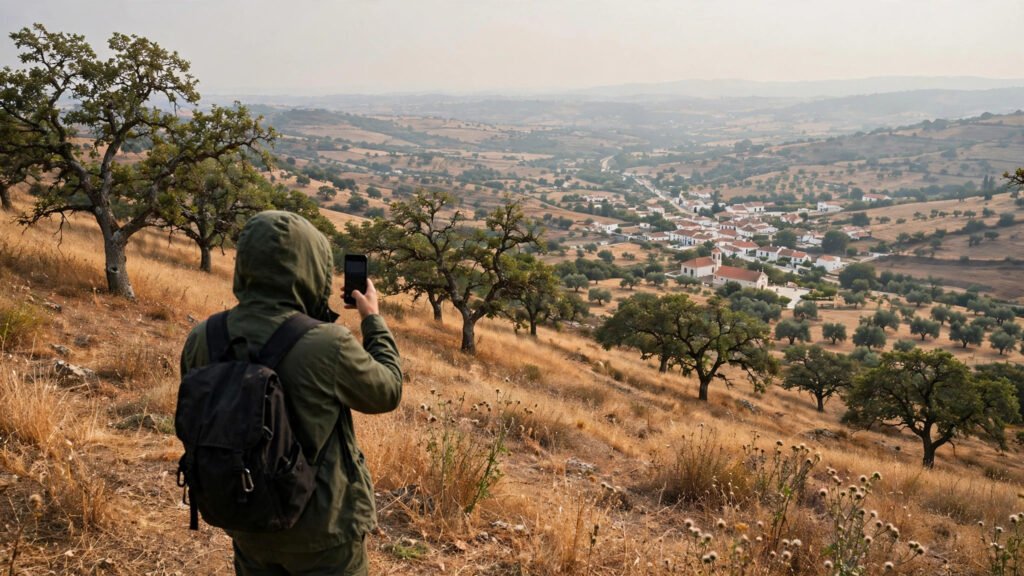
In Portugal, summer has a particular smell: dry grass, warm pine, and dust on a country road. It is also the season when a simple habit becomes a safety habit. Before heading into the countryside, to a beach village, or along a forest road, many Portuguese people check their phones for wildfire alerts and fire-risk forecasts first.
The check takes less than a minute, but it answers questions that matter on a hot day. Is the fire risk high where they are going? Has a warning been issued for that area? Are any roads closed? Is it sensible to light a barbecue, drive down a narrow forest track, or walk a rural trail today? A phone cannot put out a fire, but it can help people avoid walking into danger they did not know was there.
Key Takeaways
- Portugal’s hot, dry summers and forested interior make wildfire risk a real part of summer travel planning, not a distant worry.
- A phone check brings warnings, fire-risk forecasts, road information and family messages together in one place before a trip.
- An alert is a prompt to take care and follow official guidance, not a guarantee that an area is safe or unsafe.
Why Summer in Portugal Brings Fire Risk
Portugal’s summers are long, hot and dry, especially inland and in the centre and north of the country. Weeks without rain dry out grass, scrub and forest litter, and a stretch of hot wind can turn a landscape that looked green in spring into something ready to burn. Much of the countryside is covered in pine and eucalyptus, and villages often sit close to forest edges, with fields, gardens and woodland running into each other.
That mix is why fire risk is not limited to remote wilderness. A holiday home, a campsite, a hiking trail or a rural road can all sit near vegetation that dries out in summer heat. People who live in these areas know the pattern well: a hot afternoon, a dry wind, and the smell of smoke can change the day quickly. Visitors, who may not know the local landscape, have even more reason to check before they set out.
Fire risk also changes from day to day. One week can be mild and calm, the next can bring heat and wind that raise the danger sharply. That is why a single check at the start of a holiday is not enough. The habit that helps is checking again on the morning of each trip, when the forecast for that day is known.
Why the Phone Comes First
The simplest reason is that the phone is already in hand. A warning can arrive as an alert, a message or a news update while a person is packing the car, making lunch, or deciding which road to take. There is no need to wait for a scheduled bulletin or to search for a television. The information comes to the person, rather than the person having to go looking for it.
The second reason is that a phone brings several kinds of information together. A fire-risk forecast says how dangerous conditions are expected to be. A warning says whether an incident is already happening or an area needs extra care. A map or a traffic update shows whether a road is open. A message from family or neighbours adds local detail, such as smoke seen from a nearby hill. Together, those pieces help someone decide whether to go, to change the route, or to stay put.
A phone cannot put out a fire, but it can help people avoid walking into danger they did not know was there.
The same phone-first logic appears wherever a fast warning matters. In Chile, for example, people check their phones for earthquake alerts first, because the alert arrives faster than a scheduled broadcast. In Fiji, people check their phones first when a cyclone warning is issued, because warnings, storm updates and family check-ins all arrive on one device. Portugal’s wildfire check belongs to the same pattern: when conditions can change quickly, the device already in your hand becomes the first source of news.
What People Actually Check
The first check is usually the fire risk for the day. Forecasts and official guidance describe whether conditions in an area are expected to be calm or dangerous, and that alone can change a plan. A high-risk day is a reason to avoid forest tracks, to skip a barbecue near dry vegetation, and to keep to main roads rather than exploring remote lanes.
The second check is whether anything is already happening. A warning or a news report about a fire in the area is a clear signal to stay away, even if the original plan seemed harmless. Smoke can travel, roads can close at short notice, and emergency vehicles need clear access. A phone check before leaving home can prevent a wasted journey and, more importantly, keep people out of the way of firefighters.
- Check the fire-risk forecast for the exact area you plan to visit, on the morning of the trip.
- Look for any current warnings or road closures before taking forest or rural routes.
- Keep the phone charged and take water, especially on hot days in remote areas.
- Tell someone where you are going and when you expect to be back.
- If you see smoke or fire, move away safely and alert the emergency services rather than stopping to watch.
The third check is practical: roads, access and timing. Some rural routes are narrow, with few places to turn around. If a fire starts nearby, a quiet forest road can become a difficult place to be. Checking road information and choosing a main route, or postponing a trip to a remote spot, is a small decision that can matter a great deal.
What a Forecast Cannot Promise
It is important to be honest about the limits. A fire-risk forecast describes conditions, not a certainty. A low-risk day does not mean fire is impossible, and a high-risk day does not mean a fire will start. Fires can begin from many causes, and wind can carry them faster than expected. The phone check is a guide to sensible behaviour, not a guarantee of safety.
That is why the check should be followed by common sense on the ground. If the air smells of smoke, if ash is falling, or if a road looks blocked, the sensible move is to turn back, even if no alert has arrived yet. Alerts depend on information reaching the system, and conditions on a hillside can change before any message is sent. The phone helps, but eyes, nose and judgement still matter.
There is also a discipline to checking. Rumours and old photos spread quickly on social media during fire season, and an outdated post can cause panic or false calm. Comparing what is shared in a group chat with an official warning, and waiting for confirmation before passing a message on, keeps the phone useful instead of confusing. When in doubt, official guidance should win over a forwarded claim.
How This Fits Portugal’s Phone-First Daily Life
The wildfire check is one more example of how phones are woven into everyday planning in Portugal. People already use phones to check forecasts before a beach day, to plan a drive, or to keep in touch with family in another town. The same habit, applied to fire season, simply asks one extra question before a summer trip: is today a day to be careful?
For people who live near forests, the habit is second nature. For visitors, it is worth learning quickly. A holiday in the Portuguese countryside is at its best when it is relaxed, and a relaxed trip is easier when the day’s risks have been checked in advance. In that sense, the phone check is not about fear. It is about enjoying the countryside with a clear picture of the day ahead.
Checking forecasts before heading out is a habit people use in many places where nature sets the terms. In Iceland, for instance, people check aurora forecasts on their phones before a night out, because cloud, darkness and timing decide whether the trip is worth it. The logic is the same in Portugal: look at the conditions first, make a sensible plan, and avoid an unnecessary risk.
What to Watch Next
Portuguese people will keep checking their phones for wildfire alerts before summer trips, because the reasons behind the habit are not changing: hot, dry summers, forested landscapes, and fire risk that shifts from day to day. The check works best when it is done on the morning of the trip, when it is followed by official guidance, and when it is backed up by common sense on the ground. A charged phone, a checked forecast, a sensible route and a willingness to change plans are small steps, but together they help people enjoy Portugal’s countryside in summer while giving fire the respect it deserves.