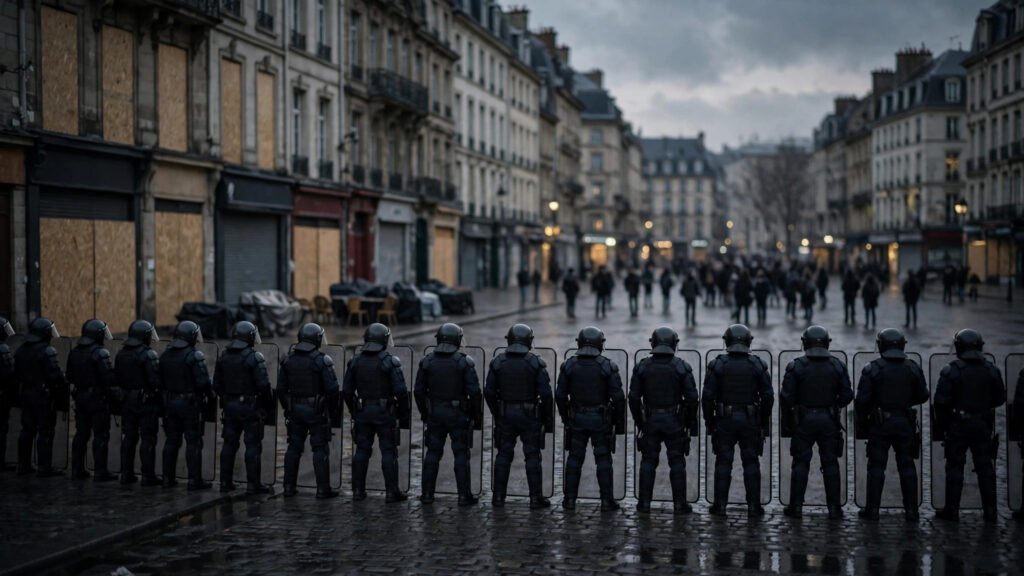
Police in the Netherlands arrested 34 people during a youth protest in the centre of The Hague on Saturday, October 31, 2026, after officers dispersed a crowd that had gathered near The Hague Central Station. Most of those detained were reported to be minors, and one police officer was taken to hospital after fireworks were thrown at officers during the unrest.
The gathering followed calls on social media for demonstrations in several Dutch cities. Police moved in during the afternoon, urged the public to avoid the city centre, and later said the situation was calm again by the early evening. Unlike some of the worst fears shared ahead of the gathering, police said looting of shops and large-scale vandalism were avoided.
The events in The Hague came during a wider weekend of protests across Europe, with demonstrators in several countries voicing anger over the cost of living, housing affordability and the state of public services. In the Dutch city, however, the day was defined less by a single march than by a fast-moving, spontaneous gathering that the authorities moved quickly to break up.
Key Takeaways
- Police arrested 34 people during the youth protest in central The Hague on October 31, most of them reported to be minors.
- One officer was hospitalised with suspected hearing damage after protesters threw fireworks at police, while looting and major vandalism were avoided.
- The Hague gathering was part of a wider weekend of protests across Europe over living costs, housing and public services.
What Happened in The Hague
On Saturday afternoon, police dispersed a crowd near The Hague Central Station after young people gathered in the city centre following online calls for protests. Officers reported 34 arrests during the day. Those detained were suspected of offences including acts of violence, the illegal use of fireworks, and violating the ban on wearing clothing that conceals the face.
During the clashes, protesters threw lit fireworks at police officers. One officer was injured and taken to hospital with suspected hearing damage, according to reports citing local police. An emergency order was reported to have been issued for the shopping district and the area around Central Station and the Malieveld, giving officers wider powers to act quickly and separate groups.
By the evening, the police said the worst had been avoided: no shops were looted and no major vandalism was reported.
By the evening, the police said the worst had been avoided: no shops were looted and no major vandalism was reported. By around 7 p.m., calm had returned to the city centre, reports said. The rapid police response, including stop-and-search operations and the dispersal of groups, was credited with preventing the kind of shop looting that some online posts had encouraged ahead of the gathering.
Why Young People Gathered
The Hague gathering was described as a spontaneous youth protest, organised largely through social media platforms. Similar online calls were reported in several Dutch cities, and some of those posts encouraged looting and vandalism, which put shopkeepers and the authorities on alert before the weekend.
The grievances echoed those heard at other recent youth-led demonstrations in Europe. In the Netherlands, young people have faced a severe housing shortage, student debt and rising living costs, all issues that have featured in youth protest movements elsewhere on the continent. The Hague protest did not present a single set of formal demands in the way an organised march might, but it took place against that same backdrop of frustration over housing and everyday costs.
For the authorities, the challenge was the spontaneous character of the gathering. With no single organiser and a crowd assembled through online posts, police said they had to act on the day itself, first by warning the public to stay away from the centre and then by dispersing the crowd and making arrests.
- 34 people arrested in The Hague, most of them reported to be minors aged around 15 to 18.
- Arrests were linked to violence, illegal fireworks and face-covering violations.
- One officer hospitalised with suspected hearing damage after fireworks were thrown.
- Shops boarded up their windows in advance; looting and major vandalism were avoided.
- Calm had returned to the city centre by around 7 p.m. on Saturday.
Shops Boarded Up as Businesses Counted the Cost
Before the gathering, some businesses in the city centre boarded up their shopfronts with plywood and temporarily closed their doors. The precautions were a response to online posts that encouraged looting, and to the heightened security measures in place across the centre.
Bas Winkler, head of The Hague’s business association, told reporters that local stores could suffer losses running into thousands of euros because of the additional security measures, including boarding up windows and closing early. He said he planned to hold talks with the city authorities about further steps to protect businesses from such threats.
The experience underlined a tension that runs through spontaneous protest movements: shopkeepers who may sympathise with concerns about living costs still face direct losses when a city centre is shut down for security reasons, even when no looting takes place.
Part of a Wider European Protest Wave
The Hague was far from the only European city to see protests that weekend. In Germany, demonstrations took place in more than 30 cities on Saturday, with young protesters calling for greater investment in public services, measures to address the rising cost of living, and opposition to compulsory military service. A Gen Z protest in Germany turned violent in Frankfurt, where shops were looted, showing how quickly some of the gatherings escalated.
In France, about 320,000 people took part in demonstrations across the country on Saturday, according to the Interior Ministry, in a third weekend of mobilisation over living costs and public services. France saw a third weekend of protests, with 320,000 marching and clashes on Halloween. In Italy, protesters remained camped near Rome’s Colosseum on Saturday following nationwide demonstrations over living costs and public services, while in Portugal police cleared a housing protest camp in Lisbon after thousands marched against a rental bill, as covered in the Lisbon housing protest camp clearance.
The pattern across these countries was similar: young people, often mobilised online, protesting about housing, education funding and the rising cost of living, with authorities in several cities deploying extra police and, in some cases, emergency powers. The Hague stood out mainly for how quickly the gathering was dispersed and for the young age of most of those arrested.
What to Watch Next
In the coming days, attention will turn to what happens to the 34 people arrested in The Hague, and to whether the authorities review how spontaneous online gatherings are policed after a day in which most detainees were minors. Shopkeepers will also be watching for the outcome of talks between the business association and the city authorities over security costs and protection for the city centre.
The wider question is whether the weekend’s protests across Europe grow into a sustained movement. With further youth-led actions already being discussed online in several countries, and with housing and living costs still rising, the unrest seen in The Hague, Frankfurt, Paris and Lisbon may prove to be part of a longer wave rather than a single weekend of demonstrations.