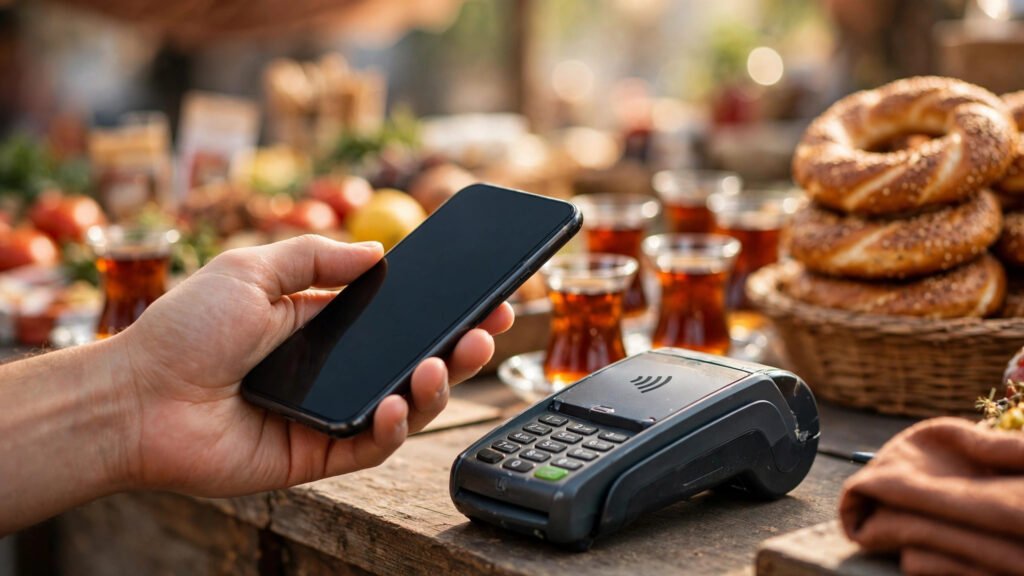
In Türkiye, paying for a simit, a cup of tea, a bus ride or a weekly shop often takes just a second: hold a card or a phone near the terminal, wait for the beep, and walk away. For many Turks, this quick tap has quietly replaced counting out banknotes and waiting for change. It did not happen because cash disappeared. It happened because tapping fits the rhythm of everyday life — fast, simple, and easy to track.
Key Takeaways
- Tapping a card or phone is faster than handling cash, especially for small everyday purchases.
- Phones made payment even simpler by putting the card inside a device people already carry everywhere.
- Cash still has a place, particularly in small markets and rural areas, so tapping complements it rather than replacing it entirely.
How Tap-to-Pay Works
Contactless payment uses a short-range wireless signal between a card or phone and a payment terminal. When the card or phone is held close to the terminal, the payment details are shared securely and the transaction is confirmed, usually with a beep or a green light. There is no need to insert the card, swipe it, or hand it to anyone.
For the shopper, the experience feels almost invisible. For the shopkeeper, it means shorter queues, less time spent handling notes and coins, and a clearer record of each sale. That combination is a big reason why terminals that accept contactless payments are now a familiar sight in supermarkets, cafés, bakeries, pharmacies and many smaller shops across Turkish cities.
Why Speed Matters in Daily Life
Daily life in Türkiye moves quickly, and small purchases happen all day long. A morning simit from a street vendor, a tea break with colleagues, a quick stop at the market on the way home — each of these is a small transaction, and each one is faster when it takes a single tap.
Speed also matters at busy times. At lunch hours and in crowded shopping streets, a queue that moves quickly is good for everyone. Shoppers spend less time waiting, and sellers can serve more customers. When a payment method saves a few seconds on every purchase, those seconds add up over a whole day.
There is also the simple matter of convenience. Carrying exact change for every small purchase is a chore. A card or a phone removes that chore entirely, and it means there is no need to worry about whether a note is too large for a small item.
Phones Made It Even Easier
The next step was the phone itself. Many Turks now pay with a phone instead of a physical card, using a digital wallet or a bank app that holds their card details. Since the phone is already in hand for messages, maps and calls, paying with it feels natural rather than new.
Paying by phone also brings extra features that a plain card cannot offer. A payment can often be confirmed with a fingerprint or a face scan, and the transaction usually appears straight away in the banking app. That instant record helps people keep track of spending without keeping paper receipts — a habit that is useful for anyone managing a household budget.
This pattern is not unique to Türkiye. In other countries, people have made similar shifts for similar reasons, as seen in how Peruvians pay with Yape and Plin instead of cash and cards and how Panamanians pay with Yappy instead of cash and bank cards. The tools differ from country to country, but the appeal is the same: a payment that takes a second and leaves a clear record.
Tapping fits the rhythm of everyday life — fast, simple, and easy to track.
Where Cash Still Has a Place
None of this means cash has vanished. In weekly neighbourhood markets, in small villages, and among older shoppers who prefer the feel of notes and coins, cash remains common and practical. Some small sellers still work cash-only, and some buyers simply like seeing exactly what they spend.
That balance is healthy. A payment system works best when people can choose the method that suits the moment — tap for speed in a busy shop, cash for a market stall or a small favour. The rise of tapping has added an option rather than removing one, and that choice is part of why the habit has spread so smoothly.
- One tap replaces counting notes, waiting for change, and carrying coins.
- Phone payments add fingerprint or face confirmation and an instant spending record.
- Busy shops benefit from shorter queues, and shoppers benefit from faster checkouts.
- Cash still works well in markets, villages, and for shoppers who prefer it.
Safety Habits That Make Tapping Feel Safe
People often ask whether tapping is safe, and the answer comes down to habits as much as technology. Keeping the phone locked, checking the amount on the terminal before tapping, and reviewing transactions in the banking app are simple steps that catch mistakes early. If a card is lost, it can usually be frozen quickly from the bank app, which limits the worry.
It also helps to remember that a tap is still a payment like any other. The convenience of tapping makes it easy to spend without thinking, so the instant record in a banking app is genuinely useful — it turns a quick tap into a visible expense, and that visibility helps people stay in control of their money. A similar habit of using the phone as a daily money tool is visible elsewhere too, for example in how Ghanaians pay with mobile money instead of cash and bank cards.
What to Watch Next
Tapping a card or phone has become an ordinary part of everyday payments in Türkiye because it is fast, simple, and easy to track, while cash still holds its place in markets and smaller settings. The habit spread because it fits daily routines — small purchases, busy shops, and a phone that is already in hand. What comes next is likely to be more of the same quiet evolution: wider acceptance in smaller shops, smoother phone payments, and a payment landscape where people keep choosing the method that suits each moment.