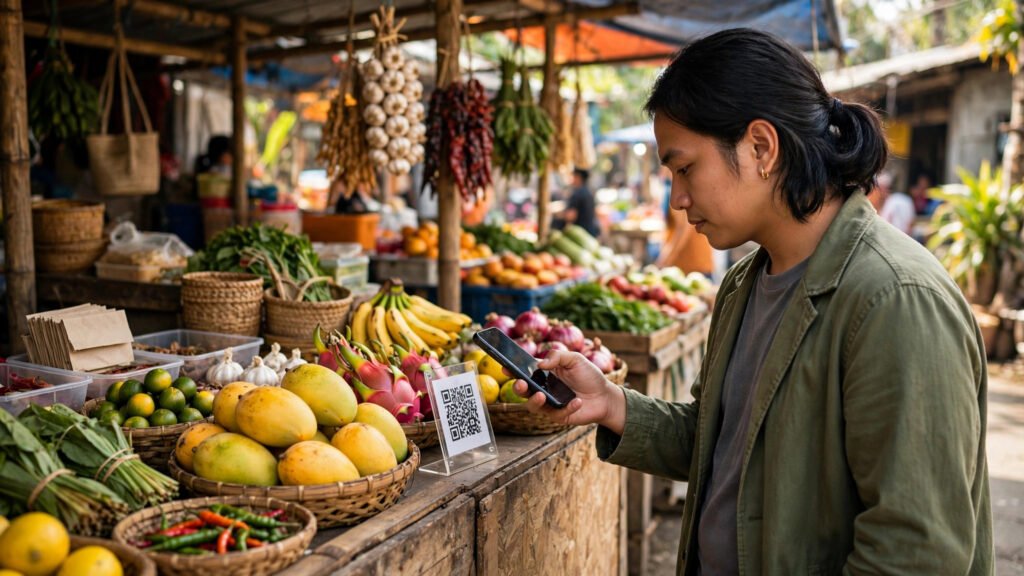
In markets, jeepney stops, and small shops across the Philippines, a familiar scene plays out every day: instead of handing over coins and banknotes, a customer opens a phone, scans a small printed QR code, and walks away with the purchase paid for. The wallet behind that scan is usually GCash, and for many Filipinos it has become the default way to pay. The shift did not happen overnight, and it did not happen because of one single feature. It happened because GCash fits how daily life in the Philippines already works.
Key Takeaways
- GCash works on the phone most Filipinos already carry, so paying needs no bank branch visit or card terminal.
- QR codes let even the smallest stalls accept digital payments without expensive equipment.
- Remittances, bills, and everyday shopping all flow through one wallet, which keeps money habits simple.
A Wallet That Starts With a Phone Number
One of the biggest reasons GCash spread so quickly is how easy it is to start. A bank account traditionally meant paperwork, a visit to a branch, and maintaining a balance. GCash, by contrast, begins with something almost every Filipino already has: a mobile phone number. Registration happens on the phone itself, and the wallet lives inside an app people already know how to use.
That low barrier matters in a country where many people live far from a bank branch or work hours that make branch visits difficult. For a market vendor, a tricycle driver, or a student, a phone-based wallet is simply more reachable than a traditional account. The phone is already in their pocket, so the wallet is too.
QR Codes Changed the Smallest Shops
The second reason is visible on almost every counter: a small printed QR code. A shop does not need a card machine, an internet line, or a monthly terminal rental to accept GCash. It needs a printed code and a phone to receive a notification. That tiny difference opened digital payments to sari-sari stores, street food stalls, and wet markets that card payments never reached.
For customers, scanning is also faster than counting change, especially for small everyday amounts. Buying load, paying for a meal, or settling a market purchase takes a few taps. Cash still exists, and many people still use it, but the QR code gave digital payment a place in the smallest transactions of daily life, not just in malls and big stores.
The phone is already in their pocket, so the wallet is too.
One App for Bills, Load, and Family Support
GCash is not only a way to pay a shop. People use it to buy mobile load, pay electricity and water bills, send money to family in another province, and receive money from relatives working abroad. Putting all of these jobs in one place is a large part of its appeal. Instead of juggling separate trips and queues for each errand, a user can handle several of them from one app.
That matters especially for families spread across islands. Sending support to a parent or a child used to mean a trip to a remittance counter and a wait in line. A wallet-to-wallet transfer removes that trip. The same pattern shows up in other countries too, where mobile wallets in Vietnam and mobile money in Ghana grew because they solved the same everyday problem: moving small amounts of money quickly without a bank branch in between.
Why Cards Never Took the Same Hold
Cards exist in the Philippines, of course, but they never became the everyday default for most people. Card terminals are concentrated in larger stores, and card ownership itself has historically been lower than phone ownership. Cash filled the gap for decades, but cash has its own costs: it can be lost, it needs exact change, and carrying larger amounts feels unsafe.
GCash sits in the middle. It keeps the simplicity of cash — pay the person in front of you, right now — while removing the need to carry notes and coins. Like mobile money in Tanzania, it won by meeting people where they already were, on their phones, rather than asking them to adopt a system built for someone else.
- A phone number, not a branch visit, is the starting point for a GCash wallet.
- Printed QR codes let tiny shops accept payments with no card terminal.
- Bills, load, and family transfers all run through the same app.
- Cards stayed limited to bigger stores, while cash stayed inconvenient for larger sums.
What Cash Still Means
None of this means cash has disappeared. Many Filipinos still pay cash in markets, for transport, and in places with weak signal. Older users and people in remote areas may still prefer notes and coins, and a phone with a dead battery cannot pay for anything. GCash has grown alongside cash rather than replacing it outright, and that coexistence is part of why it works: nobody is forced to give up the old way before the new way proves itself.
The habit also depends on trust built over time. People started with small amounts — a load top-up, a small transfer — and only moved larger spending into the wallet after the small steps worked repeatedly. That gradual trust is hard to manufacture and easy to lose, which is why reliability and simple design matter more than any single promotion.
What to Watch Next
GCash grew because it fit Filipino daily life: a phone-first wallet, QR codes for the smallest shops, and one place for bills, load, and family support, while cash remains in use alongside it. What comes next is whether that same simplicity holds as more services, shops, and everyday payments move onto the phone, and whether the trust built on small everyday transactions keeps growing with it.