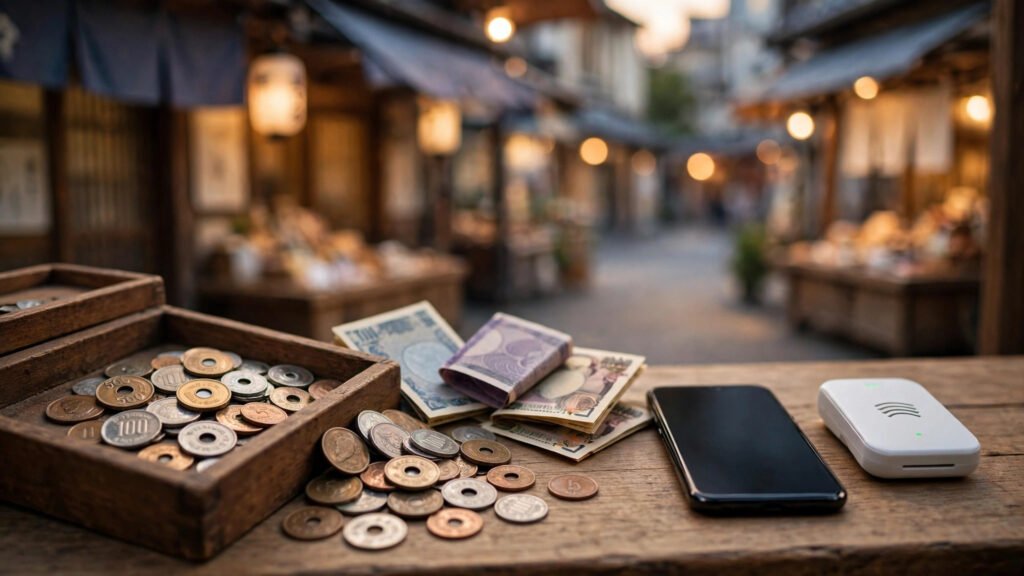
Japan is famous around the world for bullet trains, robots, and some of the most advanced electronics ever made. So visitors are often surprised by one thing: in a country that seems to live in the future, cash is still everywhere. Notes and coins change hands in shops, restaurants, and markets every day, even in big cities where card readers and phone payments are also available.
So why do Japanese people still use cash so much? The answer is not that Japan is behind the times. It is that cash in Japan works unusually well, and it fits habits, trust, and daily life in ways that digital payments have not fully replaced.
Key Takeaways
- Cash is still widely accepted and convenient across Japan, from big cities to small local shops.
- Trust, privacy, and control over spending keep many people loyal to notes and coins.
- Digital options like IC cards and phone payments are growing, but they sit alongside cash rather than replacing it overnight.
Cash Simply Works Everywhere
One of the biggest reasons cash survives in Japan is practical: it is accepted almost everywhere. Large department stores and chain restaurants take cards, but many small ramen shops, family-run stores, market stalls, and rural businesses still prefer cash or accept only cash. A visitor who carries yen never has to wonder whether a tiny shop will take their card.
Japan also makes cash easy to handle. Banknotes and coins are clean and standardised, vending machines accept them without fuss, and ATMs are common in convenience stores, which stay open long hours. Paying with cash rarely involves a failed connection, a flat phone battery, or a card machine that refuses a foreign card. For everyday purchases, it is the option with the fewest surprises.
Trust and a Feeling of Control
For many people in Japan, cash feels safe and easy to understand. When you hand over a note, the payment is finished. There is no bill arriving later, no app to check, and no worry about a subscription or a charge you did not notice. That sense of finality matters, especially for people who like to keep a close eye on their spending.
Cash also gives a clear sense of how much money is left. Taking a set amount out of an ATM and spending from it through the week is a simple budgeting habit, and it is one that many households have followed for years. A wallet with notes and coins shows, at a glance, what remains. Digital balances can feel more abstract, even when the numbers are exactly the same.
When you hand over a note, the payment is finished.
Privacy Matters Too
Privacy is another quiet reason cash stays popular. A cash purchase leaves no digital trail linking a person to a shop, a meal, or a gift. In a society where discretion is valued, that matters. Some people simply prefer not to have every small purchase recorded in an app or on a bank statement, even when they have nothing to hide.
This is not a rejection of technology. Many of the same people who pay cash in a small shop will happily tap an IC card on a train or order something online. They are choosing the payment method that suits each moment, rather than using one method for everything.
Old Habits, New Technology Side by Side
Japan’s relationship with technology is more layered than the stereotype suggests. The country adopted some technologies very early, from high-speed rail to the mobile internet, while keeping older habits that still work well. That same pattern shows up in everyday life: flip phones still survive in Japan long after smartphones took over elsewhere, because they suit the people who use them.
Cash follows the same logic. Older generations grew up with it and see no reason to change a system that has never let them down. Younger people, meanwhile, often mix methods: an IC card for the train, a phone payment at a convenience store, and cash at a favourite local restaurant. The result is a payment culture with room for everything, rather than a race to abandon one method entirely.
Small Shops and Everyday Rituals
Small businesses play a big part in the story. Running a tiny shop in Japan often means thin margins and a focus on personal service. Accepting cards can mean extra equipment and fees, while cash keeps things simple. Some shopkeepers also like the small ritual of it: the cash tray, the careful counting, and the polite exchange that comes with paying in person.
That ritual is part of the experience for customers too. Paying at a small counter, receiving change with both hands, and hearing a polite thank you feels personal in a way that tapping a phone does not always match. Japan is not alone in this: Greeks still pay cash in many small shops for some of the same reasons, while the contrast with Swedes, who barely use cash anymore, shows how different each country’s habits can be.
Disasters and Practical Preparedness
Japan’s experience with earthquakes and other natural disasters is another practical reason cash keeps its place. When power or mobile networks are disrupted, card machines and phone payments can stop working, but notes and coins still work. Many households keep some cash at home for emergencies, and that habit reinforces the idea of cash as a reliable fallback, even for people who mostly pay digitally.
This is not about expecting the worst every day. It is about a culture that plans carefully for disruption, and cash fits that mindset: it needs no battery, no signal, and no software update.
- Cash is accepted in small shops, markets, and rural areas where cards may not be.
- It offers privacy, instant settlement, and a simple way to track spending.
- It keeps working during power or network outages.
- Digital payments are growing in Japan, but they complement cash rather than replacing it outright.
Is Cash Disappearing in Japan?
Cash use in Japan is gradually changing. Phone payments, QR codes, and IC cards are more common than they were a few years ago, especially in cities and among younger shoppers. Government and business campaigns have encouraged cashless payment, and many visitors now find they can get by with a card in major tourist areas.
But change here is slow and steady rather than sudden. Cash remains a normal, respected way to pay, not something old-fashioned to be embarrassed about. For the foreseeable future, Japan looks set to stay a country where the newest phone and a pocketful of coins live happily side by side.
What to Watch Next
Watch whether phone and QR payments keep spreading into smaller towns and family-run shops, and whether younger shoppers carry the mixed habits of today into the future. If digital options become as effortless and universally accepted as cash already is, the balance may shift further. Until then, cash in Japan is not a leftover from the past: it is a choice that still makes sense for millions of people every day.