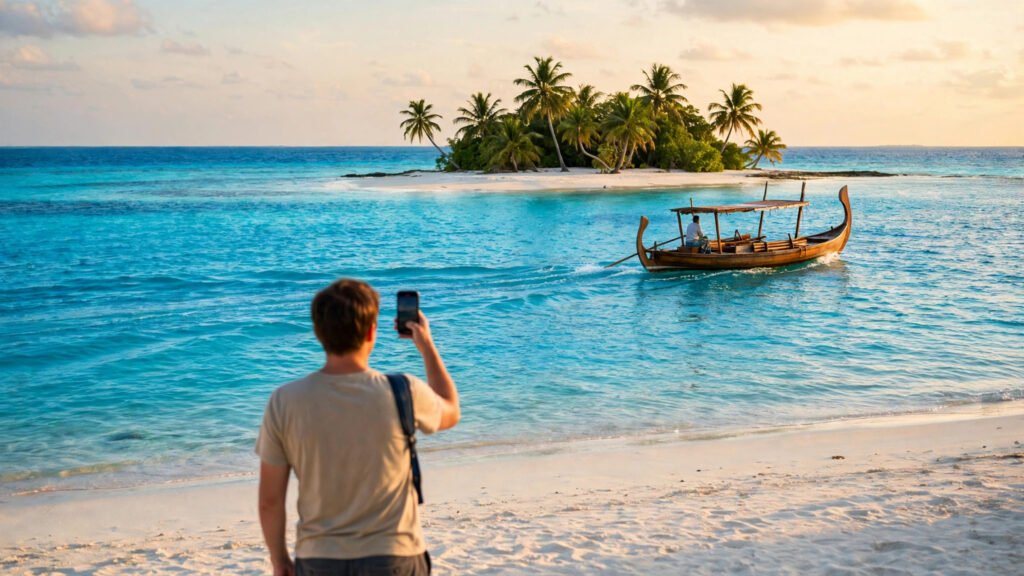
In the Maldives, the sea is not a backdrop to everyday life — it is the road between one part of life and the next. The country is made up of island after island, grouped into atolls and separated by open water, and for most Maldivians, reaching another island means a boat ride or a seaplane flight rather than a short drive. That geography shapes almost everything, from school and work to shopping and family life — and it is a big reason why the phone has become the most important tool in a Maldivian pocket.
For many Maldivians, the phone is far more than a device for chatting. It is how you check whether the ferry is running, confirm a guesthouse booking, send money to family on another atoll, follow the weather before a fishing trip, and keep in touch with relatives who live hours away by sea. When distance is measured in boat journeys, a call or a message can save an entire day of travel.
Key Takeaways
- Island geography makes the phone the fastest link between communities spread across many atolls.
- Phones help Maldivians arrange ferries, run small businesses, and stay close to family on other islands.
- Banking, weather updates, and news all reach people through the same small device.
Distance Makes the Phone Essential
The Maldives stretches across a long chain of atolls in the Indian Ocean, with inhabited islands, resort islands, and uninhabited islands scattered over a wide area. Visiting family, attending school, reaching a hospital, or selling fish at a market can all involve planning around boats, timetables, and sea conditions. A phone call before setting out can confirm whether someone is home, whether a ferry is still running, or whether a meeting is still on.
That simple check matters even more when the alternative is a wasted journey. If a boat is delayed by rough seas, a message can rearrange the whole plan in minutes. Island life runs on timing — tides, ferry schedules, and weather windows — and the phone is what keeps those moving parts in sync. People living on far-apart islands face the same challenge as Solomon Islanders who rely on phones across scattered islands, where water, not roads, sets the pace of daily life.
Staying Close to Family Across the Water
Family ties run deep in the Maldives, but families are often spread across several islands. Children may study in Malé, the capital, while parents and grandparents live on a home island. Relatives may work on a resort island for weeks at a time. In that setting, the phone is what keeps a family feeling like one household even when its members sleep on different islands.
Video calls, voice messages, and family group chats have become part of the daily routine. Birthdays are celebrated over a call, news of a new baby travels in seconds, and older relatives who cannot travel easily can still be part of family conversations. For many people, the first thing they do in the morning and the last thing they do at night is check their phone for messages from family.
Work, Fishing, and Small Business on a Phone
Work in the Maldives is closely tied to the sea and to tourism, and both run on phones. Fishermen check weather forecasts and sea conditions before heading out, and they use their phones to coordinate with buyers once the catch is in. Guesthouse owners on local islands confirm bookings, answer questions from guests, and arrange airport transfers — all from a phone.
Small businesses, from cafés to dive shops to souvenir stalls, reach customers through social media and messaging apps. A photo of the day’s catch, a new menu item, or a special offer can reach hundreds of people in minutes. For an island business with no high street foot traffic, the phone is the shop window, the booking desk, and the customer service counter all at once.
Banking and Paying Without a Branch Nearby
Not every island has a bank branch, and travelling to one can take a large part of the day. Mobile banking has changed that equation. People can check balances, transfer money to family, pay bills, and receive payments without leaving their island. That matters for workers sending money home, for parents supporting children studying elsewhere, and for small traders settling accounts with suppliers.
The same pattern shows up in other island nations, where Fijians use mobile money across islands to bridge the same kind of distance. In the Maldives, the phone has quietly become the nearest bank for many households, open at any hour and reachable from any island with a signal.
Weather, News, and Everyday Information
Weather is not small talk in the Maldives — it decides whether boats run, whether fishing trips go ahead, and whether travel plans hold. Forecasts, storm warnings, and sea condition updates arrive on phones, helping people plan around the ocean rather than being caught out by it. News, government announcements, and school notices travel the same way, reaching islands quickly without waiting for a boat delivery.
Phones also carry entertainment and learning. Students use them for study material and online classes, especially where specialist teachers are based on another island. Young Maldivians follow global trends, music, and sport on the same device their parents use for ferry timetables. The phone has become a shared household resource that serves every generation differently.
Connectivity Across the Atolls
Keeping hundreds of islands connected is no small task, and mobile networks are the backbone of that effort. Coverage reaches far beyond the capital, linking resort islands, fishing communities, and remote atolls into one national conversation. When a new cable or tower improves service on a distant island, the change is felt immediately in everyday life — clearer calls, faster messages, and easier access to online services.
That connectivity also supports tourism, the country’s largest industry. Visitors share their experiences online, resorts coordinate with suppliers on other islands, and local islands promote their guesthouses to a global audience. The phone links the Maldives not only island to island, but also to the wider world, as Seychellois rely on phones across islands in a similar island setting.
When distance is measured in boat journeys, a call or a message can save an entire day of travel.
What Phones Cannot Replace
For all their usefulness, phones have limits. A call cannot carry a sick patient to a hospital, deliver building materials, or replace a ferry. Island communities still depend on boats, planes, and harbours for the physical side of life, and bad weather can still disrupt both travel and signals. The phone makes island life easier to coordinate, but it does not remove the sea from the equation.
There are also everyday frustrations: charging a phone where power supply is limited, keeping a device working in salt air and humidity, and paying for data on a modest income. Yet for most Maldivians, those costs are worth it, because the alternative — being cut off from family, work, and information — costs far more.
- Ferries, weather, and family news are all coordinated by phone across the atolls.
- Mobile banking brings financial services to islands without a nearby branch.
- Fishing, guesthouses, and small shops all run much of their business from a phone.
- Island geography means the phone is often the fastest and cheapest way to connect.
What to Watch Next
The phone’s role in Maldivian life is likely to keep growing as coverage improves and more services move online. Ferry bookings, government services, banking, and learning are all becoming easier to reach from a handset, and each step makes island life a little less dependent on long journeys for simple tasks.
At the same time, the sea will remain the defining fact of the Maldives. Phones will keep helping Maldivians bridge the water between islands, but the boats, the weather, and the atolls themselves will keep shaping how that connection works. For now, the phone remains the thread that ties hundreds of islands into one country — a small device carrying family, work, and daily life across the Indian Ocean.