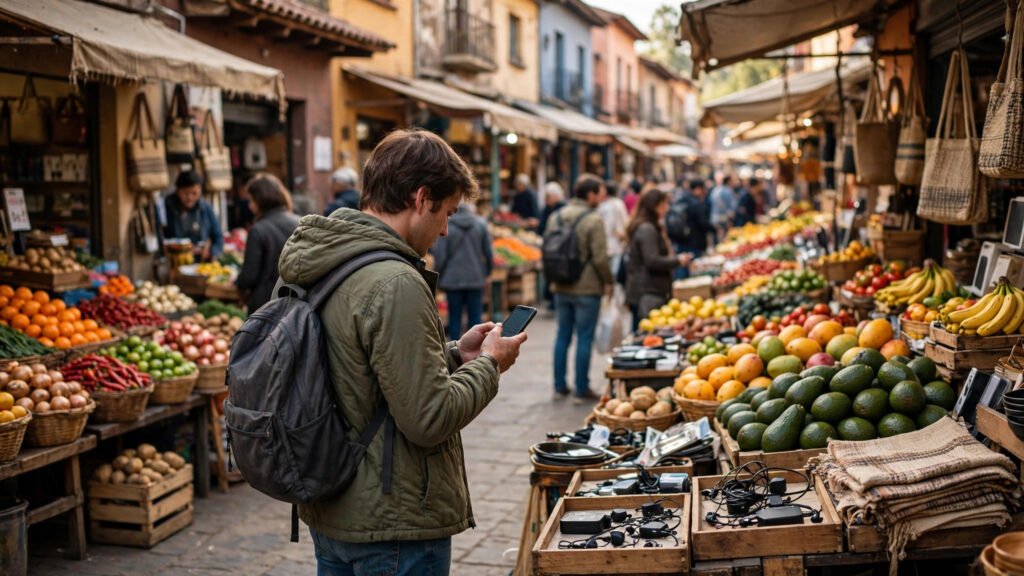
Paraguay is a landlocked country, bordered by Brazil, Argentina and Bolivia, and for many Paraguayans a shopping trip across the border is a normal part of life. Before they set off, one habit has become almost universal: they check their phones. In Paraguay, the phone has become part of the shopping trip itself, checked before the journey even begins.
The reason is simple. A cross-border shopping trip involves more than one country, more than one currency and more than one price for the same product. The phone gathers all of that information in one place, before any money is spent and before any time is wasted on a journey that may not be worth it.
Key Takeaways
- Paraguayans check exchange rates on their phones because the value of the guaraní against the Brazilian real and the Argentine peso changes what a trip across the border is worth.
- Prices are compared on the phone before travelling, so shoppers know whether electronics, clothing or household goods are genuinely cheaper on the other side.
- The phone also plans the crossing itself, from bridge traffic and shop hours to mobile payments and staying in touch with family.
The exchange rate decides the trip
For a Paraguayan shopper, the first question is rarely what to buy. It is what the money is worth today. Paraguay uses the guaraní, while Brazil uses the real and Argentina uses the peso, so every cross-border purchase means converting between currencies in your head or on a screen.
Exchange rates move, sometimes noticeably, and a rate that made a trip worthwhile last week may not do so this week. Checking the rate on a phone before leaving home turns a guess into a decision. Shoppers can work out roughly what an item will cost in guaraníes before they cross, and decide whether the journey is worth the time and the transport cost.
This habit is not unique to Paraguay. Across the region, people watch currency movements on their phones as part of everyday money decisions, and Argentinians check the dollar rate on their phones every day for similar reasons. In Paraguay, the same instinct applies to the real and the peso, the two currencies most relevant to a border shopping trip.
Prices are compared before the border
The second check is the price itself. Electronics, clothing, shoes, household appliances and everyday goods can cost different amounts on each side of the border, and the difference is not always obvious from a shop window.
Before travelling, shoppers search online stores, compare listings and ask sellers questions through messaging apps. Photos of products, specifications and prices travel faster than people do, so much of the shopping is effectively done before the trip starts. By the time a shopper arrives, they often know exactly which shop to visit and roughly what they expect to pay.
Messaging also keeps the trip flexible. A seller can confirm whether an item is in stock, a friend can recommend a shop, and a family member can add a request to the list. The phone turns a solo errand into a shared plan.
In Paraguay, the phone has become part of the shopping trip itself, checked before the journey even begins.
The phone plans the crossing itself
Crossing a border takes planning, and the phone helps with that too. Shoppers check maps and routes, look at traffic around busy crossings such as the Friendship Bridge between Ciudad del Este and Foz do Iguaçu in Brazil, and confirm shop opening hours before they leave.
Ciudad del Este, on Paraguay’s eastern border with Brazil, is one of the busiest shopping destinations in the region, and its streets are known for electronics and imported goods. A trip there can mean crowds, queues and long days, so knowing when to go and where to head first makes a real difference.
The phone also holds the practical details of the trip: identity documents to carry, transport times, meeting points and the way home. For shoppers travelling with family or friends, a shared location or a quick message keeps the group together in crowded streets.
Paying on the phone, not just with cash
Payment is the next place the phone matters. Many shoppers still carry cash, but cards and phone-based payments are increasingly part of the trip, especially for larger purchases where carrying large amounts of cash is uncomfortable.
Mobile wallets and QR payments are spreading across South America, and Bolivians pay with QR codes and mobile wallets instead of cash and cards in a similar shift. In Paraguay, paying by card or phone also leaves a clear record of what was spent, which helps when working out the real cost of a trip in guaraníes afterwards.
On the Argentine side of the border, phone-based payment is already deeply established, and Argentinians pay with Mercado Pago instead of cash and cards for much of their everyday spending. For a Paraguayan shopper, knowing how payment works on the other side of the border is one more detail the phone sorts out in advance.
Staying connected in two countries
Finally, the phone keeps shoppers connected while they are away from home. Crossing into another country can mean different mobile networks, roaming charges or a local SIM card, and shoppers check these details before they travel so they are not cut off at the wrong moment.
Staying reachable matters for practical reasons: coordinating with travel companions, letting family know the trip is going well, and confirming purchases or transport on the way home. In a trip built around prices, rates and timing, losing connection means losing the information the whole plan depends on.
- Exchange rates are checked first, because the guaraní’s value against the real and the peso decides whether a trip is worth it.
- Prices, stock and sellers are compared and contacted on the phone before travelling.
- Routes, bridge traffic and shop hours are planned on the phone, especially for busy crossings like Ciudad del Este.
- Cards, mobile wallets and QR payments reduce the need to carry large amounts of cash.
- Staying connected across the border keeps the group together and the plan on track.
What to Watch Next
Cross-border shopping from Paraguay is unlikely to lose its phone-first habit. As exchange rates keep moving, prices keep being compared online and mobile payments keep spreading, the phone will remain the first thing checked before a trip.
What to watch is how far that habit goes: whether more shoppers plan entire trips, from price comparison to payment, on their phones, and whether paying by phone becomes as normal on a cross-border trip as checking the exchange rate already is. For now, the pattern is clear. In Paraguay, the shopping trip starts not at the border, but on the screen.