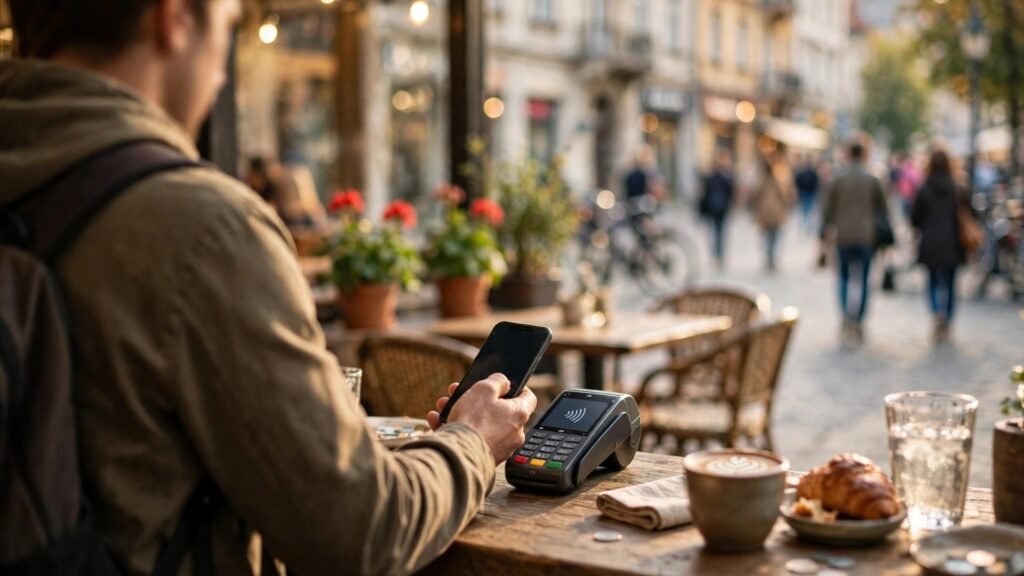
Walk into a café in Belgrade, split a bill with friends in Novi Sad, or pay a small business in Niš, and you may notice something that surprises visitors: many Serbians reach for an instant bank transfer instead of a card. The system behind that habit is called IPS, Serbia’s instant payment system, and it has quietly changed how everyday money moves in the country.
So why do Serbians pay with instant bank transfers instead of cards? The short answer is that IPS fits how people already bank, shop, and split costs. It moves money directly from one bank account to another, usually in seconds, using a phone number, a QR code, or ordinary account details inside a banking app. For many users, that feels simpler than carrying a card, waiting for a terminal, or handling cash.
Key Takeaways
- IPS is Serbia’s instant payment system, run by the National Bank of Serbia, and it moves money between bank accounts in seconds.
- Many Serbians use it because it works inside the banking apps they already have, for person-to-person transfers and for paying merchants.
- Cards and cash still have a place in Serbia, so IPS is best understood as a popular extra option rather than a replacement for everything.
What IPS Actually Is
IPS stands for instant payments in Serbia, and it is the system run by the country’s central bank, the National Bank of Serbia. When someone sends an IPS payment, the money does not wait for the usual banking timetable. It is credited to the recipient’s account almost immediately, at any hour, including weekends and public holidays.
That timing matters in daily life. A friend who owes you for lunch does not have to promise to pay tomorrow. A small business does not have to wait for a payment to clear before treating it as received. The transfer itself is the confirmation, and both sides can see it in their banking apps.
IPS works through banks that take part in the system, and most people use it inside their own bank’s mobile app. There is no separate wallet to set up in the way some payment apps require. If your bank supports IPS, the option is usually already there, alongside ordinary transfers.
Why a Phone Number Can Be Enough
One reason IPS caught on is that sending money can be as simple as knowing someone’s phone number. Instead of asking for a long account number and sorting out bank details, a sender can choose a registered phone number in their banking app, enter the amount, and confirm the transfer.
That simplicity helps in exactly the situations where cards feel awkward. Splitting a restaurant bill, paying a friend back for tickets, or sending money to a family member are all person-to-person payments, and a phone number is the detail people already have. The recipient does not need to be standing nearby, and neither side needs to handle cash or a card reader.
For merchants, QR codes play a similar role. A shop, café, or service provider can show a code that already contains the payment details, and the customer scans it with a banking app, checks the amount, and confirms. There is no card to insert, no PIN pad to share, and no change to count.
For many users, that feels simpler than carrying a card, waiting for a terminal, or handling cash.
Why It Suits Serbian Daily Life
Serbia still has a strong cash culture in some places, especially in smaller shops and markets, and cards are widely used in larger stores and cities. IPS sits comfortably between those two habits. It keeps the directness of cash — money goes straight from buyer to seller — while adding the record-keeping and convenience of a bank transfer.
It also suits a country where people often bank with local institutions and use their banking apps for many tasks. Paying a bill, checking a balance, and sending an instant transfer can all happen in the same place, without opening another app or creating another account. That familiarity lowers the barrier for people who might not want to try a new payment brand.
Small businesses benefit too. A tradesperson, a market seller, or a freelancer can accept a payment without renting or buying card terminal equipment, as long as the customer can send an IPS transfer. That makes it easier for very small sellers to accept electronic payments at all.
- Money moves between bank accounts in seconds, at any hour.
- A registered phone number or a QR code can replace long account details.
- Payments happen inside existing banking apps, with no separate wallet needed.
- Small sellers can accept electronic payments without card terminal equipment.
How It Compares With Cards and Cash
Cards remain convenient, especially for visitors and for larger stores where terminals are standard. A card payment is quick at the till, and many people still prefer it for everyday shopping. Cash remains useful where electronic payments are not accepted, or where people simply prefer to pay in notes and coins.
IPS does not replace either of those options. Instead, it gives people a third choice that is particularly strong for transfers between people and for payments where a card terminal is not handy. Neighbouring countries have developed their own versions of the same idea, shaped by their own banks and habits. In Croatia, for example, many people use the Keks Pay app for everyday phone payments, while in Slovenia the Flik system lets people send money between banks in a similar instant way.
The comparison with cash is also instructive. In Greece, many small shops still prefer cash, as explained in our look at why Greeks still pay cash in so many small shops. Serbia is moving in a different direction for person-to-person payments, but the underlying point is the same: people stick with the method that feels easiest, cheapest, and most reliable in the places they actually shop.
What to Watch Out For
IPS is not universal. Whether you can use it depends on your bank, and whether a particular merchant accepts it depends on that merchant. Visitors should not assume every shop in Serbia takes instant transfers, and they should still carry a card or some cash as a backup.
As with any bank transfer, it is worth double-checking the recipient and the amount before confirming. An instant payment is designed to be fast, and that speed is part of its appeal, but it also means a mistake is harder to undo than a payment that is still processing. The usual care applies: confirm the phone number or QR code, check the amount, and keep the confirmation in your banking app.
Fees and limits can also vary by bank, so the exact terms depend on the account you hold. The system itself is about speed and directness; the commercial terms around it are set by the banks that offer it to their customers.
What to Watch Next
IPS already shows how a bank-based instant system can become an everyday habit, especially for transfers between people and for small sellers without card terminals. What to watch next is whether more merchants display QR codes at the till, whether banks make instant transfers even easier to find inside their apps, and whether visitors find IPS accepted in more of the places they shop. Cards and cash are not going away in Serbia, but for many Serbians, the instant transfer has already earned its place alongside them.