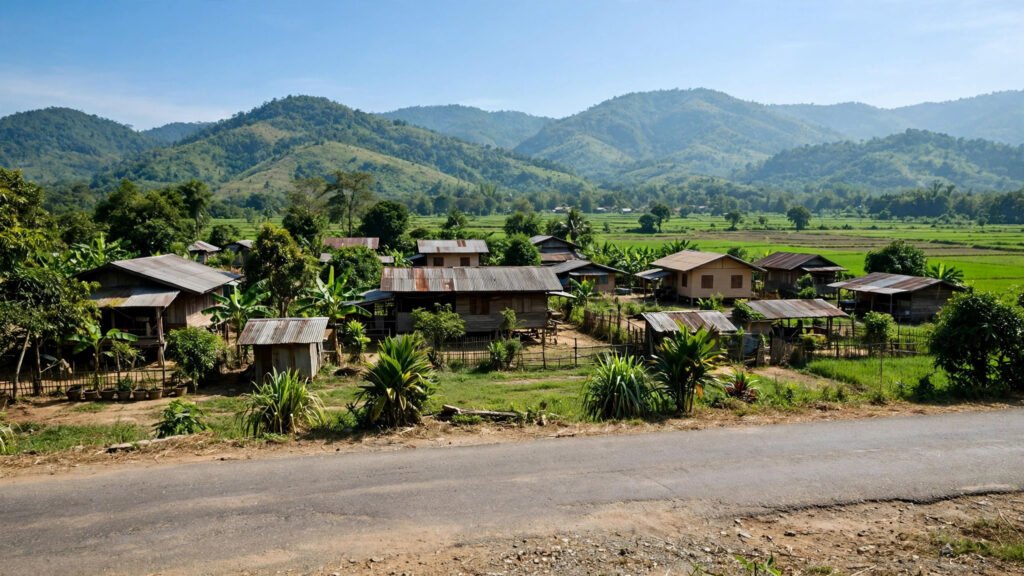
A magnitude 3.9 earthquake struck Phayao province in northern Thailand at 12.01pm on Sunday, November 1, 2026, shaking homes in Pong district and sending tremors across five districts of the province. The Earthquake Surveillance Division reported the epicentre in Kuan subdistrict of Pong district, at a shallow depth of just one kilometre.
Residents in Pong and nearby areas reported feeling the shaking inside buildings and houses, noticing movement in buildings and other structures. Disaster officials moved quickly to check the affected area, and initial reports brought reassuring news: there were no reports of damage or impact on residents in the first hours after the tremor.
Key Takeaways
- A magnitude 3.9 earthquake struck Kuan subdistrict in Pong district, Phayao province, at 12.01pm on November 1, 2026.
- The quake was shallow, at a depth of one kilometre, and tremors were felt across five districts: Pong, Chiang Muan, Chun, Dok Kham Tai and Mueang Phayao.
- Disaster officials initially reported no damage or impact on residents, and the quake did not meet the criteria for a Cell Broadcast alert.
What Officials Reported
The Phayao Provincial Disaster Prevention and Mitigation Office coordinated with Pong district authorities and local administrative organisations after the earthquake, checking for any impact on residents. It had initially received no reports of any damage or impact, according to the reports of the event.
The Thai Meteorological Department said the quake did not meet the criteria for a Cell Broadcast alert, with shaking felt near the epicentre. That detail matters for readers wondering why no phone alert arrived: the alert system is reserved for events that meet specific thresholds, and this tremor, while widely felt in its home province, did not reach them.
The department added that shaking could be felt in some areas and advised people to remain calm and not panic. Authorities also urged residents in Pong and neighbouring districts to follow updates from the Thai Meteorological Department and other government agencies, rather than relying on rumours or unverified posts.
The department added that shaking could be felt in some areas and advised people to remain calm and not panic.
Why a Small, Shallow Quake Was Felt So Widely
A magnitude 3.9 earthquake is modest by global standards, but depth and location shape what people feel just as much as magnitude does. A shallow earthquake releases its energy close to the surface, so shaking can be noticeable near the epicentre even when the magnitude is not large. At one kilometre deep, this Phayao tremor was very shallow, which helps explain why residents across five districts felt it.
That is a useful contrast with a very different kind of earthquake reported in the region in recent days: a deep earthquake near Shima, Japan, measured at magnitude 6.0 but at a depth of more than 350 kilometres, produced only weak shaking at the surface. The Phayao event was far smaller in magnitude, but far closer to the surface, so it was felt directly by the communities above it.
The Thai Meteorological Department attributed the Phayao tremor to slight movement along the Phayao Fault Group, which it described as having been dormant for a long time. That description does not mean the fault can never move again — faults that have been quiet for a long time can still produce small tremors — but it does explain why a quake in this province drew attention: it happened in a place where residents are not used to feeling the ground move.
- Magnitude 3.9, reported by the Earthquake Surveillance Division
- Epicentre in Kuan subdistrict, Pong district, Phayao province
- Depth of one kilometre — very shallow, so shaking was felt near the epicentre
- Tremors felt in Pong, Chiang Muan, Chun, Dok Kham Tai and Mueang Phayao
- No initial reports of casualties or property damage
- Quake did not meet Cell Broadcast alert criteria
What Residents Were Advised to Do
The advice that followed the tremor was practical and calm. Residents were told to remain calm and not panic, to follow official updates from the Thai Meteorological Department, and to watch for any signs of damage to buildings. Anyone who notices cracks or damage to a building was advised to stay away from the affected area and notify the relevant authorities for inspection.
That advice reflects how small earthquakes are usually handled: the first job is to confirm whether anyone was hurt or any building was damaged, and the second is to keep information flowing from official sources. In a province where the fault group had been dormant for a long time, clear official communication matters, because residents may otherwise fill the gap with speculation about whether a larger quake could follow. No such forecast was made in the initial reports, and readers should treat any claim of a predicted larger quake with caution unless it comes from an official monitoring agency.
Earthquake alerts work differently from country to country, and the systems behind them are worth understanding. In Chile, for example, a separate explainer on this site looks at how earthquake alerts reach phones in Chile — a reminder that an alert arriving, or not arriving, depends on the thresholds and systems each country uses, not only on whether shaking was felt.
Phayao in Context
Phayao is a province in northern Thailand, a region of hills, valleys and farming communities, where the ground does not shake as often as it does in some better-known earthquake zones. That is part of why this event stood out: a tremor felt across five districts, in a province whose fault group had been described as dormant for a long time, is unusual enough to be noticed, even when it causes no reported damage.
The wider region has seen a busy few days for natural hazards. In the Philippines, the Mayon volcano eruption forced more than 2,000 people to evacuate, and in Japan, a deep magnitude 6.0 earthquake caused only weak shaking. The Phayao tremor sits at the other end of that scale: small, shallow and local, but felt directly by the people living above it. It is also a reminder that earthquake risk is not only about the largest events. Smaller tremors, like the earthquake in Afghanistan’s Hindu Kush region reported earlier, are monitored closely precisely because they tell seismologists how active a fault system is, even when they cause no harm.
What to Watch Next
What to watch next is only what the article has already set out: whether disaster officials confirm that the initial picture holds — no damage and no impact on residents — whether any further tremors are reported in Phayao in the coming days, and whether the Thai Meteorological Department issues any further updates on the Phayao Fault Group. Until confirmed updates arrive, the verified picture remains the one reported on November 1: a magnitude 3.9 earthquake, one kilometre deep, in Pong district, felt across five districts, with no initial reports of damage.