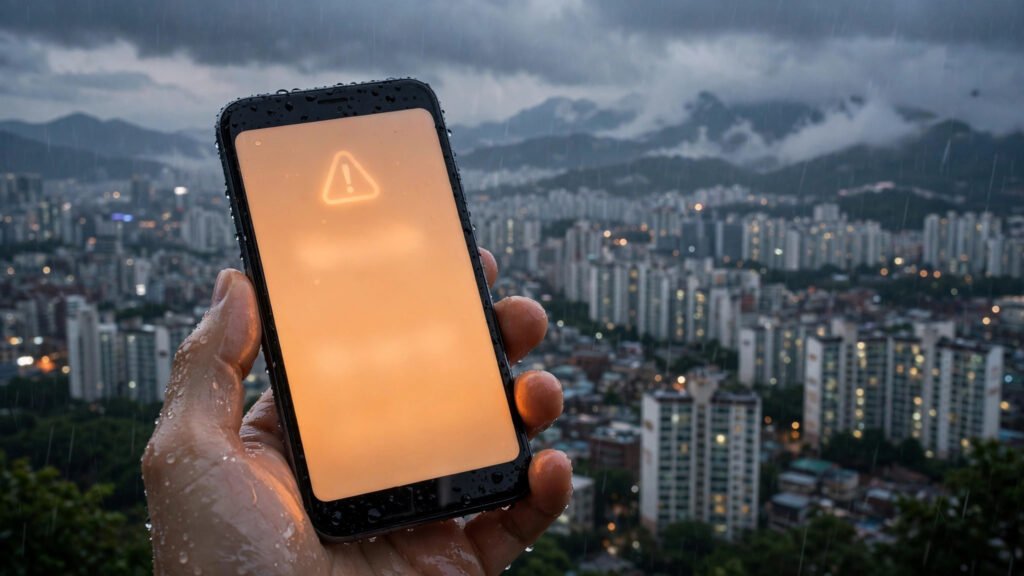
In South Korea, the phone in your pocket can buzz with an official warning at almost any hour of the day. It may be a heavy rain warning on a summer afternoon, a heatwave notice in July, or a missing-person alert late at night. For visitors, the frequency can feel surprising. For residents, it is simply part of daily life.
So why do South Koreans get emergency alerts on their phones so often? The short answer is that the country built a system designed to reach everyone in a threatened area at once, and it uses that system widely. The alerts are not a sign that danger is everywhere. They are a sign that the warning network is working the way it was designed to work.
Key Takeaways
- South Korea’s emergency alerts travel through the mobile network itself, so they reach phones in a specific area without needing a special app.
- Alerts cover a wide range of risks, from heavy rain and heatwaves to earthquakes, fine dust and missing-person cases.
- Most alerts are precautionary, and the safest response is to read the area and the advice, not to panic.
What These Alerts Actually Are
South Korea’s emergency messages are sent through a cell broadcast system. Instead of sending a text message to each phone number one by one, the network broadcasts the warning to every phone connected to mobile towers in a chosen area. That is why an alert can arrive within moments, and why it can reach people who are only passing through a district.
The phone does not need an app for these alerts, because the warning system is built into the mobile network itself. As long as the phone is switched on and connected, it can receive the broadcast. Most alerts arrive in Korean, and visitors sometimes see an English version as well.
Different government bodies send different kinds of alerts. Weather warnings come from the meteorological authorities, disaster and safety notices from emergency management bodies, and missing-person alerts from the police. The sender and the subject are usually shown at the top of the message, so the reader can tell at a glance what kind of warning it is.
The alert is not a prediction that something will happen to you, it is a warning to pay attention and stay safe.
Why South Korea Sends So Many
One reason is geography. South Korea is a mountainous peninsula with a long coastline, and its weather can change fast. Summer brings monsoon rain that can flood streets and valleys in hours. Winter brings sudden cold snaps and heavy snow in some regions. A warning system that stays quiet through all of that would not be doing its job.
Another reason is population density. Millions of people live in and around Seoul and other large cities, often in tall apartment buildings. When heavy rain, a heatwave or a storm threatens a crowded area, officials would rather warn too many people than too few. A broad alert may reach people who turn out to be safe, but it also reaches the people who genuinely need to change their plans.
Earthquakes are less frequent in South Korea than in some neighbouring countries, but the system is ready for them too. People in other earthquake-prone countries rely on their phones in a similar way, as Chileans check their phones for earthquake alerts first when the ground shakes. The principle is the same everywhere: a fast warning gives people time to act.
The system is also used for risks that have nothing to do with weather. Fine dust days, when air quality worsens, can trigger health advice for children, older people and anyone with breathing problems. Missing-person alerts ask the public to look out for a child or an older person who has gone missing nearby. Civil defence drills are announced the same way, so people know a siren or a test message is only a drill.
The Kinds of Alerts You May See
Not every alert means immediate danger. Some are simple advice, and some ask for urgent action. Learning the difference makes the buzzing phone much less stressful. Here are the kinds of messages that appear most often:
- Weather warnings: heavy rain, strong wind, snow, heatwaves and cold snaps, often with advice to avoid riverside roads or outdoor work.
- Earthquake alerts: tremor notices with guidance to stay calm, move away from falling objects and follow official updates.
- Air quality notices: fine dust warnings that advise limiting outdoor activity, especially for children and older people.
- Missing-person alerts: descriptions of a missing child or older person, asking people in the area to keep an eye out and report sightings.
- Safety and drill notices: civil defence drills, fire warnings and local safety information from city or district authorities.
Weather alerts are a global habit now. In island nations, Fijians check their phones first for cyclone warnings during storm season, and in the Himalayas, Bhutanese travellers check weather and road alerts before mountain travel. South Korea’s system belongs to the same idea: the phone is the fastest way to reach everyone at risk.
How to Read an Alert Without Panicking
The first thing to check is the area. Many alerts name a city, district or province, and if you are not in that area, the message is usually not meant for you. The second thing to check is the advice. Some alerts only ask people to be careful, while others ask people to move to higher ground, stay indoors or avoid a road.
It also helps to remember that a warning is a precaution, not a report of something that has already happened. The alert is not a prediction that something will happen to you, it is a warning to pay attention and stay safe. When an alert asks for action, follow the official guidance in the message rather than rumours on social media.
Visitors can keep alerts switched on and simply read them when they arrive. If the message is in Korean and hard to understand, a translation app or a local friend can help, and the area name and any English words in the message often give the main point. Turning alerts off entirely is not a good idea, because the one message that matters may be the next one.
What to Watch Next
South Korea’s emergency alerts are likely to stay a frequent part of daily life, because the system is built to warn widely rather than narrowly. Weather, air quality and safety notices will keep arriving on phones across the country, and the fastest way to live with them is to read the area and the advice in each message. The phone buzzing is not a reason to panic. It is the warning network doing exactly what it was built to do.