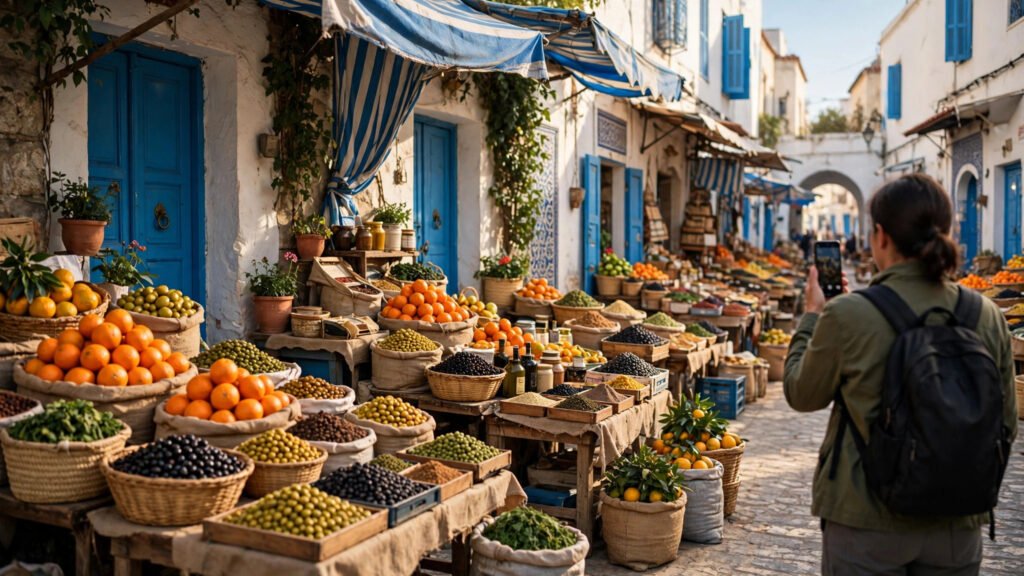
Walk through a market in Tunis in the morning and you will see two Tunisias at once. On one side are the stalls that have barely changed in generations: baskets of oranges, olives, spices and bread, sellers calling out prices, neighbours stopping to talk. On the other side is the phone in almost every hand, quietly running the errands, conversations and payments that hold the day together.
For many Tunisians, the phone is not a gadget for spare moments. It is the diary, the shop window, the family telephone and the bus timetable, all in one pocket. Understanding why means looking at how Tunisian life actually works: close family ties that stretch across the Mediterranean, busy markets and small businesses, and cities where getting things done often depends on who you know and how quickly you can reach them.
Key Takeaways
- Tunisians use phones to bridge distance: family abroad, relatives in other towns, and friends across the city stay in daily contact.
- Small sellers and market traders use phones and social pages as their shopfront, reaching customers without a formal store.
- Cash still matters in Tunisia, so phones complement rather than replace the market stall, the café and the face-to-face deal.
Family First, Across Borders
Tunisia has a large diaspora, especially in France, and many families live with one foot in two countries. A phone call or video call is how grandparents watch grandchildren grow up abroad, how news of a wedding or an illness travels in minutes, and how everyday decisions get made together even when an ocean sits between the people making them.
Inside Tunisia, the same pattern repeats on a smaller scale. Young people often move to Tunis, Sfax or Sousse for work or study while their parents stay in smaller towns. The phone keeps those households connected: a quick message in the morning, photos of a new baby, a voice note when typing feels too slow. Distance has not disappeared, but it no longer means silence.
The phone keeps those households connected, even when work or study has pulled family members to different towns.
The Market Stall Went Mobile
Tunisian commerce has always been personal. Shoppers like to see the produce, haggle a little and buy from a seller they trust. Phones have not replaced that ritual; they have extended it. A market trader can photograph the morning’s catch or harvest, post it on a social page, and have regular customers message their orders before they even arrive at the stall.
Small businesses work the same way. A café, a tailor, a repair shop or a home baker may never build a website, but a social media page with photos, prices and a phone number does the same job for far less effort. Customers discover the business through friends sharing posts, ask questions in messages, and arrange pickup times — all without a formal online store. This is one reason phones feel so central to Tunisian working life: for many sellers, the phone is the business.
Shoppers, too, use their phones as a first step rather than a final one. They compare items, check what friends recommend, look up directions to a shop, and then still go in person to see, touch and bargain. The phone saves the wasted trip; the market still closes the sale.
- Family calls and messages link Tunisians with relatives abroad and in other towns every day.
- Market traders and small sellers use social pages as a low-cost shopfront.
- Shoppers research on phones, then still buy in person at stalls and small shops.
- Cash remains common, so phones support rather than replace face-to-face trade.
Cash Still Counts
Anyone writing about Tunisia and phones should be honest about one thing: cash is still king in much of daily life. Market shopping, café stops, taxis and small services are very often paid for in notes and coins. Neighbours across North Africa live with a similar mix — in Morocco, many shoppers still order on their phones and pay cash on delivery, and in Algeria, cash still dominates everyday purchases even as mobile internet grows.
That does not make the phone less important; it makes its role clearer. In Tunisia, the phone is mainly a tool for finding, arranging and communicating, while the payment often still happens hand to hand. A seller confirms an order by message, the buyer collects it at the stall, and the money changes hands in person. Trust is built face to face, and the phone simply makes the meeting easier to arrange.
News, Football and the Daily Check-In
Phones are also how many Tunisians follow the day’s news, football results and community gossip. A big match, a transport disruption or a neighbourhood event spreads through group chats faster than any noticeboard. For students, phones carry lecture notes, class groups and revision material. For jobseekers, they carry job posts and application messages. None of this is unique to Tunisia, but together it explains why the device feels indispensable rather than optional.
There is a practical side, too. In a country where many services still run on personal contact, being reachable matters. A missed call can mean a missed delivery, a lost customer or a family member worrying. Keeping the phone charged and close is, for many Tunisians, simply part of being responsible — much as keeping the house stocked or the shop open is. The same family-first logic shows up elsewhere, from Mozambican households that rely on phones for money, fishing work and family news to Tunisians checking in with relatives abroad.
What to Watch Next
The Tunisian phone story is still being written. As mobile services keep spreading, more everyday tasks — from ordering to booking to paying — will move onto the phone, but the market stall, the café table and the family visit are unlikely to disappear. The most likely future is a blend: phones arranging more of life, while cash, conversation and personal trust continue to close the deal. For visitors and newcomers, the lesson is simple — in Tunisia, the phone is not a distraction from daily life, it is one of the main ways daily life happens.