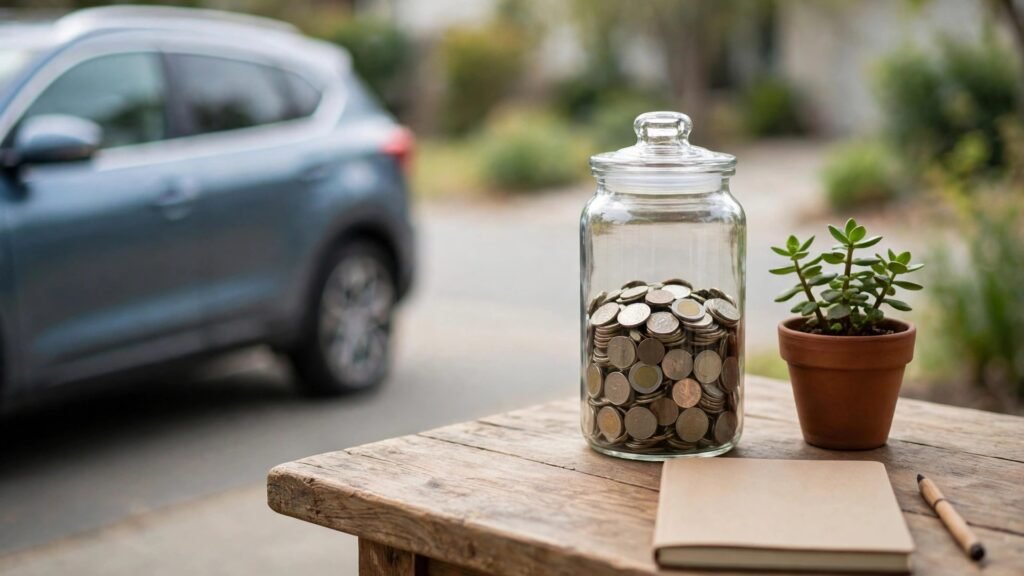
If you want to save for a car down payment, the hardest part is rarely the first transfer. It is keeping the plan going month after month while rent, groceries, and everyday bills still need paying. A good down payment plan does not ask you to stop living. It gives the car fund a fixed place in a budget that already works.
Key Takeaways
- Set a realistic savings target and a date first, then work backwards to a monthly amount you can actually keep.
- Give the car fund its own separate place and move the money on payday, before spending can swallow it.
- When progress slows down, adjust the timeline instead of raiding the fund or giving up on the plan.
A down payment is simply the amount you pay upfront when you buy a car, with the rest covered another way. Saving it in advance means you start with a clearer picture of what you can afford, and you are not making the whole decision under pressure in a showroom. The plan below keeps the process steady and boring, in the best sense: small, regular steps that add up.
Set a Realistic Target Before You Save a Cent
Start with the car, not the savings account. Decide what kind of car fits your daily life: how many seats you need, how far you drive, and whether a smaller, simpler car would do the job just as well. A target that matches your real needs is far easier to stick to than one built around a car you only want for a week.
Next, look at the full cost of owning the car, not just the price tag. Insurance, fuel or charging, maintenance, and yearly fees all come out of the same monthly budget. If those running costs leave almost nothing for saving, the target or the timeline needs adjusting before you begin, not after you have already committed.
Then pick a date. A target with a date turns a vague wish into a plan: divide the amount you want to save by the number of months until that date, and you get the monthly figure to aim for. If that figure feels impossible, stretch the date rather than forcing a monthly amount that will collapse in the second month.
How to Save for a Car Down Payment Without Pausing Everything Else
A down payment plan works best when it fits the life you already live, not a budget you can only keep for a month. Build the monthly amount into your normal budget the same way you treat a bill, and let the rest of the budget stay recognisable. Cutting every small pleasure at once usually backfires, because a plan nobody enjoys is a plan nobody keeps.
One practical method is treating the car fund like a sinking fund: a pot for a known future cost that you feed a little at a time. Instead of hoping money is left over at the end of the month, the transfer happens first, and the remaining money is what you actually live on. That single change is often what separates a fund that grows from one that never gets started.
A down payment plan works best when it fits the life you already live, not a budget you can only keep for a month.
If the monthly figure still feels tight, look for one flexible category to trim rather than overhauling everything. Takeaway meals, unused subscriptions, or impulse shopping are common places where a small, painless cut frees up a steady amount. The goal is not perfection; it is a monthly transfer you can repeat without dreading it.
Keep the Fund Separate and Visible
Money saved for a car should not sit in the same account you spend from every day. When the fund shares space with grocery money, it quietly disappears into everyday spending, and nobody notices until the target date arrives. A separate savings account, or even a clearly labelled pot in your banking app, keeps the boundary visible.
Timing matters as much as separation. Moving the money on payday, by automating the transfer, means you never have to decide again each month. Decisions are where saving plans usually fail, so removing the monthly decision removes the monthly temptation to skip it.
- Move the money on payday, before everyday spending gets a chance at it.
- Check the balance once a month, not once a day, so progress feels steady rather than slow.
- Celebrate milestones along the way, like reaching a quarter or half of the target.
- Keep the fund separate from everyday spending money at all times.
A monthly check-in is enough. Look at the balance, compare it with where the plan said you should be, and adjust the next month if needed. Watching the fund grow, even slowly, is what keeps the goal feeling real instead of distant.
Protect the Plan From Everyday Surprises
Life does not pause while you save. A broken appliance, a medical bill, or a quiet month at work can all collide with a savings plan, and the temptation is to empty the car fund to cover them. That is exactly why a small emergency fund deserves its own place alongside the car fund, even if it grows more slowly for now.
When money is tight, pause the car transfer for a month rather than cancelling the plan. A pause is honest and temporary; a cancelled plan is much harder to restart. Write down the new target date when you pause, so the delay stays a deliberate choice instead of an open-ended drift.
What to Do When Progress Slows Down
Almost every long savings plan hits a slow patch. The balance seems stuck, an unexpected cost eats a month, or the car you wanted feels further away than it did at the start. The first step is a calm review: is the monthly amount still realistic, is the date still sensible, and has anything in your spending changed since you began?
Sometimes the fix is small, like shifting the transfer to a different payday or trimming one more flexible expense. Sometimes the fix is bigger, like choosing a simpler car or pushing the date back a few months. Both are better than raiding the fund, because money taken out of a savings pot is rarely paid back on schedule, and the plan loses its momentum.
Keep the goal visible while you adjust. A note on the fridge, a progress tracker in your phone, or a simple chart on paper all do the same job: they remind you that the fund is growing, even when a single month looks flat. Slow progress is still progress, and a plan that survives a slow patch is a plan that reaches its target.
What to Watch Next
Saving for a car down payment comes down to a realistic target, a monthly amount that fits your everyday budget, a separate fund fed on payday, and a plan that bends instead of breaking when surprises arrive. Set the target, automate the transfer, check in once a month, and adjust the timeline when life gets in the way. The car fund will grow the same way it started: one steady month at a time.