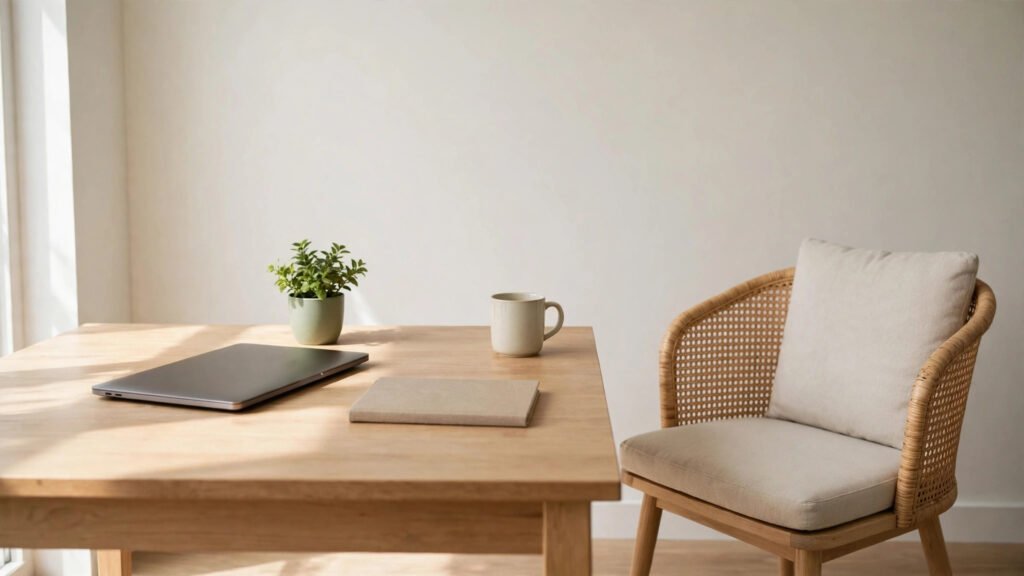
Working from home sounds easy until the first distraction arrives. A message pings, a delivery knocks, the washing machine finishes, and suddenly an hour has gone without much real work. Learning how to set up a distraction-free workspace at home is not about buying expensive furniture or building a separate office. It is about making a few deliberate choices so your brain knows, when you sit down here, that it is time to work.
The goal is not perfection. A workspace that is a little plain and a little boring is often the one that works best, because there is less in it competing for your attention. Start small, change one thing at a time, and keep only what genuinely helps you concentrate.
Key Takeaways
- Pick one fixed spot for work and keep it clear, even if it is only one corner of a room.
- Silence notifications and keep your phone out of easy reach during focused work.
- Set simple boundaries with the people around you so interruptions become the exception, not the pattern.
How to Plan a Distraction-Free Workspace at Home in One Afternoon
Begin by choosing a single spot and using it consistently. It could be a desk in a spare room, a table by a window, or a quiet corner of the living room. What matters most is that the spot is used for work and little else, so sitting down there becomes a cue to focus. If the same chair is also where you eat, watch videos, and scroll, your brain will not know which mode to switch into.
Next, clear the surface completely, then put back only what you need for the task in front of you. A laptop, a notebook, a pen, and a glass of water are usually enough. Everything else — unopened post, chargers for devices you are not using, papers from another project — can live in a drawer or a box until it is needed. A clear desk is not about tidiness for its own sake; it removes small decisions and visual noise that quietly pull your attention away.
Light and comfort matter more than decoration. Sit near natural light when you can, and make sure your chair supports you well enough that you are not shifting around every few minutes. You do not need a perfect setup to begin. A setup that is comfortable enough to sit in for an hour without fidgeting is a good starting point, and you can improve it gradually.
A workspace that is a little plain and a little boring is often the one that works best, because there is less in it competing for your attention.
Silence the Digital Noise Before You Start
Most home distractions are digital, and they are designed to interrupt you. Before a focused session, turn off notifications that are not essential, or use your phone’s focus mode to let only important contacts through. Put the phone face down or in another room if you can. Out of sight really does make it easier to resist checking, because every check breaks your train of thought even when it lasts only a few seconds.
On your computer, close tabs and apps that are not part of the current task. It helps to decide in advance what you will work on for the next hour, and to write that one task on a piece of paper where you can see it. When you know exactly what you are doing, a stray notification is less likely to drag you into a different job. Pairing this habit with time blocking — giving each task its own slot in the day — makes it even easier to stay on one thing until it is done.
Set Boundaries People Can Actually Respect
If you share your home with family, flatmates, or children, boundaries need to be spoken out loud, not just hoped for. Agree on work hours, agree on a simple signal for “please do not disturb” — a closed door, headphones on, or a note on the desk — and agree on what counts as a genuine interruption. Most people are happy to respect a clear boundary; they interrupt because they are unsure whether you are actually working.
Household noise also needs a plan rather than willpower. If mornings are noisy, try starting focused work earlier or later, or use headphones with steady background sound. If deliveries and chores keep breaking your flow, batch them: deal with household tasks in a set window between work sessions instead of letting each one interrupt a session in progress.
- One fixed work spot, used for work only, trains your brain to focus faster.
- A clear desk, silenced notifications, and a phone out of reach remove the most common interruptions.
- Spoken boundaries and a simple do-not-disturb signal protect your focus far better than silent frustration.
- Comfort, light, and one visible task for the hour matter more than expensive equipment.
Keep It Simple and Review It Weekly
A good workspace is one you will actually use, so avoid turning the setup into another project. Resist adding new apps, gadgets, or organisers every week. Instead, notice what pulled you away during the day and fix that one thing tomorrow. If your phone was the problem, move it further away. If clutter was the problem, clear one drawer. Small, repeated fixes beat a grand redesign that never gets finished.
It also helps to end the day by resetting the space. Put papers away, close open tabs, and leave the desk ready for tomorrow morning. That small reset means you start the next day with a clear surface and a clear head, instead of spending the first half hour tidying up yesterday’s mess. Over time, this habit makes it easier to focus on one task at a time rather than juggling half-finished jobs.
What to Watch Next
Setting up a distraction-free workspace at home comes down to a fixed spot, a clear surface, silenced notifications, and boundaries people can respect. Keep the setup simple, review what distracted you each day, and reset the space before you finish. With those habits in place, the same room that used to pull you in every direction can become the place where focused work feels easiest.