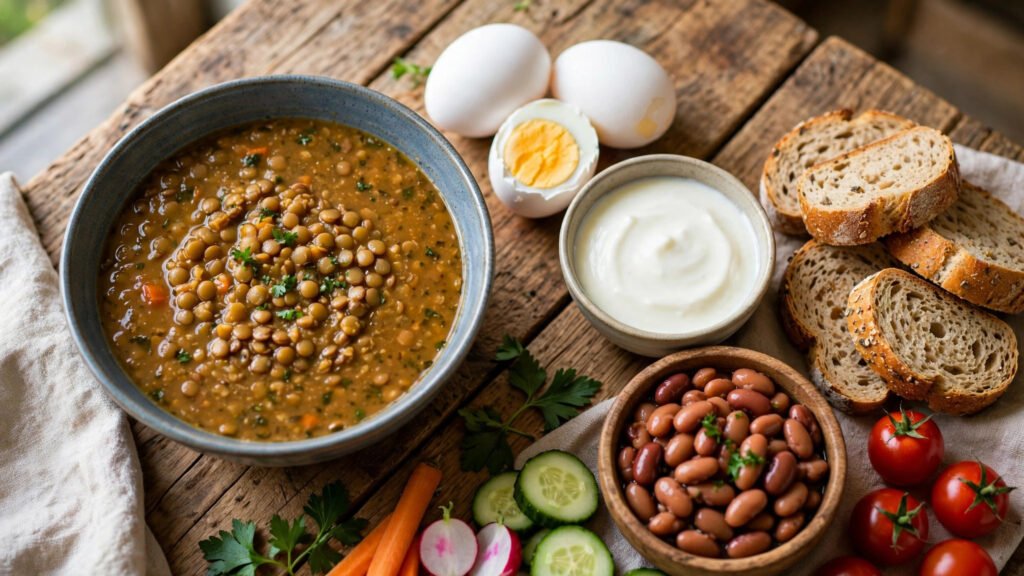
Learning how to eat more protein on a budget is easier than many shopping lists make it look. Protein helps you feel full for longer, supports everyday activity, and keeps meals satisfying, but it does not have to come from expensive cuts of meat or specialty products. With a few affordable staples, a little planning, and meals built around what is already in your kitchen, you can raise the protein in your day without raising your grocery bill by the same amount.
The trick is to think in terms of portions and patterns, not single perfect meals. One protein-rich food at each meal, plus a simple snack, usually adds up to far more than one large, costly dish. When you plan around foods that are cheap, filling, and easy to cook, protein stops feeling like a luxury and starts feeling like a normal part of every plate.
Key Takeaways
- Add one affordable protein food to each meal instead of trying to overhaul your whole diet at once.
- Eggs, beans, lentils, yoghurt, and tinned fish are reliable low-cost protein staples.
- Planning meals around what you already have keeps protein affordable and reduces waste.
How to Eat More Protein on a Budget, Step by Step
Start by looking at what you already eat. Many everyday meals are only one ingredient away from being more filling. Adding an egg to a noodle dish, stirring beans into a soup, or serving cheese or yoghurt alongside fruit can lift a meal without a new recipe or a special shopping trip. Small additions are easier to keep up than a complete change of diet, and they are usually cheaper too.
Next, choose two or three staples you enjoy and can cook without stress. If you like lentils, keep dried or tinned lentils in the cupboard. If eggs suit your mornings, keep them in stock. If yoghurt works as a snack, buy the larger plain tub rather than many small flavoured pots, which often cost more for the same amount. A short list of favourites makes shopping faster and stops you buying protein foods you never actually use.
Affordable Protein Foods Worth Keeping at Home
Eggs are one of the most flexible budget proteins. They cook in minutes, work for breakfast, lunch, or dinner, and pair well with vegetables, bread, rice, or salads. Beans and lentils are another strong choice: they are filling, store well, and can stretch a meal for several people. Tinned fish, plain yoghurt, cottage cheese, and peanut butter can also help, depending on what you like and what is available where you shop.
It also helps to compare foods by how far they go, not only by the price on the shelf. A bag of dried lentils may look plain, but it makes many servings. A small pack of a premium protein snack, by contrast, may cost more and fill you for far less time. Thinking about servings per pack, rather than only the headline price, makes budget choices much clearer.
Build Meals Around Protein, Not Around Expensive Ingredients
A useful habit is to pick the protein first and then add cheap, filling sides. Lentil soup with bread, rice and beans with vegetables, eggs with potatoes, or yoghurt with oats are all complete, satisfying meals built from simple ingredients. Learning how to build a balanced plate can help here, because it shows how protein, vegetables, and a filling staple fit together without needing a complicated recipe.
Leftovers are another budget ally. Cooking a larger batch of beans, lentils, or a grain dish once and using it across two or three meals saves both time and money. The same base can become soup one day, a wrap filling the next, and a salad topping after that. This kind of reuse is also why easy weeknight dinners often work so well: they repeat a few reliable ingredients in different combinations, rather than asking for a new shopping list every night.
- Choose protein first, then add affordable sides such as rice, bread, potatoes, or vegetables.
- Batch-cook beans and lentils and reuse them across several meals in the week.
- Compare price per serving, not just price per pack, when judging value.
- Keep one or two ready-to-eat protein snacks at home so hunger does not lead to costly impulse buys.
Shop Smarter for Protein
Shopping with a short list helps more than any single bargain. Check what protein foods you already have before you shop, buy only the staples you will use that week, and avoid doubling up on similar items. Frozen vegetables, tinned beans, and dried pulses keep well, so you can buy them when they are available and use them gradually, rather than rushing to use fresh food before it spoils.
It is also worth watching portion habits at home. Serving protein as part of a full meal, with vegetables and a staple, usually feels more satisfying than eating it alone. That balance matters for your budget too, because a meal that fills you properly reduces the urge for an extra snack an hour later. A weekly look at how to save money on groceries every week can help you spot where protein spending creeps up and where simple swaps bring it back down.
Small additions are easier to keep up than a complete change of diet, and they are usually cheaper too.
Simple Snacks That Add Protein Without Extra Cost
Snacks are often where protein plans fall apart, because the easiest options are also the most expensive. A boiled egg, a small bowl of yoghurt, a handful of nuts if they fit your budget, or leftovers from lunch can all add protein without a special purchase. Keeping one of these ready in the fridge makes the choice easy when you are hungry and short on time.
If you enjoy sweet snacks, pairing fruit with yoghurt or peanut butter is more filling than fruit alone. The point is not to ban treats, but to make the filling option the convenient one. When the protein snack is already prepared and within reach, you are far less likely to reach for something costly and unsatisfying.
What to Watch Next
Eating more protein on a budget comes down to a few steady habits: add one affordable protein food to each meal, keep a short list of staples you enjoy, build meals around protein with simple sides, and use leftovers across the week. Shop with a list, compare price per serving, and keep a ready snack at home. With those habits in place, higher-protein meals become an ordinary, affordable part of your week, not a special project.