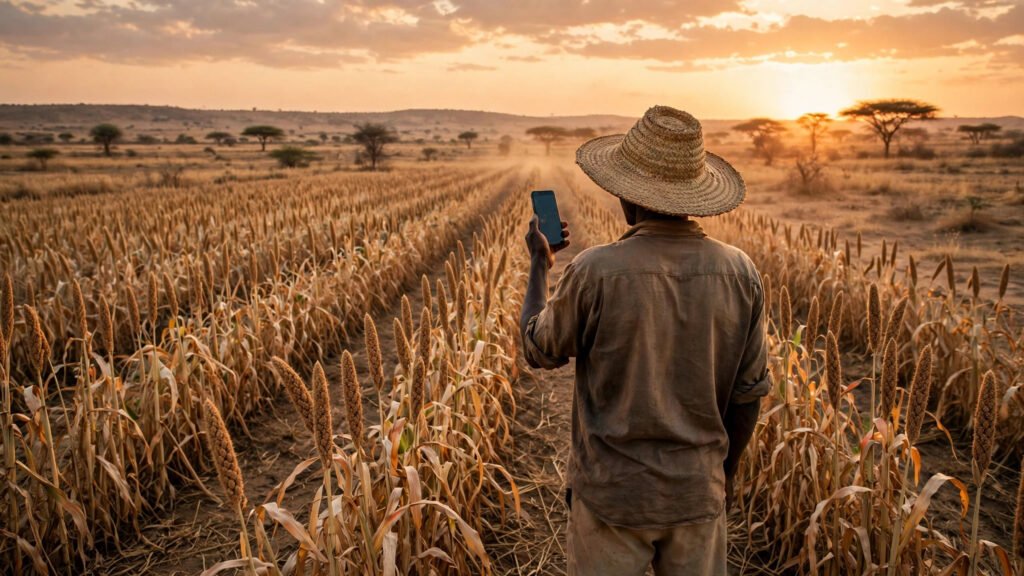
In Burkina Faso, farming is a race against the weather. Rain arrives in a short season, dry spells can follow without warning, and the price a farmer gets for a harvest can change between one market day and the next. For many farmers, the phone in their pocket has become one of the most practical tools they own — not because it replaces hard work in the field, but because it helps them decide when that work matters most.
Key Takeaways
- A phone helps Burkinabè farmers check rain forecasts before planting, watering and harvesting.
- Market price information on a phone helps farmers compare buyers instead of accepting the first offer.
- Calls, messages and farmer groups turn a phone into a shared source of farming advice and warnings.
Rain Decides Almost Everything
Burkina Faso’s farming year is shaped by rain. Planting too early can waste seed if the rains stop, while planting too late can leave a crop without enough water to finish growing. Harvesting at the wrong moment can also damage a crop that took months to raise. That is why a weather forecast on a phone carries real weight: it helps a farmer judge whether to plant this week or wait, whether to protect a crop, and when to bring in a harvest.
The forecast does not need to be complicated to be useful. A simple message about expected rain, a dry spell or a storm can change a day’s plan. A farmer who hears that heavy rain is coming may hurry to gather a drying crop, while a farmer who expects a dry stretch may plan watering, if water is available, or delay work that rain would undo. Over a season, those small decisions add up.
Knowing the Price Before Reaching the Market
Once a crop is ready, the next question is just as important: what is it worth today, and where? In the past, many farmers learned the price only after travelling to a market, carrying produce that could not easily be carried back home. That put the buyer in a stronger position, because the farmer had already spent time and effort getting there.
A phone changes that balance in a simple way. A farmer can call ahead, ask a trader or a fellow farmer what buyers are paying, and compare one market with another before loading a cart or a vehicle. Even a rough idea of the going price helps a farmer negotiate with more confidence and avoid selling far below what others are receiving. When several farmers share price information with each other, the whole village gains a clearer picture of the market.
Phones also help farmers reach buyers directly. A call can confirm that a buyer is actually at the market, that transport is available, or that a sale agreed earlier still stands. That saves wasted journeys, which matter when fuel, time and daylight are all limited.
A Phone Is Also a Classroom and a Warning System
Beyond weather and prices, phones carry farming knowledge from farmer to farmer. Short messages, voice notes and group chats let growers share what worked on their own plots: which seed performed well, how a pest was handled, or how a neighbour stored grain so it lasted longer. Advice from someone farming in similar soil and weather is often more trusted than advice written for a different place altogether.
Phones also spread warnings quickly. News of a pest outbreak, an animal disease, a flooded road or a market closure can travel through a village group far faster than word of mouth alone. A warning received in time can save a crop, protect animals or stop a wasted trip. In a country where many people live far from towns and offices, that speed matters.
A warning received in time can save a crop, protect animals or stop a wasted trip.
For farmers who cannot read long texts easily, voice messages and calls are especially important. A short voice note in a familiar language can carry the same warning or advice as a written message, and a quick call can settle a question that a text alone would leave unclear. The phone works best when it fits how people already talk.
Why Mobile Money Fits Farming Life
Phones also help farmers handle money without long journeys to a bank. Selling a crop, paying for seed or sending money to family can often be done through mobile money on a phone, a pattern seen in other African farming countries too. In Rwanda, mobile money has become an everyday way to pay without cash or bank cards, and in Mali, farmers and traders use phone payments in daily trade. For a Burkinabè farmer, receiving payment on a phone can mean less cash carried on a long road home, and a record of the payment that both sides can check.
That does not mean every farmer uses every feature, or that a phone solves every problem. Network coverage can be weak in remote areas, charging a phone can be difficult where electricity is scarce, and a phone itself costs money. But where the signal reaches, the phone earns its place by answering the two questions farmers ask most often: what will the weather do, and what will my crop fetch?
- Weather forecasts help farmers time planting, watering and harvesting.
- Price checks before market day give farmers a stronger negotiating position.
- Calls and group messages spread farming advice and warnings fast.
- Voice notes make farming information accessible even without long written texts.
- Phone payments reduce the need to carry cash over long distances.
What to Watch Next
The phone will keep mattering to Burkinabè farmers as long as rain stays unpredictable and markets stay far apart. The most useful improvements will be the practical ones: better coverage in rural areas, easier charging, forecasts in local languages, and price information that reaches farmers before market day rather than after. None of that replaces farming skill, but each step makes the phone a more reliable partner in the field — helping farmers plant with more confidence, sell with more information, and protect the harvest they worked so hard to grow.