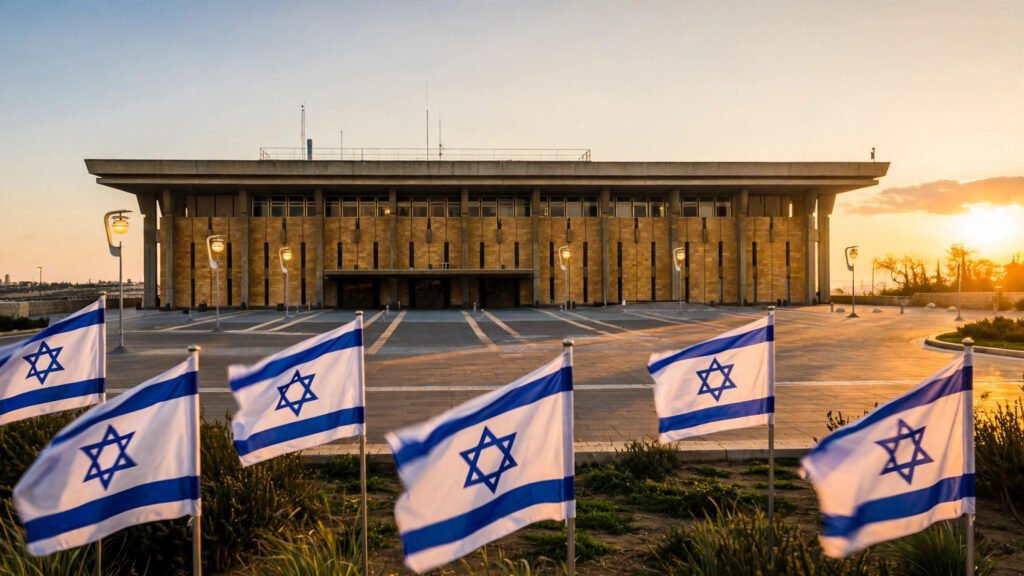
Israel’s Central Elections Committee published the final results of the country’s 2026 general election on Friday, October 30, confirming a fragmented parliament and leaving Prime Minister Benjamin Netanyahu eight seats short of the majority he needs to form a government on his own.
Netanyahu’s Likud emerged as the largest single party with 27 seats, but his wider pro-Netanyahu bloc secured only 53 of the 120 seats in the Knesset. A governing majority requires 61 seats, so the result points to weeks of coalition bargaining — or, if no arrangement can be reached, the prospect of another election.
Key Takeaways
- Netanyahu’s bloc won 53 of 120 Knesset seats, eight short of the 61 needed for a majority.
- Likud finished first with 27 seats, ahead of Gadi Eisenkot’s Yashar party with 21 seats.
- The new 26th Knesset will be sworn in on November 10, with final results going to President Isaac Herzog on November 4.
How the 120 seats are divided
According to the final tally, the opposition bloc led by former military chief Gadi Eisenkot’s Yashar party won 48 seats, while Arab-led parties won a combined 19 seats. Yashar finished second overall with 21 seats, followed by B’Yachad with 12 and the Joint List with 11.
The Democrats and Ra’am secured eight seats each. Yisrael Beytenu, United Torah Judaism and Otzma Yehudit won seven seats apiece, while Shas and Religious Zionism secured six each. Together, the opposition bloc and the Arab factions hold 67 seats, but they are distinct groupings with very different politics, and no single bloc can govern alone.
Three smaller groups failed to cross Israel’s 3.25 per cent electoral threshold: The Reservists with 2.7 per cent of the vote, People of Israel with 1.7 per cent, and Charedi Public with 0.2 per cent. Voter turnout stood at 77.9 per cent of eligible voters, with 5,716,665 votes cast.
A governing majority requires 61 seats, so the result points to weeks of coalition bargaining — or, if no arrangement can be reached, the prospect of another election.
A first-place finish without a majority
The outcome leaves Netanyahu in a familiar but difficult position: first past the post, yet dependent on partners he does not yet have. His bloc needs eight more seats, and the arithmetic offers only a narrow set of routes. A broad unity arrangement spanning the Netanyahu-Eisenkot divide has been discussed in coverage of the results, but political differences between the camps make such a deal unlikely.
The Arab parties, meanwhile, hold unusual leverage. With 19 seats between the Joint List and Ra’am, they are potential kingmakers in a parliament where neither main bloc commands a majority. The role of Arab parties as potential kingmakers has already shaped the debate since election night, and the final numbers confirm that position.
The final results also close a tense chapter of the campaign. Netanyahu’s camp had amplified claims that the election was stolen, including allegations about foreign funding for Arab-Israeli groups — claims that election officials have described as unfounded. The committee said the final seat allocations were unchanged from its previous update, and the formal results will now go through the remaining checks before being submitted to the president.
What the calendar looks like now
- November 4: Final official results are submitted to President Isaac Herzog, after examinations of possible errors and inquiries.
- After November 4: Herzog consults the factions and grants the government-forming mandate to the candidate judged most likely to build a coalition.
- November 10: The newly elected 26th Knesset is sworn in, whether or not a government has been formed.
- The decisive question: whether Netanyahu can add eight seats, or whether an alternative majority can be assembled around Eisenkot’s bloc.
The election itself took place on October 27, when Israelis voted in a contest framed around Netanyahu’s leadership and the direction of the country after a year of war and regional upheaval. Coverage of election day and the Netanyahu-Eisenkot contest captured a race that was always expected to be close, and the final tally has borne that out.
The regional backdrop has not stood still either. The United States has reportedly warned Gulf allies to prepare for possible action against Iran, a reminder that whoever forms Israel’s next government will do so against a volatile Middle East backdrop, as reported in reports of US warnings to Gulf allies over Iran.
What to Watch Next
Attention now turns to President Herzog’s consultations after November 4 and to the first serious coalition soundings between the blocs. The swearing-in of the 26th Knesset on November 10 will go ahead regardless of whether a government exists by then, and the weeks after that will show whether Netanyahu can bridge his eight-seat gap, whether an alternative majority emerges, or whether Israel faces the prospect of returning to the polls.