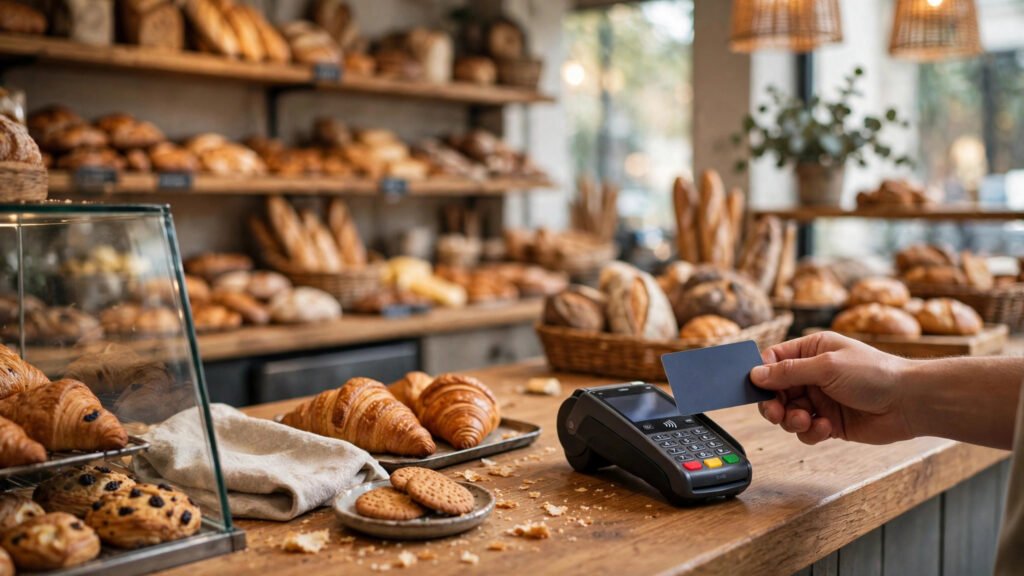
Walk into a bakery in Brussels, a frituur in Ghent or a pharmacy in Antwerp, and the payment routine is almost always the same. The customer taps a card, types a code or holds a phone near the terminal, and the payment goes through in seconds. Visitors often assume that card is a Visa or a Mastercard. In Belgium, very often, it is neither. It is Bancontact.
Bancontact is Belgium’s own debit payment system. It has been part of everyday Belgian life for decades, and it still handles a huge share of ordinary payments in shops, restaurants and online stores across the country. For many Belgians, it is simply the default way to pay — the card that came with their bank account, the button they click at checkout, and the app they open when a friend asks to split a bill.
So why has a small local system survived in a world dominated by two giant international card networks? The answer is a mix of history, cost, habit and trust.
Key Takeaways
- Bancontact is Belgium’s domestic debit system, and it comes standard with most Belgian bank accounts.
- Shops like it because it is widely accepted at home and generally cheaper for them to take than international credit cards.
- Its weakness is geography: outside Belgium, travellers usually need a co-branded card or another payment method.
What Bancontact Actually Is
Bancontact is a debit payment scheme, which means money comes straight out of the customer’s bank account. There is no credit involved and no bill at the end of the month. That distinction matters in Belgium, where many people prefer to spend money they already have rather than borrow on a credit card.
The system dates back to 1979, when it launched under the name Mister Cash. It was renamed Bancontact in the years that followed, and it grew up alongside Belgium’s banks. Because the banks themselves built and supported it, Bancontact cards were issued automatically with ordinary current accounts. Belgians did not have to apply for Bancontact the way they would apply for a credit card. It simply arrived with the account.
That early head start created a network effect that still holds today. Almost every shop terminal in Belgium accepts Bancontact, so customers can rely on it everywhere. And because customers rely on it, every shop has a reason to accept it. Breaking that loop is very hard for any newcomer.
Why Shops Prefer It
For shopkeepers, the appeal of Bancontact is practical. International credit cards charge merchants a fee on every transaction, and those fees can eat into the margin on a coffee, a loaf of bread or a bunch of flowers. Domestic debit payments are generally cheaper for the shop to accept, which is one reason small Belgian businesses have long been happy to take Bancontact while sometimes hesitating over credit cards.
There is also a cultural side to it. Belgium has a strong tradition of small, independent shops — bakers, butchers, bookshops and cafés that serve the same neighbourhoods for years. For those businesses, a payment method that is cheap, fast and familiar is worth more than a flashy new option. Bancontact fits that description.
Customers feel the same convenience. There is no separate sign-up, no new password to remember and no extra app to install just to pay for groceries. The card is already in their wallet, and the payment simply works. As with the Dutch iDEAL system next door, a home-grown payment method that arrived early and works everywhere is very hard to dislodge.
For many Belgians, Bancontact is simply the default way to pay — the card that came with their bank account, the button they click at checkout, and the app they open when a friend asks to split a bill.
From Plastic Cards to Phones
Bancontact has not stood still while payment habits changed. The physical card is still common, but contactless payment has become normal for small purchases, and the Bancontact app lets people pay with their phone, send money to contacts and scan QR codes in shops.
Its mobile payment brand, Payconiq by Bancontact, works in a similar way to other European phone-payment systems. A customer scans a code or confirms a payment in the app, and the money moves directly between bank accounts. For splitting a restaurant bill or paying a market stall, it removes the need for cash entirely — much like Poland’s BLIK system, which also grew out of local banks rather than an international card network.
Online shopping tells the same story. At the checkout of a Belgian webshop, Bancontact usually sits alongside the international options, and many shoppers pick it without thinking. It feels safer to them because it goes through their own bank, and it avoids the credit-card details and interest that some shoppers would rather not deal with.
Why Not Just Use Visa or Mastercard?
None of this means Belgians never use Visa or Mastercard. Many do, especially for travel, for large online purchases from foreign stores, or for the extra protections that credit cards can offer. The point is narrower: at home, in everyday Belgian shops, Bancontact usually wins because it is already there, already accepted and already trusted.
Trust is a big part of it. Belgians tend to trust their banks, and Bancontact is a bank product in a way that a global card brand is not. When something goes wrong, the customer deals with their own bank, in their own language, under rules they understand. That familiarity counts for a lot.
Habit counts too. Payment habits are among the hardest habits to change. People pay the way their parents paid, the way their first bank account taught them to pay, and the way every shop around them expects them to pay. Bancontact benefits from all three.
- Bancontact is a debit system — money leaves the bank account at once, with no credit involved.
- It dates back to 1979 and grew up with Belgium’s own banks.
- Shops accept it almost everywhere in Belgium, and it is generally cheaper for them than credit cards.
- The Bancontact app and Payconiq bring the same system to phones and QR payments.
- Its main limit is abroad, where co-branded cards or international cards take over.
The Limit: Leaving Belgium
Bancontact’s strength is also its weakness. It is a Belgian system, built for Belgian shops and Belgian banks. Step across the border into France, Germany or the Netherlands, and most terminals will not recognise a Bancontact-only card. That is why many Belgian banks now issue co-branded cards that carry both Bancontact and an international debit brand, such as Visa Debit or Debit Mastercard. At home, the card runs on Bancontact. Abroad, the international brand takes over.
For travellers, this is the practical lesson: Bancontact alone is not a travel card. Visitors to Belgium face the mirror image of the same problem. A foreign Visa or Mastercard usually works fine in Belgian shops, but some small Belgian businesses still prefer Bancontact, and a few may not take foreign cards at all. Carrying a little cash or a local-friendly payment option remains wise, just as it does in Switzerland, where the local TWINT system dominates everyday payments.
What to Watch Next
Bancontact is unlikely to disappear from Belgian tills any time soon, because its advantages — wide acceptance at home, low cost for shops and deep habit — are still intact. The more interesting question is how it adapts as payments move further onto phones and as European payment systems talk to each other more closely. If Belgian shoppers can one day pay a Dutch or French shop as easily as a shop in Brussels, the line between a local system and an international one will blur. Until then, the small card from a Belgian bank will keep winning the everyday payment in Belgium, one bakery, frituur and pharmacy at a time.