What the UN Chief Said on Tuesday
United Nations Secretary-General Antonio Guterres on Tuesday urged governments to strengthen women’s participation in peace negotiations, restore funding for women-led organisations, and ensure accountability for gender-based violence.
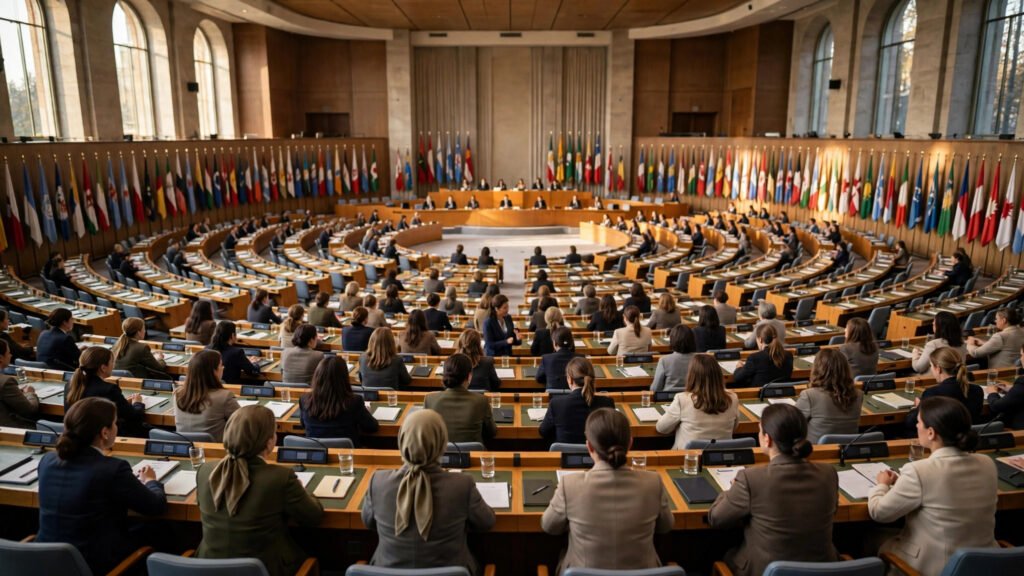
He was addressing a United Nations Security Council open debate on women, peace and security. Guterres warned that gender inequality continued to undermine peace efforts despite long-standing international commitments to women’s participation.
He cited Security Council Resolution 1325, adopted in 2000, which recognised the importance of women’s involvement in conflict prevention, resolution and peacebuilding. More than two decades on, he said, implementation has fallen short of the promise.
Key Takeaways
- Guterres urged governments to give women a meaningful role in peace negotiations, not a symbolic seat at the table.
- He set out three immediate priorities: representation in peace talks, funding for women’s organisations, and zero tolerance for violence against women and girls.
- He warned that women and girls face rising exposure to armed conflict, sexual violence, displacement and restrictions on their fundamental rights.
The Scale of Exclusion From Peace Talks
Guterres said women remained largely excluded from formal peace negotiations despite evidence that their meaningful participation could strengthen peace agreements and improve prospects for lasting stability.
Women accounted for just 5% of negotiators across 57 peace processes in 2025, he said. Fewer than one-fifth of peace agreements concluded globally that year included at least one reference to women, girls, gender or sexual violence, he added.
Those figures, presented in his address to the Security Council, frame the central argument of his intervention: peace processes that leave out half the population are weaker, and the agreements they produce are less likely to last.
He urged governments and other participants in peace processes to introduce binding targets and quotas to ensure women’s meaningful participation in negotiations. The call goes beyond inviting more women to attend talks. It asks for measurable commitments that change who negotiates, and on what terms.
Equality is not a dream. It’s a decision.
Three Immediate Priorities
Guterres outlined three immediate priorities: securing women’s representation in peace talks, increasing funding for women’s organisations in conflict-affected areas, and enforcing zero tolerance for violence against women and girls.
He called on governments to fulfil their official development assistance commitments and restore funding to organisations supporting women and girls in conflict settings, particularly those affected by forced displacement.
He also demanded full accountability for perpetrators of gender-based violence, including conflict-related sexual violence. The UN chief urged authorities to remove restrictions on female humanitarian workers and strengthen protections for those delivering aid.
- Representation: binding targets and quotas for women’s meaningful participation in peace negotiations.
- Funding: restored support for women’s organisations in conflict-affected areas, especially where displacement has cut services.
- Accountability: zero tolerance for violence against women and girls, with perpetrators held to account.
- Protection: fewer restrictions on female humanitarian workers and stronger safeguards for aid delivery.
Conflicts Where the Warning Lands Hardest
Guterres said the world was experiencing its highest number of conflicts since World War II, citing crises in the Gaza Strip, Ukraine, the Sahel, Sudan and Myanmar.
He warned that women and girls faced increasing exposure to armed conflict, sexual violence, displacement and restrictions on their fundamental rights. Women and girls also faced growing risks from explosive weapons used in densely populated areas, including in Myanmar, Sudan and the occupied Palestinian territory, he said.
The warning connects directly to ongoing efforts to end fighting through negotiation. Recent calls for Ukraine peace talks show how much still turns on who is at the table, while the Sudan conflict continues to put civilians, including women and children, in harm’s way. A separate UN report on Russia-Ukraine energy attacks has likewise underlined the civilian cost of the war.
Guterres also raised concerns about rising maternal mortality in crisis zones, disruptions to girls’ education, and attacks on women leaders, journalists and human rights defenders. Each of those pressures, he suggested, narrows the space in which women can organise, speak out, and take part in public life.
Beyond the Three Priorities
Beyond those priorities, Guterres called for stronger domestic laws addressing gender-based violence, improved economic security for women, greater support for grassroots organisations, and better collection of gender-related data.
He acknowledged that the three priorities were not the only areas where action was urgently needed. The wider agenda, as he set it out, links peace negotiations to everyday security: laws that protect women at home, incomes that give them independence, and grassroots groups that can carry their voices into formal talks.
The number of UN-verified cases of conflict-related sexual violence has sharply increased, reaching over 9,700 last year, with the actual number certain to be much higher, he said. That figure, he warned, is a floor rather than a full count, because many cases go unreported in war zones.
What to Watch Next
What happens next will turn on whether governments act on the three priorities Guterres set out: representation in peace talks, funding for women’s organisations, and zero tolerance for violence against women and girls.
Watch for binding targets or quotas in upcoming peace processes, for restored funding to organisations supporting women and girls in conflict settings, and for stronger domestic laws, economic security measures, and protection for female humanitarian workers. As Guterres put it, the test is whether commitments made in the Security Council chamber become decisions that change who negotiates peace, and who benefits from it.