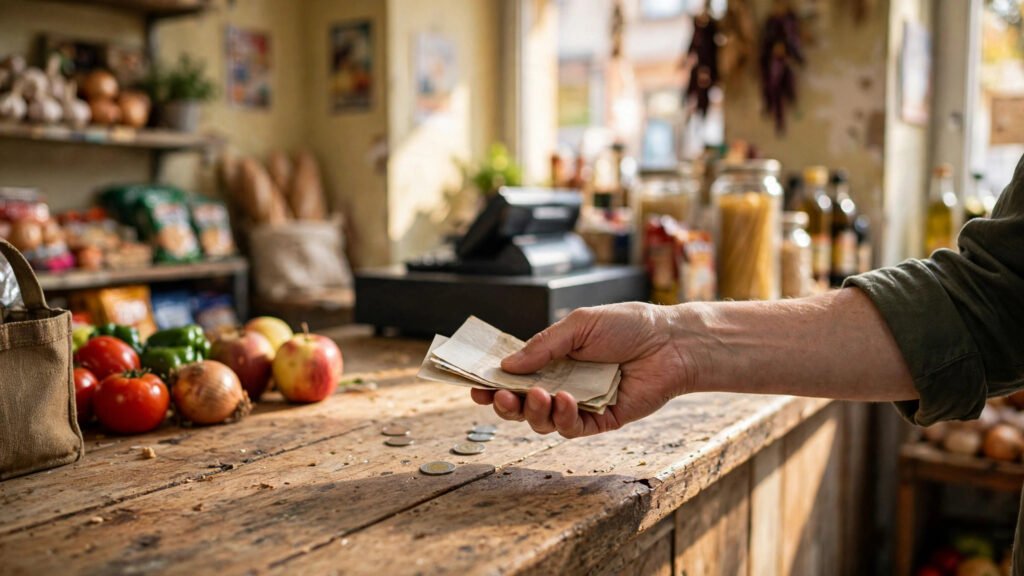
Walk into a small bakery in Budapest, a market stall in Debrecen, or a village shop anywhere in Hungary, and you may notice something that surprises visitors from more card-heavy countries: cash is still an everyday sight. Banknotes and coins change hands for bread, vegetables, coffee, and bus tickets, even though cards and phones are accepted in many larger stores. Hungary is not cut off from modern banking. It simply has a payment culture in which cash has held its ground longer than in some of its neighbours.
That habit is not about a single cause. It comes from a mix of habit, household budgeting, small-business life, and the way people learned to trust what they can hold in their hands. Understanding why Hungarians still pay cash in so many shops means looking at daily life, not just at payment technology.
Key Takeaways
- Cash remains common in Hungary’s small shops, markets, and everyday purchases, even as cards and phones grow in larger stores.
- Many people use cash to control spending, because a wallet that empties is easier to feel than a card balance.
- Cash survives because it works for everyone: no battery, no signal, and no device is needed to pay.
Cash Is Part of Everyday Shopping
For many Hungarians, cash is simply the default for small amounts. A morning coffee, a loaf of bread, or a few items from a market stall often feel too small for a card. Paying with notes and coins is quick, familiar, and finished in seconds, with no terminal to wait for and no receipt to sort out later.
Small shops play a big part in this pattern. Hungary has plenty of independent bakeries, butchers, grocers, and market traders, and in these places cash has always been the simplest way to trade. A stallholder at an open-air market does not need a card machine, a charged device, or a mobile signal to sell a kilo of apples. Cash keeps the queue moving, and it works exactly the same way whether the customer is a regular or a first-time visitor.
That is a pattern seen in other countries too, where small shops and cash go together. Readers who follow payment habits across Europe may recognise the same story in why Austrians still pay cash in many small businesses, even as digital payments spread around them.
Budgeting You Can Feel
One of the strongest reasons people give for sticking with cash is control. When money leaves a wallet, the loss is visible at once. A person who takes out a set amount for the week can see, at a glance, how much is left. For households that watch every forint, that physical limit can feel safer than a card that keeps working until a balance runs out.
Cash also makes shared spending simple. Splitting a meal with friends, giving children pocket money, or handing over money for a school collection is straightforward with notes and coins. There is no need to ask everyone to use the same app, and no need to explain a transfer to someone who does not bank on a phone.
Cash survives because it works for everyone: no battery, no signal, and no device is needed to pay.
Older Hungarians, in particular, often prefer cash because it is the system they have used all their lives. They know its value by sight and touch, and they do not need to learn a new app or remember a new password to buy groceries. That familiarity matters, and it is not a small thing: a payment method people trust is a payment method they will keep using.
Cards and Phones Are Growing, Not Replacing Cash Overnight
None of this means Hungary has rejected digital payments. Cards are widely used in supermarkets, shopping centres, petrol stations, and online shopping, and phone payments are becoming more familiar in cities. Younger Hungarians in Budapest often tap a card or phone for most purchases, and contactless payment is a normal part of city life.
But the change is uneven. A payment habit that works well in a Budapest shopping centre may not fit a rural market, a small café, or a family-run shop in the same way. In those places, cash remains practical, and shopkeepers see little reason to change a system that already works. The result is a mixed payment culture: digital in some places, cash in others, and both side by side in many.
That mix is common across Central Europe. In Poland, for example, a home-grown mobile system changed how many people pay, as explained in why Poles pay with BLIK instead of cards, while in Switzerland a shared bank-backed app took a different path, as described in why Swiss people pay with TWINT instead of cards. Hungary has no single equivalent that pushed cash aside everywhere at once, so cash has kept more of its everyday role.
Why Cash Still Feels Safe
Trust is another quiet reason. Cash does not depend on a phone battery, a network connection, or a bank’s app working at that moment. If a card terminal fails or a phone runs out of charge, cash still pays. That reliability matters at a market stall, on a bus, or in a village where a signal can be patchy.
Cash also leaves no digital trail for a simple purchase, and some people value that privacy. Buying a newspaper or a coffee with coins does not create a record in an app, and for many people that simplicity is part of the appeal. It is not about hiding anything; it is about keeping an ordinary purchase ordinary.
- Small purchases: bread, coffee, and market goods are still often paid for in cash.
- Household budgeting: a wallet makes spending visible in a way a card balance does not.
- Small businesses: markets and independent shops find cash simple, fast, and reliable.
- Access for everyone: cash needs no phone, app, signal, or password.
What Cash Means for Visitors
Visitors to Hungary should not assume that cards will work everywhere, even in a modern European capital. Larger hotels, restaurants, and supermarkets generally accept cards, but a small café, a market stall, or a rural shop may prefer cash or accept only cash. Carrying some forint notes and coins is still sensible advice, especially outside Budapest.
It is also worth remembering that Hungary uses the forint, not the euro. That alone makes cash feel more local: visitors exchange money or withdraw forint, and once they have notes in hand, spending them on small purchases feels natural.
What to Watch Next
Cash in Hungary is unlikely to vanish suddenly, but its role will keep shifting. Cards and phones are already normal in larger stores and cities, and younger shoppers are more comfortable paying digitally than older generations. Over time, that generational change may narrow the places where cash is the first choice.
At the same time, the reasons cash survives — simple budgeting, small-shop life, reliability without a device, and trust built over a lifetime — will not disappear quickly. The likeliest future is the one already visible today: cash and digital payments side by side, with cash holding on longest where purchases are small, shops are independent, and habit runs deepest.