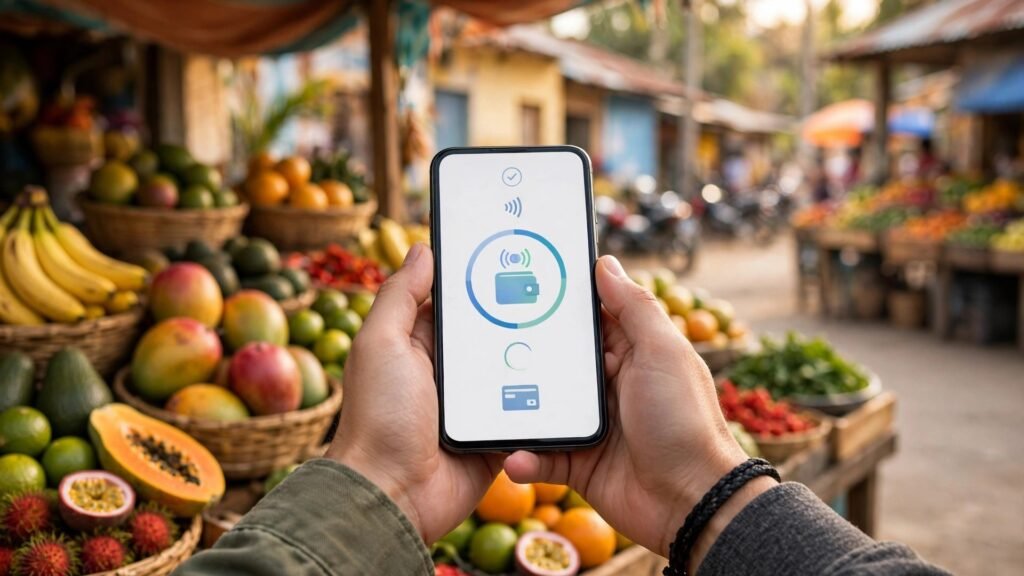
In Honduras, a phone can be a wallet even when a bank card is not in the picture. For many people, Tigo Money is the tool they reach for when they want to send money to family, pay a bill, top up a phone, or settle a small purchase. It does not replace cash everywhere, and it does not replace banks for everyone, but it fills a gap that cards never quite filled.
The question is a fair one: why would a mobile money wallet win over a bank card in a country where cards do exist? The answer is not about one feature. It is about access, habit, trust, and the way daily life actually works.
Key Takeaways
- Tigo Money lets people send money, pay bills, and top up phones from a mobile phone, without needing a bank card for every transaction.
- Its agent network and phone-based design suit people who live far from a bank branch or do not use a traditional bank account.
- Cards still matter for larger or formal purchases, but mobile money fits the small, everyday payments that dominate daily life.
What Tigo Money Actually Is
Tigo Money is a mobile money service offered through the mobile operator Tigo in Honduras. In simple terms, it turns a mobile phone account into a place to hold and move money. A user can load money into the wallet, send it to another person, pay for services, and buy airtime, often through a phone menu or an app.
That last point matters. Not every phone in Honduras is a new smartphone with a fast connection. A service that works on a basic phone, through menus and codes, reaches far more people than a service that only works inside a polished banking app. For a street vendor, a bus rider, or a worker sending money home, simplicity is not a bonus — it is the whole point.
For a street vendor, a bus rider, or a worker sending money home, simplicity is not a bonus — it is the whole point.
Why Bank Cards Never Became the Default for Everyone
Bank cards work best when a few conditions are already in place: a bank account, a card reader at the shop, a reliable connection, and a habit of paying by card. In much of daily life in Honduras, one or more of those conditions is missing. Many small shops, market stalls, and informal sellers deal in cash or in mobile payments, not in card terminals.
Opening and keeping a bank account can also feel like a bigger step than opening a mobile wallet. A bank may ask for documents, require a visit to a branch, and feel distant from everyday routines. A mobile wallet, by contrast, starts from something people already have and already use every day: a phone number and a SIM card.
That is why the comparison is not really wallet versus card in the abstract. It is wallet versus the friction of getting, carrying, and using a card for a small payment. For a coffee, a bus fare, or a phone top-up, the wallet usually wins on convenience.
The Agent Network Makes the Difference
One of the most important parts of mobile money is not the phone at all — it is the agents. Agents are local shops and kiosks where people can put cash into a wallet or take cash out of it. They turn a digital balance into something tangible, and they do it in the neighbourhood, without a trip to a bank branch.
This matters in a country where bank branches are concentrated in towns and cities, while many people live and work outside them. An agent in a local shop is close, familiar, and open at hours that suit daily life. A person can receive money from a relative, walk to a nearby agent, and use it the same day.
Trust grows through these small, repeated transactions. When a transfer arrives as expected, time after time, people keep using the service — and they tell family and neighbours about it.
Remittances and Family Support Run Through Phones
Money sent home by Hondurans living abroad is a major part of household income for many families. Mobile money fits naturally into that flow. A relative abroad can send money, and the recipient can receive it on a phone, check the balance, and decide whether to keep it in the wallet, pay a bill directly, or withdraw cash from an agent.
This is a pattern seen across the region, where phones have become the first stop for money sent from abroad. In neighbouring Guatemala, for example, families receive money from abroad on their phones in much the same way, because the phone is already the device everyone checks first.
Small Payments, Everyday Life
Most payments in daily life are small. A top-up here, a bill there, a transfer to a relative, a payment to a small seller. Mobile money is built for exactly this scale. Sending a small amount does not require a card, a terminal, or a formal checkout — it requires a phone number and a few taps or menu steps.
That also makes it useful for people who run small businesses. A seller can accept a mobile payment without buying a card machine, and a buyer does not need to carry exact change. The payment leaves a record on the phone, which is more useful than a purely cash transaction when someone wants to check what they spent.
- Works on basic phones as well as smartphones, through menus and agents.
- Turns a phone number into a way to send, receive, and store money.
- Local agents make cash-in and cash-out possible close to home.
- Fits small, everyday payments better than a card terminal does.
Where Cards Still Have a Role
None of this means cards are useless in Honduras. Cards remain useful for larger purchases, for online shopping, for travel, and for anyone whose income and spending already run through a bank. Some employers pay into bank accounts, and some formal businesses prefer card payments. The two systems overlap, and many people use both depending on the situation.
The point is about defaults. For formal, larger, or bank-linked spending, a card may be the natural choice. For quick, small, person-to-person payments, the phone wallet is often the default — and defaults are shaped by what is easiest, not by what is most advanced.
Other countries in the region show the same pattern in different forms. In Costa Rica, people send money with SINPE Móvil instead of cash, while in El Salvador the debate has been very different, after El Salvador made Bitcoin legal tender. The tools differ, but the underlying story is similar: people adopt the payment method that fits their phones, their shops, and their daily routines.
What Could Change the Balance
Several things could shift the balance between wallets and cards over time. More card terminals in small shops would help cards. Easier bank accounts and lower barriers to formal banking would help too. Better mobile coverage and cheaper data would help both wallets and banking apps.
At the same time, mobile money services keep adding features — bill payments, merchant payments, and links to other services — which makes the wallet useful in more situations. The winner is unlikely to be a single tool. The more likely future is a mix, where wallets handle small and person-to-person payments, and cards and bank transfers handle larger and more formal ones.
What to Watch Next
Watch whether more small shops start accepting both mobile payments and cards, and whether banks and mobile operators build closer links between wallets and bank accounts. Watch too whether remittance flows continue to land first on phones, and whether new features make the wallet useful for savings or larger payments. The balance between Tigo Money and bank cards will not be decided by one launch or one rule — it will be decided, transaction by transaction, by what Hondurans find easiest to use every day.