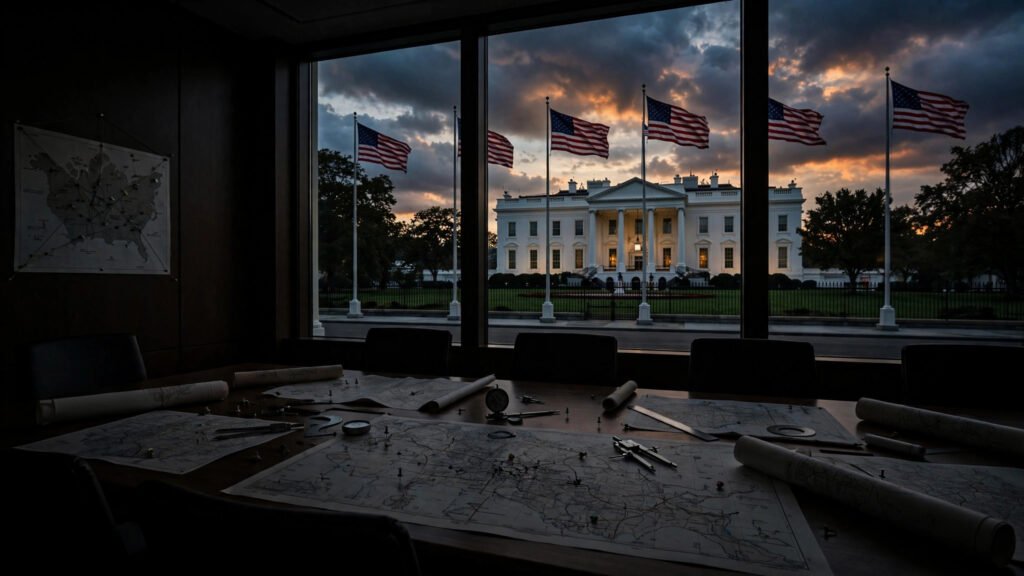
The top United States commander in the Middle East briefed President Donald Trump on Thursday on military options for Iran, in a rare in-person visit to the White House as Washington weighs resuming major combat operations, the Wall Street Journal reported, citing United States officials and other people with direct knowledge of the meeting.
The briefing was delivered by Admiral Brad Cooper, who heads United States Central Command, the command responsible for American military operations across the Middle East. He was joined by Defence Secretary Pete Hegseth and Joint Chiefs of Staff Chairman General Dan Caine, along with other cabinet members, according to the report.
Key Takeaways
- Admiral Brad Cooper, the head of United States Central Command, briefed President Trump in person at the White House on Thursday on military options for Iran, the Wall Street Journal reported.
- Defence Secretary Pete Hegseth and Joint Chiefs Chairman General Dan Caine joined the meeting, which also covered the continuing United States blockade.
- The report describes a briefing on options; it does not report a decision to launch a new campaign.
A Rare In-Person Briefing
Cooper rarely briefs Trump in person, so the meeting could signal that the US is moving closer to significant military operations. His previous in-person meeting with the president took place in July, when the two met with Hegseth and Caine on Air Force One in Delaware, according to the report.
The White House gathering followed a session on Wednesday in which the military officers met with Vice President JD Vance, one person familiar with the discussions said. The Thursday meeting covered other topics as well, including the continuing United States blockade, some of the people said.
Cooper rarely briefs Trump in person, so the meeting could signal that the US is moving closer to significant military operations.
A Pentagon spokesperson and a spokesperson for United States Central Command declined to comment, the Journal reported. The White House discussions come as some lawmakers have expressed alarm that Trump could soon renew hostilities with Tehran, after United States and Israeli strikes earlier this year.
What the Pentagon Has Moved Into Place
The Pentagon has laid the groundwork for a fresh bombing campaign in recent weeks, sending additional air defences, munitions and supplies to the Middle East, according to the report. A live news blog on Friday also noted increased United States air defences, munitions and troop repositioning across the region as the administration considers its next move.
Trump officials have told Arab Gulf states to be prepared for a short, intense campaign after the midterm elections, the Journal has previously reported. That warning, reported separately, is part of the same unsettled picture: military planning is advancing while diplomacy has not produced a lasting settlement.
- Admiral Brad Cooper heads United States Central Command, which oversees American military operations in the Middle East.
- The Thursday White House meeting included Defence Secretary Pete Hegseth and Joint Chiefs Chairman General Dan Caine.
- A Wednesday session with Vice President JD Vance preceded the briefing to the president.
- The Pentagon has recently sent additional air defences, munitions and supplies to the Middle East.
- Spokespeople for the Pentagon and Central Command declined to comment on the meeting.
Iran’s Warned Response
Iran has threatened publicly and in private diplomatic communications to attack a broad array of United States and Gulf country targets in the region in response to any United States strike, according to the report. Tehran has also resumed making ballistic missiles using stockpiled components in underground facilities and ramped up efforts to target United States personnel in the Middle East, the report said.
Those threats are one reason the briefing matters beyond the meeting room. Any renewed campaign would land in a region where American forces, Gulf allies and shipping routes are all within reach of retaliation, and where private diplomatic communications have so far not produced a settlement. At the same time, the administration is weighing other fronts where it has pressed for pauses in fighting, including Ukraine’s reported pause in strikes on Russian refineries amid renewed efforts to revive peace talks.
For now, what is confirmed is the meeting itself and the preparations around it, not an outcome. The report presents the briefing as part of a decision still being weighed, with military options on the table and diplomatic channels still open, even as the risk of miscalculation grows with each public warning.
What to Watch Next
What to watch next is whether the briefing leads to a decision after the midterm elections, whether Gulf states’ preparations signal a campaign that is getting closer, and whether Iran’s threats of retaliation change the calculations in Washington. The other tests are whether the continuing blockade and the Pentagon’s buildup stay as pressure or turn into action, and whether private diplomacy produces a settlement before military options move from the briefing room to the battlefield. Until those questions are answered, the meeting stands as a sign of how seriously the option of renewed strikes is being weighed, and how high the stakes of that choice have become.