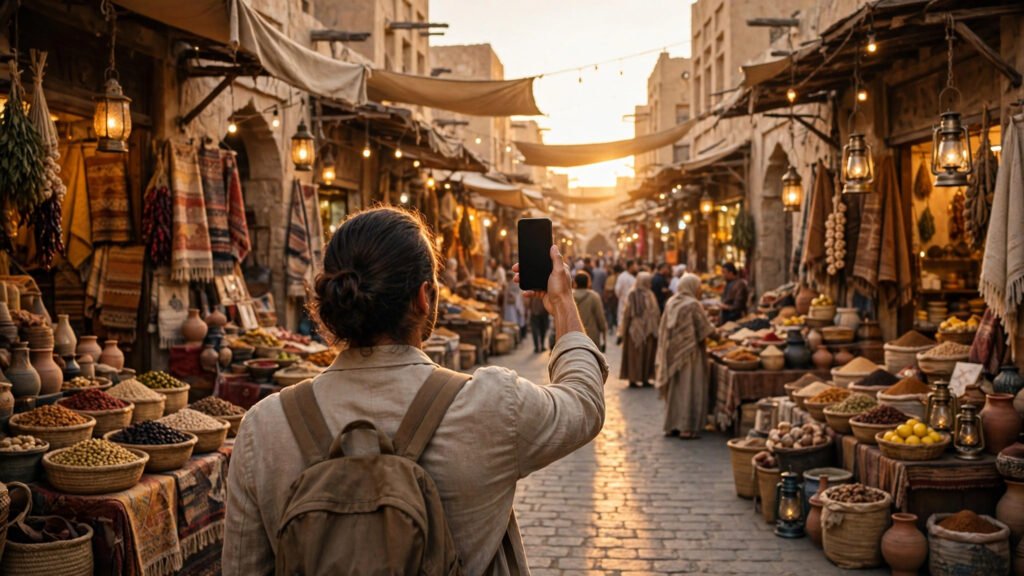
For many Syrians, the phone is not just a device for calls and photos. It is the link between family members living in different cities and different countries, the way money is arranged and collected, and one of the main ways people follow what is happening around them. When travel is difficult, banks are hard to reach, or relatives live far away, a small screen often carries a large part of daily life.
This is not only about technology. It is about distance. Syria has a large diaspora, and many families have members in neighbouring countries, in Europe, and elsewhere in the world. At the same time, many people inside Syria live away from the town or village where they grew up. The phone helps bridge that gap in a practical, everyday way, even when other systems are slow or hard to use.
Key Takeaways
- For many Syrians, a phone links family members across cities and countries.
- Money, messages and news often travel through the phone when other routes are difficult.
- The phone helps with daily life, but it cannot replace stable power, connectivity and access to cash.
Why Money Often Arrives Through a Phone
One of the most important jobs of the phone is helping families handle money. A relative working abroad may send support home, and the people receiving it often need a simple way to know that the transfer has been arranged, where it can be collected, and what steps are needed to receive it. A call or a message can confirm those details far faster than a letter or a visit.
In many cases, the phone is used to coordinate rather than to move the money itself. The sender and the receiver agree on a time, a place, and the information the collection point will ask for. That coordination matters, because a missed message can mean a wasted journey, and a clear message can save hours of travel and waiting.
Cash still plays a large role in daily spending, so the phone does not replace cash for most people. Instead, it sits alongside it. Someone may receive help through a transfer service and then spend it in cash at a market, a pharmacy, or a shop. The phone helps organise that chain, from the first message to the final purchase.
That pattern is familiar across the region, where cash still matters for many everyday payments even as mobile wallets grow. The details differ from place to place, but the basic idea is the same: people use the tools that are actually available to them, and they combine old and new methods to get things done.
Staying in Touch Across Distance
Family contact is the second reason the phone matters so much. Voice calls, video calls, voice notes and text messages let parents, children, siblings and grandparents stay part of each other’s lives even when they cannot meet in person. A short video call can carry far more than a written update: it shows a face, a home, a new baby, or a meal being prepared.
For families separated by borders, messaging apps have become a kind of living room. Groups for extended family share birthdays, exam results, health news and everyday photos. They also share practical information, such as which shops are open, which roads are busy, or when a relative plans to visit.
This contact is emotional as well as practical. Hearing a familiar voice can ease worry, especially when news from a region is uncertain. At the same time, the phone can bring difficult news quickly, and families often have to manage both the comfort and the stress of being constantly connected.
News, Safety Information and Daily Decisions
The phone is also a news source. Many Syrians follow local and international news on their phones, through news websites, social media, and messages shared by friends and family. That habit helps people make daily decisions, from travel plans to shopping, school, and work.
Information does not always arrive in a neat or verified form. A message forwarded many times may be incomplete, out of date, or simply wrong. For that reason, many people learn to compare what they read with what trusted relatives, local contacts, or well-known news sources say. The phone makes information fast, but it does not automatically make it reliable.
Connectivity itself can be uneven. Mobile internet can be slow or costly in parts of the region, and similar problems with signal, power, and cost affect people in Syria too. When the network is weak, a simple text message may get through where a video call cannot, and people adapt by choosing the lightest option that works.
When travel is difficult, banks are hard to reach, or relatives live far away, a small screen often carries a large part of daily life.
What the Phone Helps With Every Day
Beyond money, family contact and news, the phone supports many smaller tasks. It holds contact numbers, photos, and documents. It helps people find work, arrange transport, check prices, and keep in touch with employers, teachers, and customers. For small traders and freelancers, a phone can be a shop window, a diary, and a payment coordinator all at once.
Young people often use phones for study and learning as well, watching lessons, reading material, and sharing notes with classmates. Older relatives may use the phone more narrowly, mainly for calls and family messages, but that narrower use is no less important. The device adapts to the person, not the other way around.
- Money transfers are often arranged and confirmed by phone before cash is collected.
- Family groups keep relatives involved in birthdays, health news and everyday decisions.
- News and local updates on the phone help people plan travel, shopping and work.
- When signal is weak, short messages often work where video calls cannot.
- Cash remains important, so the phone usually supports cash rather than replacing it.
What the Phone Cannot Solve
It is easy to overstate what a phone can do. A phone cannot create a stable electricity supply, repair a damaged network, or guarantee that a transfer service will be open when it is needed. It cannot replace a bank account for everyone, and it cannot make every service available in every town.
Cost is another limit. A phone, a charger, and regular credit or data all cost money, and for families under pressure those costs compete with food, rent, medicine, and school expenses. People therefore make choices: they may share a device within a household, use free messaging where possible, or keep calls short.
Privacy and safety also matter. Phones hold personal photos, messages, and financial details, so losing a device or sharing it carelessly can create problems. Many people learn simple habits, such as keeping important numbers written down elsewhere and being careful about what they share in large groups.
Neighbouring countries show similar trade-offs. In Jordan, for example, instant bank transfers through a phone have become a familiar way to move money, but that kind of system still depends on bank access, working networks, and trust in the service. No single app or device removes those underlying needs.
What to Watch Next
For Syrians, the phone is likely to remain central to money, family contact and news, because it answers a simple need: staying connected when distance makes meeting in person difficult. The most useful changes will be the practical ones, such as steadier connectivity, more affordable access, and simpler ways to arrange and collect support.
At the same time, cash will continue to matter, family messages will continue to carry both comfort and worry, and news on the phone will still need careful checking. The phone helps Syrians manage distance, but daily life still depends on power, networks, services, and the people on the other end of the call.