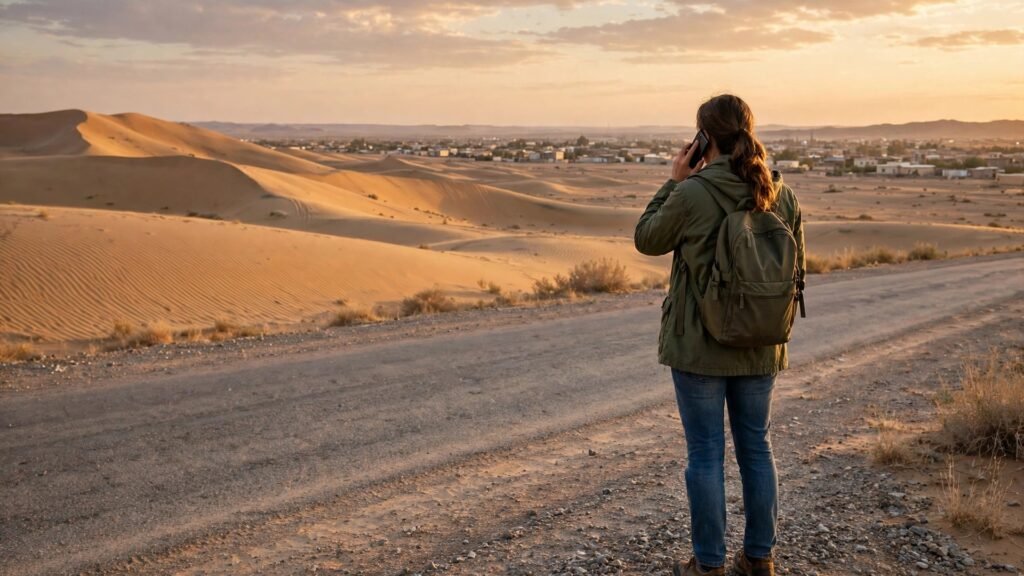
Turkmenistan is a country of long distances. Towns and villages are spread across a vast landscape, much of it desert, and a journey to see family can take hours on the road. For many Turkmen families, that distance is simply part of life — and the phone is what keeps them close despite it.
When a son moves to the capital for work, when a daughter leaves for study, or when grandparents stay in the village while the rest of the family lives in the city, the phone becomes the family meeting place. It carries the morning greeting, the evening check-in, and the news that cannot wait for the next visit.
This is why the question matters far beyond technology. For Turkmen families, staying in touch by phone is not about owning the newest device. It is about holding a family together across a country where the next town can feel a long way off.
Key Takeaways
- Long distances between towns and villages make the phone the everyday link between Turkmen families.
- Voice calls still come first for many families, with messages, photos and video calls adding to the conversation.
- The phone helps families share news, check on elders, support children away from home, and plan travel and work.
Distance Is Part of Daily Life
Turkmenistan stretches across a large area, and its desert landscape shapes how people live and travel. A family may have relatives in the capital, Ashgabat, in a regional city, and in a village far from either. Visiting everyone in person takes time, planning and a long road trip, so visits happen when they can — and the phone fills the days in between.
That is the first reason the phone matters so much here. It turns a distance that would otherwise mean silence into a daily conversation. A short call in the morning can tell a mother that her son arrived safely. A message in the evening can tell a father that the harvest, the journey or the working day went well. Without the phone, these small updates would have to wait for the next visit, and family news would travel slowly.
Neighbours in Central Asia face similar questions about distance and connection, and phones have become part of the answer across the region. In Mongolia, for example, people bank and handle daily life on their phones across wide open steppe country, where towns can also be far apart.
The Phone Call Still Comes First
For many Turkmen families, the voice call remains the heart of staying in touch. A call carries tone, warmth and reassurance in a way that a short written message cannot. Parents can hear whether a child sounds tired or happy. Grandparents can hear a grandchild’s voice even when the child lives far away.
Calls also suit the rhythm of family life. They can be short and practical — confirming a travel plan, asking after someone’s health, or passing on news from a relative. Or they can be long and unhurried, the kind of conversation that used to happen only around a table at home. In a country where the next town can be a long journey away, a phone call can close the distance in seconds.
The habit is practical as well as personal. When a journey is being planned, a call can confirm the time, the meeting place and who is travelling. When weather or road conditions change a plan, a call spreads the news quickly. The phone, in this sense, is not just a way to chat — it is a tool for running family life across distance.
Messages, Photos and Video Calls
Alongside calls, messages have become part of the daily routine. A short message can say what a call does not need to: that someone has arrived, that a parcel is on its way, or that dinner will be ready when a traveller reaches home. Messages can be read when the other person is free, which suits working days and different schedules.
Photos add another layer. A picture of a newborn, a new home, a family meal or a desert sunset can travel from one end of the country to the other in moments. For relatives who cannot visit often, these images keep them part of everyday moments rather than only the big occasions. Video calls go one step further, letting grandparents see a grandchild’s face and letting children show their parents a new room, a school or a workplace.
Messaging apps have become central to this kind of daily contact in the wider region too. In Uzbekistan, for instance, messaging apps now carry much of everyday communication, showing how one app on a phone can become a family’s main meeting place.
Keeping Elders and Children Connected
The phone matters most, perhaps, at the two ends of family life. Older relatives often stay in the place they have always lived, while younger family members move for work or study. The phone lets the younger generation check in regularly, ask after health, and share news without waiting for a visit. For an elder living alone or with only part of the family nearby, a daily call can be a real comfort.
Children away from home benefit in the same way. A student in another city can call home after classes, share a worry, or ask for advice. Parents can follow a child’s progress and offer support from far away. The phone does not replace a visit home, but it softens the distance, especially in the first months away, when homesickness is strongest.
Family news also travels through the phone in both directions. Good news — a birth, a graduation, a new job — is shared quickly. Difficult news is shared gently, by voice, so that relatives can respond with care rather than learning about it late. In a spread-out family, the phone is often the first place where the whole family hears the same news together.
Travel, Work and Study Across the Country
Work and study pull Turkmen families in different directions. Jobs may be in one city, a university in another, and the family home somewhere else entirely. The phone helps coordinate all of it: confirming travel, arranging pick-ups, sending documents or directions, and keeping everyone informed when plans change.
It also helps families support each other economically and practically from a distance. A relative can be told what is needed, where to find it, or when to expect a delivery. A family member travelling across the desert can stay in contact along the way, checking in at stops and letting others know they have arrived safely. These are small uses, but added together they make a spread-out life workable.
Across Central Asia, phones now carry more of daily life than calls alone. In Kyrgyzstan, for example, people pay and manage money on their phones, showing how neighbours in Central Asia have built everyday routines around the device in their pocket.
- Distance, not just technology, explains why the phone matters so much to Turkmen families.
- Voice calls carry warmth and reassurance that short messages cannot.
- Messages, photos and video calls keep distant relatives part of everyday moments.
- The phone helps families check on elders, support children away from home, and coordinate travel and work.
In a country where the next town can be a long journey away, a phone call can close the distance in seconds.
What to Watch Next
The pattern described here is unlikely to change soon: as long as Turkmen families live spread across a vast desert country, the phone will remain their everyday link. Calls will keep carrying the warmth of a family conversation, messages and photos will keep sharing the small moments, and video calls will keep grandparents close to grandchildren far away.
What will keep evolving is how much of daily life the phone carries — from coordinating travel and work to sharing family news the moment it happens. For Turkmen families, the phone is already more than a device. It is the thread that holds the family together across the distance.