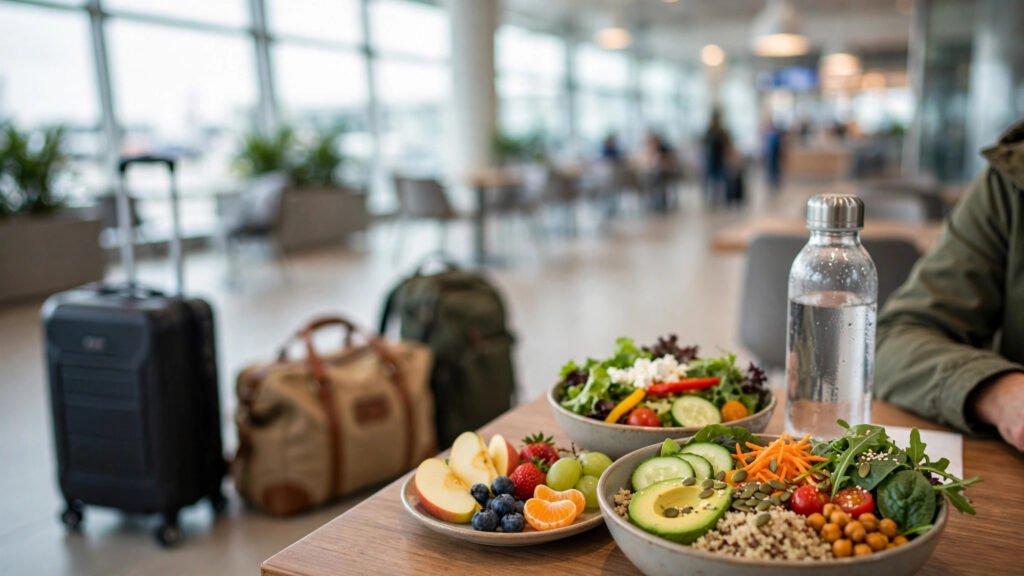
Learning how to eat healthy while traveling does not mean giving up good food or carrying a suitcase full of salads. It means making a few planned choices so that busy travel days do not turn into days of skipped meals, sugary snacks, and heavy dinners. Travel changes your routine, your sleep, and your access to familiar food, and that is exactly why a simple plan helps more than strict rules.
Healthy eating on the road is mostly about balance across the whole trip, not perfection at one meal. One rich dinner does not ruin a trip, just as one salad does not fix a week of rushed eating. When you plan breakfast, carry a snack, and choose one balanced meal a day, the rest of the trip becomes much easier to enjoy.
Key Takeaways
- Planning one balanced meal a day and carrying a simple snack prevents most rushed, unhealthy travel choices.
- At restaurants, adding vegetables and choosing grilled or baked options keeps a meal satisfying without feeling heavy.
- Drinking enough water and treating local food as part of the trip, not a problem, makes healthy travel eating sustainable.
Plan Before You Leave Home
A short plan before you leave saves more effort than any decision made at an airport counter. Think about where you will eat on the first day, especially if you arrive late, and keep one easy option in mind for breakfast. A hotel breakfast, a nearby bakery with fruit and yoghurt, or a small grocery stop can all work, as long as you are not searching while hungry.
It also helps to think in terms of a balanced plate: some vegetables or fruit, a protein food such as eggs, beans, chicken, or yoghurt, a wholegrain or starchy food, and a drink. You do not need to measure portions on holiday. Using that simple picture at most meals is enough to keep things steady without turning every meal into a calculation.
Pack Snacks That Travel Well
Snacks are where many trips go off track, because travel days are long and food is often only available in small, expensive portions. Packing a few snacks before you leave gives you a buffer between meals. Nuts, dried fruit, oat bars, crackers, and fresh fruit that does not bruise easily are practical choices for bags and day trips.
Keep snacks simple and portable, and avoid anything that needs refrigeration unless you have a cool bag. A snack is not meant to replace lunch, but it stops the kind of deep hunger that leads to grabbing the first fast food available. For longer days, packing lunch in advance works just as well as it does at home, and the same ideas in meal prep for the work week can be adapted to a travel day with a sandwich, fruit, and water.
Healthy eating on the road is mostly about balance across the whole trip, not perfection at one meal.
Choose Balanced Meals at Restaurants
Restaurants are part of traveling, and they should stay enjoyable. A useful approach is to look for one vegetable or salad item first, then build the rest of the meal around it. Grilled, baked, or steamed dishes are usually lighter than fried ones, and asking for sauce on the side lets you control how much you use without changing the dish completely.
Portions at restaurants are often larger than at home, and sharing a starter or a dessert is a simple way to enjoy local food without overeating. If a meal is very rich, balance it with a lighter meal later in the day rather than skipping food altogether. Skipping meals often leads to stronger hunger later, which makes the next choice harder, not easier.
- Start with vegetables or salad when they are available.
- Choose grilled, baked, or steamed dishes more often than fried ones.
- Ask for sauces and dressings on the side.
- Share large portions, starters, or desserts when they are generous.
- Balance a rich meal with a lighter one later, instead of skipping meals.
Stay Hydrated and Watch Hidden Sugar
Thirst is easy to mistake for hunger on a travel day, especially in warm weather or after a long flight. Carrying a refillable water bottle and drinking regularly helps you stay alert and makes snack choices calmer. The habit of drinking more water every day is even more useful when your routine changes, because you cannot rely on the same cues as at home.
Sweet drinks are another quiet source of extra sugar on trips. Juices, sweetened coffees, and fizzy drinks can add up quickly across a day of sightseeing. Water, unsweetened tea, or sparkling water are easy swaps most of the time, while a sweet drink can still be enjoyed occasionally as a treat rather than the default with every meal.
Enjoy Local Food Without an All-or-Nothing Rule
Trying local food is one of the best parts of travel, and a healthy approach should leave room for it. Instead of labelling whole cuisines as good or bad, enjoy the dishes you travelled to try, and balance them with simpler meals around them. A street-food lunch followed by a vegetable soup or a salad dinner is a normal, balanced travel day, not a failure.
It also helps to eat slowly when you can. Travel meals are often rushed between sights or transport, but even a few extra minutes at the table helps you notice fullness and enjoy the food more. If you feel full, stopping is fine, even if food remains. You are not obliged to finish a large portion just because it was served.
What to Watch Next
Eating healthy while traveling comes down to the same simple habits repeated across the trip: plan one balanced meal a day, carry a snack, choose vegetables and lighter cooking methods when you can, drink water regularly, and enjoy local food without an all-or-nothing rule. No single meal decides the trip, and a flexible plan beats a strict one every time. Pack your snacks, keep water close, and let good food be part of the journey, not a worry on top of it.