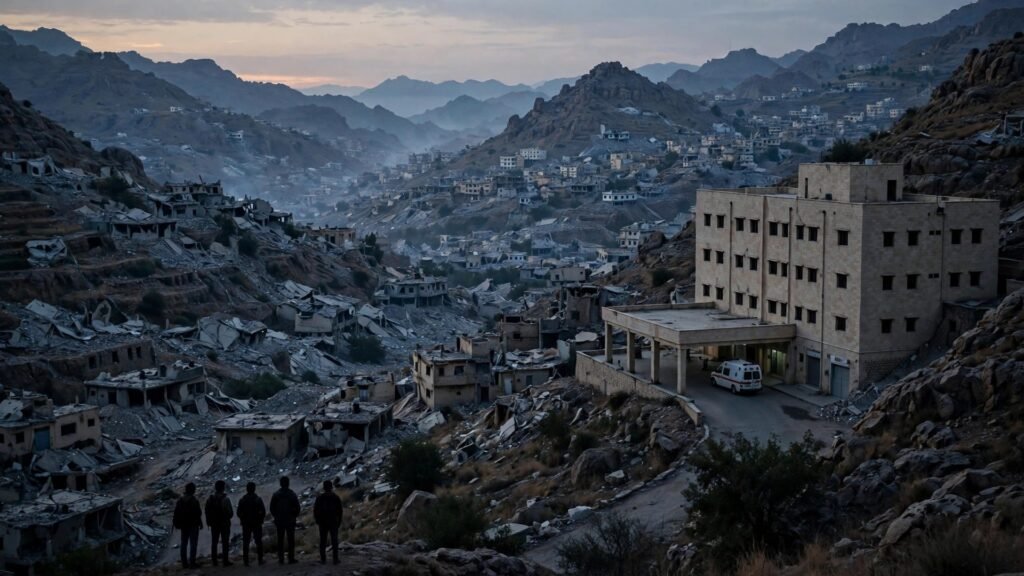
Hospitals in Yemen are buckling under a surge of war wounded as fighting escalates in and around the besieged city of Taiz, with medical staff warning that a healthcare system already weakened by years of war is now at breaking point. According to the Red Cross, hospitals near Yemen’s front lines are treating up to 700 war wounded in a single week, while shortages of medicine, oxygen, surgical gloves, anaesthetic and fuel are making even basic care difficult.
The warning, reported by Reuters from Taiz on October 29, puts a human face on a conflict that has intensified in recent weeks between the Saudi-backed government and the Iran-aligned Houthi movement. The United Nations and aid agencies say health needs in Taiz are critical, and that the city has been largely isolated since October 3, with fighting preventing humanitarian supplies from entering and civilians from leaving.
Key Takeaways
- Hospitals near Yemen’s front lines are treating up to 700 war wounded in a single week, according to the Red Cross.
- Taiz has been largely isolated since October 3, with fighting blocking humanitarian supplies and trapping civilians.
- More than 40% of hospitals and healthcare facilities across Yemen were already closed or only partially functioning before the latest fighting.
One Patient in Taiz Shows the Human Cost
In a hospital in Taiz, a 25-year-old pregnant mother of two lay immobilised after a bullet lodged in her spine while she was trapped inside her home without food or water for two days. The woman, Amal al-Sabri, said she was injured by a sniper bullet in the village of al-Shaqb, perched on the slopes of Mount Sabir overlooking Taiz, as fighting escalated around the city.
Medics at Al-Thawra hospital in Taiz said they could not perform a scan because she was over four months pregnant. Her case illustrates a wider problem facing doctors in the city: injuries are arriving faster than the supplies and equipment needed to treat them, and the choices available to medical staff are narrowed by shortages and by the risks of moving patients through front-line areas.
Patients are arriving at hospitals with gunshot wounds and complex blast injuries, according to the Red Cross. Taiz, Marib and the Red Sea coast are seeing some of the highest casualties in the current escalation, a pattern that reflects where fighting is heaviest and where civilians have the fewest safe routes out.
The healthcare system across Yemen is at a breaking point.
A System Already Weakened by Years of War
Even before the latest fighting, more than 40% of hospitals and healthcare facilities across Yemen were already either closed or partially functioning following years of protracted conflict, according to the Red Cross. That baseline matters because it means the current surge is hitting facilities that were already short of staff, equipment and medicines.
Red Cross spokesperson Hachem Osseiran said the healthcare system across Yemen is at a breaking point. The shortages described by aid agencies are not limited to one item: medicine, oxygen, surgical gloves, anaesthetic and fuel are all reported to be in short supply in Taiz, and fuel shortages in particular affect ambulances, generators and the cold storage that hospitals rely on.
The strain is not confined to Taiz alone. Hospitals near front lines across the country are facing large influxes of patients, and the combination of new injuries, disrupted supply routes and a depleted health workforce leaves little margin when fighting intensifies suddenly.
Medical Facilities Under Attack
Medical care itself has also come under fire. A hospital in Taiz’s Sabir Al-Mawadim district was hit by mortar fragments for the second time this month, according to the United Nations. A strike on an ambulance killed its driver and a paramedic, the UN said.
Attacks on hospitals and ambulances do more than damage buildings and vehicles. They deter patients from seeking care, force medical teams to move or suspend services, and break the fragile transport links that carry the wounded from front-line villages to larger hospitals. In a city that is already largely isolated, each damaged facility narrows the options that remain.
The wider regional picture adds to the pressure. Diplomacy over Yemen and the Strait of Hormuz has continued alongside the fighting, as covered in our report on Erdogan’s offer to help revive talks on Hormuz and Yemen, while shipping risks in the Strait of Hormuz remain high after a tanker was attacked with explosives. The Houthi movement has also warned other countries against joining the fighting, as reported in our coverage of the Houthis calling Egypt’s military support for Saudi Arabia a declaration of war.
- Hospitals near Yemen’s front lines are treating up to 700 war wounded in a single week, according to the Red Cross.
- Taiz governorate hosts about half of the 281,000 people newly displaced in Yemen since the start of August.
- Taiz has been largely isolated since October 3, with fighting blocking supplies and civilian movement.
- More than 40% of Yemen’s hospitals and healthcare facilities were already closed or partially functioning.
- A hospital in Sabir Al-Mawadim was hit by mortar fragments for the second time this month, the UN said.
- A strike on an ambulance killed its driver and a paramedic, according to the UN.
Displacement Adds to the Pressure
Taiz governorate hosts about half of the 281,000 people who have been newly displaced in Yemen since the start of August. Displacement on that scale puts further pressure on hospitals, because newly arrived families often need care after fleeing fighting, and because crowded temporary shelter increases the risk of disease and makes follow-up treatment harder.
For civilians still inside Taiz, the isolation since October 3 has meant that leaving is dangerous and staying is difficult. Humanitarian supplies have struggled to enter, and the same fighting that blocks aid also blocks the movement of patients who need treatment beyond what a front-line hospital can provide.
Aid agencies have described health needs in the besieged city as critical. That assessment covers not only the war wounded but also pregnant women, children and people with chronic conditions whose regular treatment is interrupted when clinics close, medicines run out or travel becomes unsafe.
What to Watch Next
What to watch next is whether humanitarian supplies can reach Taiz again and whether hospitals there can restock medicine, oxygen, surgical gloves, anaesthetic and fuel. The other questions are whether the isolation of Taiz eases enough for civilians to leave safely, whether medical facilities and ambulances are spared further attacks, and whether the surge of up to 700 war wounded a week near the front lines slows or continues. Until those questions are answered, Yemen’s hospitals will remain under the strain described by the Red Cross: a system at breaking point, treating the wounded of an escalating war with supplies that are already running short.