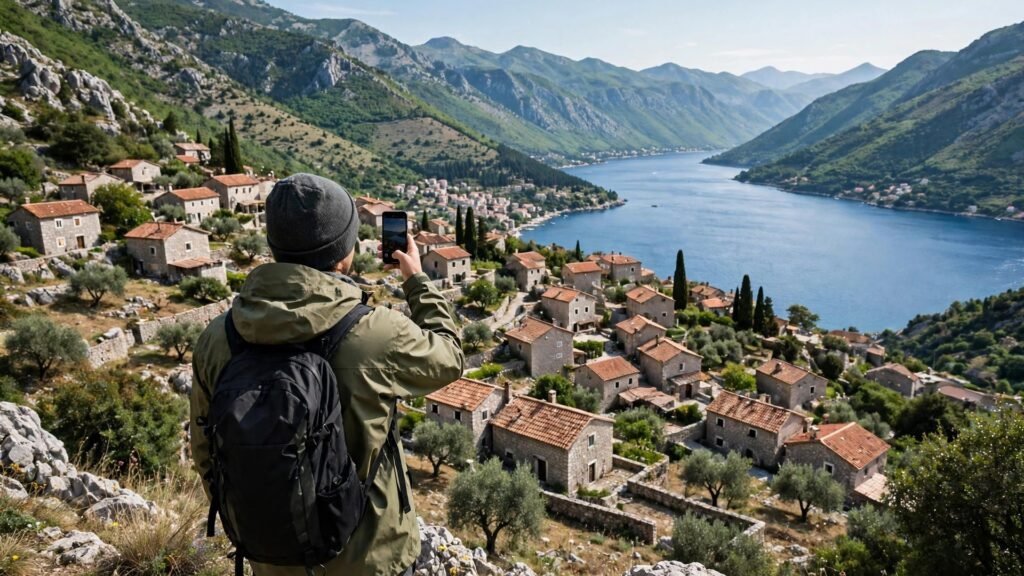
Montenegro is a small country with a dramatic shape: steep mountains inland, narrow valleys in between, and a short but busy Adriatic coast. A family can live in a mountain village, work in a coastal town during the summer, and have relatives living abroad. In that kind of geography, the phone has become more than a gadget. For many Montenegrins, it is the thread that holds everyday life together.
So why do Montenegrins use their phones to stay connected across mountains and coast? The short answer is distance: the phone shrinks journeys that are long, winding, and sometimes slow, and it keeps people in touch even when work, family, and home are in different places. A message, a call, or a photo can cross a mountain pass in seconds, while the road itself can take much longer.
Key Takeaways
- Montenegro’s mountains, valleys, and coast put distance between homes, jobs, and family members.
- The phone bridges that distance, carrying calls, messages, photos, and everyday arrangements.
- For seasonal workers, students, and families with relatives abroad, the phone is often the main way of staying in daily contact.
A Country Shaped by Distance
Look at a map of Montenegro and the challenge becomes clear. Settlements are scattered through mountainous terrain, and the road from one valley to the next often climbs, curves, and descends before it reaches its destination. The coast, with its ports and tourist towns, feels like a different world from the quieter interior, even though the country itself is small.
That shape affects daily life in practical ways. A person may live in one town and work in another. A student may study away from home. A grandparent may live in a village while children and grandchildren live by the sea, or in another country altogether. Visiting is not always a quick trip, especially in winter, when mountain weather can make travel slower and less predictable.
The phone does not remove those distances, but it changes what they mean. A journey that cannot happen today does not have to mean silence today. A call in the evening, a photo of a grandchild, or a short message about tomorrow’s plans can keep a family feeling close, even when its members are far apart.
Family First: The Main Reason Phones Matter
For many Montenegrins, the phone’s most important job is family. Montenegro has a large diaspora, with many people living and working abroad, and many families spread between the interior, the coast, and other countries. In that situation, staying in touch is not a luxury; it is part of family life.
Messaging apps and video calls have changed what that contact looks like. A parent working abroad can see a child’s school drawing the same day it is made. A grandmother in a mountain village can join a birthday by video, even if she cannot travel to it. A brother and sister in different towns can sort out a family matter in a few messages instead of waiting for a visit.
These small, frequent contacts add up. They keep people informed about health, work, school, and everyday news, and they keep relationships warm between visits. The phone becomes a kind of daily meeting place, one that fits into a lunch break, a bus ride, or a quiet evening at home.
A message, a call, or a photo can cross a mountain pass in seconds, while the road itself can take much longer.
Work That Moves With the Seasons
Montenegro’s working year also moves. The coast comes alive in the summer tourist season, when hotels, restaurants, and guesthouses need extra hands, while the quieter months look very different. Many people take seasonal work on the coast, then return inland when the season ends.
For seasonal workers, the phone is a work tool as much as a personal one. It carries job offers, shift changes, and messages from employers. It lets a worker check in with family back home, send news, and arrange travel. When work is temporary and locations change, the phone number often stays the same, even as the workplace does not.
Small businesses feel this too. A guesthouse owner on the coast, a driver, or a craft seller in a mountain town can answer enquiries, confirm bookings, and stay in touch with customers through the phone. In places where a shopfront is small or seasonal, the phone can act as the front door.
- Calls and messages keep mountain villages, coastal towns, and relatives abroad in daily contact.
- Video calls let family members share birthdays, school news, and everyday moments from a distance.
- Seasonal workers use the phone to find work, arrange shifts, and stay in touch with home.
- Small coastal and mountain businesses use the phone to answer customers and confirm bookings.
News, Weather, and Everyday Arrangements
Beyond family and work, the phone carries the practical information of everyday life. Weather matters more than usual in a mountainous country: a forecast can decide whether a journey is sensible, whether outdoor work goes ahead, or whether a coastal trip is worth making. News travels fast on the phone, and local announcements, transport changes, and community notices can reach people wherever they are.
Everyday arrangements also run through the phone. Meeting a friend, confirming a doctor’s visit, checking a bus time, or arranging a lift all happen more easily when everyone can be reached at once. In a village where neighbours are scattered along a valley, a group message can do the work of many separate visits.
For younger Montenegrins, the phone is also where much of social life happens. Friendships formed at school or university continue online when people move for work or study, and shared photos, jokes, and plans keep those friendships active across the same mountains and coastline.
Why Neighbours Tell a Similar Story
Montenegro is not alone in the Balkans in leaning on the phone for everyday life, although each neighbour leans in a different way. In Albania, many people still pay cash instead of cards, showing that a phone habit in one area does not mean the same habit everywhere. In Serbia, instant bank transfers have become a common phone-based way to pay, while in Croatia, the Keks Pay app has found its own place in daily payments.
The comparison is useful because it shows that technology follows local needs. In Montenegro, the most visible need is connection itself: closing the gap between a mountain home, a coastal job, and a family member abroad. Payments and other services matter too, but the first job of the phone here is simply keeping people together.
What the Phone Cannot Replace
For all its usefulness, the phone has limits, and Montenegrins know them. A video call is not a visit, and a message cannot replace sitting together for a meal. Mountain weather, patchy signal in remote spots, and the simple need to be present in person all remind people that the phone is a bridge, not a destination.
There is also a balance to keep. A phone that is always on can blur the line between work and rest, especially for seasonal workers whose employers can reach them at any hour. Many people manage this by choosing when to answer, keeping family time separate, and treating the phone as a tool that serves the day rather than running it.
Used that way, the phone earns its place. It does not flatten Montenegro’s mountains or shorten its coastline, but it makes the distance between them easier to live with.
What to Watch Next
The question now is how this phone-centred way of life keeps evolving. As services, messaging, and everyday arrangements move further onto the phone, the link between mountain villages, coastal towns, and relatives abroad is likely to grow even closer. At the same time, the value of an in-person visit, a shared meal, and a walk through a home village will remain. The phone will keep doing what it does best in Montenegro: carrying voices, photos, and plans across mountains and coast, so that distance does not have to mean distance from each other.