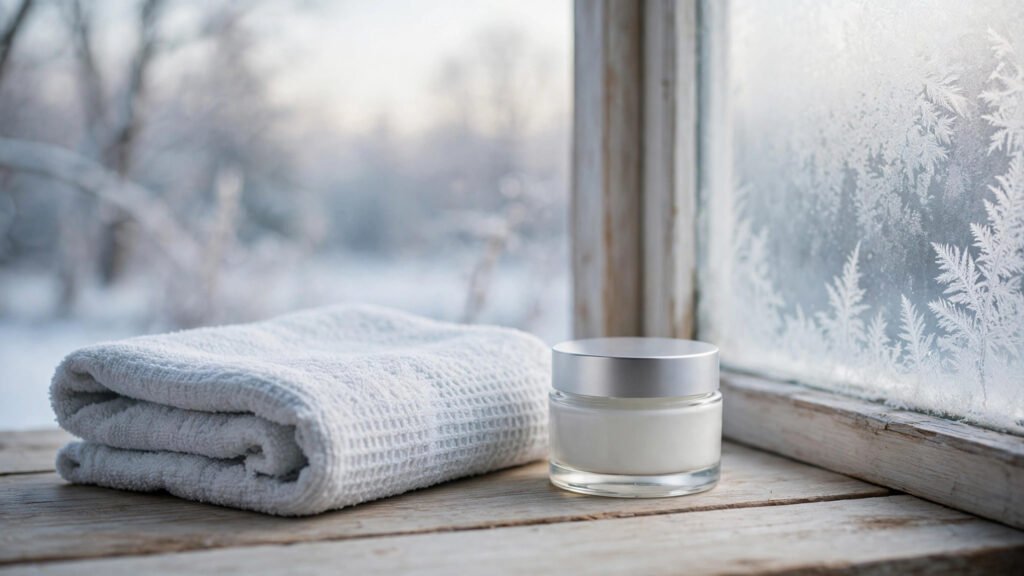
A simple winter skin care routine does not need a shelf full of products or a long list of steps. When cold air outside meets warm, dry air inside, many people notice their skin feels tighter, drier, or more easily irritated. The good news is that a few steady habits, repeated every day, usually matter more than any single product.
This guide keeps things practical. It explains why winter feels harder on skin, outlines a short morning and evening routine, and shares small habits that help skin stay comfortable through the cold months. It is general information only, not medical advice, and anyone with a lasting or worsening skin problem should speak to a clinician.
Key Takeaways
- Winter skin care works best when the routine is short, gentle, and done every day.
- Gentle cleansing, a daily moisturiser, and sun protection on bright days cover the basics.
- Small habits — lukewarm showers, soft towels, and lip care — help dry skin feel more comfortable.
Why Cold Weather Changes How Skin Feels
Cold air holds less moisture than warm air, and indoor heating can dry the air further. Moving between the two several times a day can leave skin feeling tight after washing, or rough on hands, cheeks, and shins. Wind adds another layer, especially on exposed skin during a walk or a wait at a bus stop.
Hot showers and harsh cleansers can make the feeling worse, because they strip away the skin’s natural oils. That does not mean winter skin needs heavy treatment. It usually needs a gentler approach: less scrubbing, less very hot water, and a moisturiser applied while skin is still slightly damp.
A Simple Winter Skin Care Routine That Fits Real Life
A winter skin care routine should fit into a normal morning, not take over it. Start with a gentle cleanser, or plain lukewarm water if skin feels very dry in the morning. Pat skin dry with a soft towel instead of rubbing, then apply moisturiser. On bright winter days, including days with snow on the ground, add sun protection for time outdoors, since winter sun and reflected light still reach exposed skin.
In the evening, cleanse away the day, moisturise again, and pay extra attention to hands and lips, which often dry out first. In winter, a good routine is usually a shorter one, done every day, rather than a long one done only once in a while.
In winter, a good routine is usually a shorter one, done every day, rather than a long one done only once in a while.
Morning and Evening: Keep It Short
A workable morning routine has three steps: cleanse gently, moisturise, and protect exposed skin before going out. Keep products simple and unscented if scented products tend to irritate your skin. If a product stings or leaves redness that does not settle, stop using it and go back to the basics for a few days.
The evening routine can be almost the same, with one extra step for comfort: a richer moisturiser or a hand cream before bed, and lip balm kept by the bedside. A regular night routine helps the whole body rest, and a simple night routine for better sleep can make the evening wind-down feel calmer too. Looking after yourself in the cold months is a wider habit as well, from supporting your immune system in winter to staying hydrated without plain water when cold weather makes plain water less appealing.
Small Winter Habits That Help Dry Skin
Beyond cleansing and moisturising, everyday choices make a real difference. These are easy to add one at a time, without changing the whole day:
- Use lukewarm water for washing and showers, and keep showers shorter when skin feels dry.
- Apply moisturiser within a few minutes of washing, while skin is still slightly damp.
- Wear gloves outdoors and a scarf over the lower face on windy days.
- Keep lip balm in a coat pocket, since lips dry out quickly in cold wind.
- Choose soft, breathable fabrics against skin, and wash new woollen items before wearing them for long periods.
What to Avoid When Skin Feels Tight or Dry
When skin already feels tight, strong scrubs, frequent exfoliating products, and very hot water tend to make it feel worse. It is also worth avoiding the temptation to add many new products at once. If something causes a reaction, it is much harder to work out which product was responsible when five new ones started on the same day.
Instead, change one thing at a time and give it a week or two. If dryness improves, keep the change. If it does not, try the next simple adjustment. Patience matters more in winter than variety, because skin often needs time to settle after a change in weather or routine.
What to Watch Next
A winter skin care routine works when it stays short, gentle, and regular: gentle cleansing, daily moisturiser, protection on bright days, and small habits such as lukewarm showers, gloves, and lip care. Avoid harsh scrubbing and too many new products at once, and give each change time to help. With that steady approach, cold weather becomes something skin can cope with, rather than a season to dread.