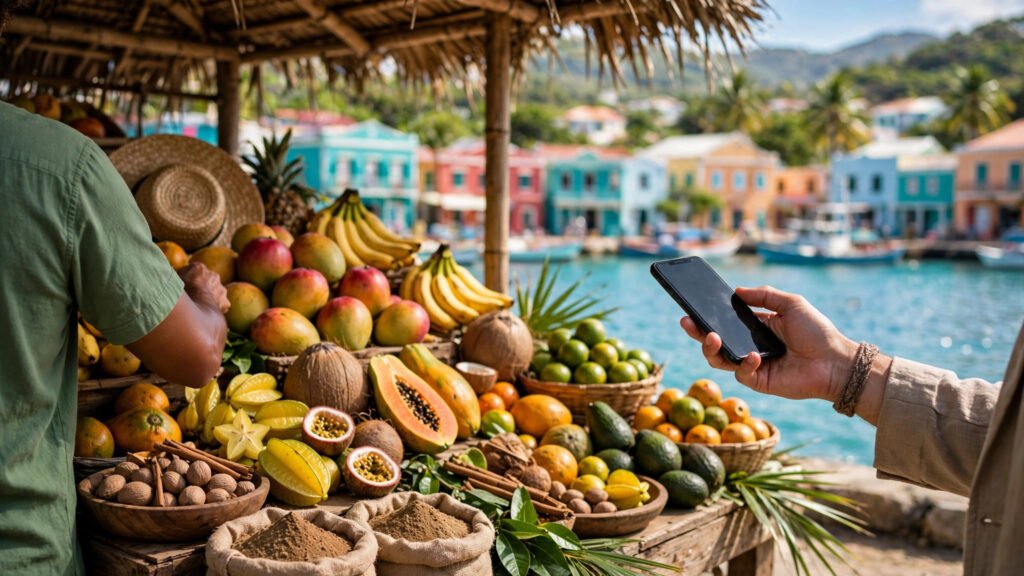
Ask a Grenadian how they pay for groceries, a bus ride, or a phone top-up, and the answer will often still be cash. Yet for a time, people in Grenada also had something unusual in their pockets: a digital version of the Eastern Caribbean dollar, called DCash, that lived on a phone. It was not a private cryptocurrency and it was not a bank app alone. It was issued by the region’s central bank, and Grenada was one of the small island economies where it was tried out.
So why did Grenadians get a digital dollar at all, when cash already worked? The short answer is that island life makes money harder to move than it looks. Banks and cash machines are not always close by, sending money between islands can be slow, and a hurricane can shut down the usual ways of paying. DCash was an attempt to answer those very practical problems with a phone-based form of money that people could use even when the normal system was under strain.
- DCash was a digital form of the Eastern Caribbean dollar, issued by the Eastern Caribbean Central Bank, and tried in Grenada and other member countries.
- It was designed for phone payments, so people could pay and send money without always handling cash or visiting a bank.
- Cash habits, phone and internet access, and merchant acceptance shaped how far a digital dollar could go in everyday island life.
What DCash Actually Was
DCash was a central bank digital currency, which is a simpler idea than it sounds. The Eastern Caribbean dollar already existed as notes, coins, and bank balances. DCash was that same currency in a digital wallet on a phone. A person could hold it, pay a shopkeeper with it, or send it to another person, much like handing over cash, except that the transfer happened through a phone.
The key difference from a private payment app was who stood behind it. Because it came from the Eastern Caribbean Central Bank, DCash was central bank money rather than a balance held only by a company. For people who trusted the currency itself, that backing mattered. It also meant the project was about the payment system of a whole currency area, not just one bank’s customers.
Grenada was a natural place to try this. It is a small island state where many people live outside the main town, where visitors arrive by air and sea, and where family and business ties run across the Caribbean. A payment method that works on an ordinary phone, without a trip to a bank branch, fits that geography better than a system that assumes everyone lives near a branch.
A payment method that works on an ordinary phone, without a trip to a bank branch, fits that geography better than a system that assumes everyone lives near a branch.
Why an Island Economy Wanted a Phone-Based Dollar
The first reason was access. In a small island economy, not everyone has a bank account, and not every village has a bank branch or a cash machine that is always working. A phone wallet lowers that barrier. If a person has a phone and a wallet, they can receive money, store it, and spend it without first travelling to town.
The second reason was cost and speed. Moving physical cash around islands is expensive and slow. Notes have to be printed, shipped, stored, and guarded. Small payments in cash also create change problems and security risks for shopkeepers. A digital payment can move from one phone to another in moments, which helps market vendors, taxi drivers, and small shops that handle many small sales each day.
The third reason was resilience. Grenada knows what a major storm can do to roads, power, and communications. No digital system is storm-proof, and a phone payment still needs a charged phone and a connection. But a wallet that does not depend on carrying cash can be one more option when banks are closed and cash machines are empty, as long as the basic network is working.
There was also a regional reason. Grenada shares its currency with other members of the Eastern Caribbean Currency Union. A digital dollar that works across that group could make it easier to pay and send money between islands, rather than treating each island’s payment habits as a separate problem.
How People Used It in Everyday Life
In practice, DCash worked like other phone wallets. A user signed up through an approved provider, loaded value into the wallet, and then paid by scanning or sending to another wallet. A shopkeeper who accepted it could take a payment without handling notes and coins, and a customer did not need a bank card to pay.
For families, that kind of wallet had an obvious use: sending small amounts of money quickly. For small businesses, it offered a record of sales that cash does not leave behind. For people who sell at markets or run guesthouses, a phone payment could also mean less cash kept on the premises at the end of the day.
- Phone wallets cut the need for a trip to a bank branch for everyday payments.
- Digital transfers leave a record, which helps small sellers track what they earned.
- Island geography makes phone-based money more useful than in places where banks are on every corner.
- Cash still matters, because not every seller accepts digital payments and not every phone is always connected.
Why Cash Did Not Disappear
Despite the idea, cash did not vanish in Grenada, and that is not surprising. Many people prefer cash because it works without a phone, without a signal, and without learning a new system. Older residents, in particular, may trust notes they can see and count more than a balance on a screen.
Merchants also needed a reason to change. A shopkeeper who accepts a new payment method needs customers who use it, equipment or a phone setup that works, and confidence that the money will arrive. If only a few customers pay digitally, the effort can feel larger than the benefit. That chicken-and-egg problem affects every new payment system, and it is sharper in a small market.
Access to phones and the internet mattered too. A digital wallet helps most where phones and mobile data are reliable and affordable. Where a signal drops, a battery dies, or data is costly, cash remains the fallback that always works. Any digital money in Grenada therefore had to live alongside cash, not replace it overnight.
Trust was the last piece. People adopt a new form of money when they believe it will be accepted tomorrow, when something goes wrong there is help, and when their money is safe. A central bank’s name helps with that trust, but everyday experience matters more: a payment that fails, a wallet that is hard to recover, or a shop that refuses it can undo confidence quickly.
What DCash Showed the Rest of the Caribbean
Whatever the long-term fate of any single pilot, the Grenada experience showed something useful for other island economies. Small states can test new payment technology without waiting for a large country to do it first. They can also learn, in real conditions, where a digital currency helps and where it does not.
The lessons were practical rather than dramatic. A digital dollar needs merchants as much as customers, it needs simple sign-up and recovery when a phone is lost, and it needs to work in places where connectivity is uneven. It also needs a clear answer to a basic question: what does this do that cash and existing bank apps do not already do for this person, in this village, today?
That is why Grenada’s story is worth explaining beyond the island. Other Caribbean countries have tried their own digital currency ideas, such as the Bahamas with its Sand Dollar, and larger countries are still debating what a digital version of their currency should look like. Grenada’s trial added a small-island view to that debate: usefulness, not novelty, decides whether people keep using a new form of money.
What to Watch Next
What happens next for digital money in Grenada will depend on the same practical tests that shaped DCash. Watch whether merchants accept phone wallets more widely, whether sign-up and support become simpler for people who are less comfortable with technology, and whether digital payments keep working when storms and outages strain the island. Cash is unlikely to disappear soon, but a phone wallet that is easy, trusted, and accepted could still earn a lasting place beside it. The real test is not whether a digital dollar can be built, but whether Grenadians find it worth using in everyday life.
For readers in other small island states, the Grenada example is a reminder to judge any new payment option by everyday use: does it reach people outside the main town, does it work when the network is weak, and does it make a market vendor’s day easier? If the answer is yes, a digital dollar has a future. If not, cash will keep doing the job it has always done.
Related reading: learn how the Bahamas launched its own island digital currency in why the Bahamas launched the Sand Dollar, how Barbadians rely on their phones during hurricane season, and how Gabonese pay with Airtel Money and Moov Money instead of cash.