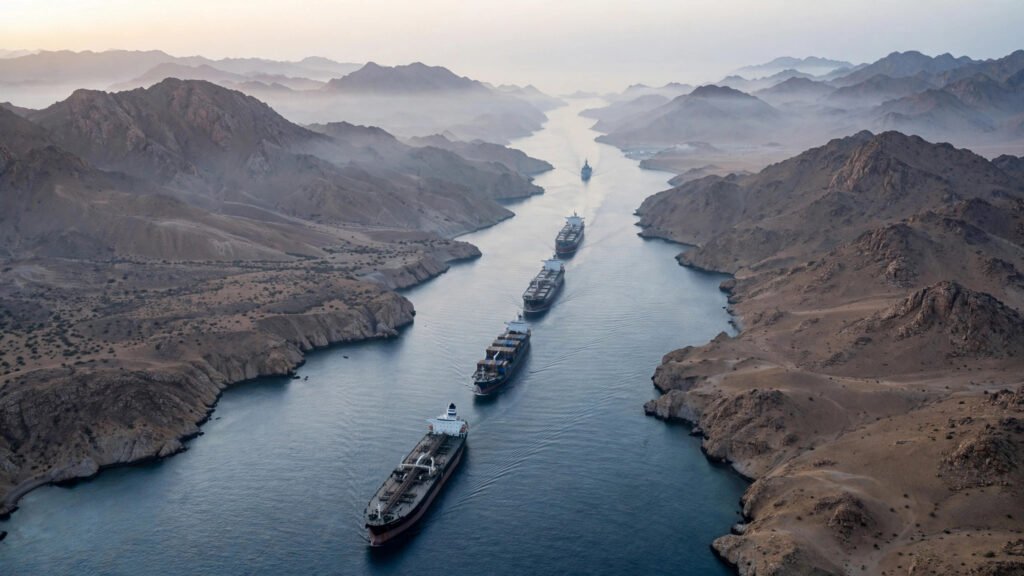
The United States Central Command says the primary shipping routes through the Strait of Hormuz have been cleared of Iranian sea mines and that commercial vessels are now transiting the strategic waterway freely. CENTCOM commander Admiral Brad Cooper made the claim in a video update released on Friday, October 30, after flying over the strait himself earlier in the week and meeting the forces behind the mine-clearance mission.
Key Takeaways
- CENTCOM commander Admiral Brad Cooper says the primary internationally recognised transit routes through the Strait of Hormuz are free and clear of Iranian sea mines.
- CENTCOM says more than 3,000 commercial vessels have transited the strait with its support over the past six months, and more than 95 per cent of ships in recent months passed through safely.
- Iran’s Revolutionary Guards dispute the claim, saying three tankers struck mines on an unauthorised southern route and warning crews not to rely on CENTCOM’s assurances.
Cooper said he visited the strait on October 25, flying over the waterway in a US Army CH-47 Chinook helicopter to observe operations. He said he saw dozens of merchant vessels transiting unimpeded, carrying cargo, crude oil and liquefied natural gas, alongside US assets in the air and on the water, including a squadron of advanced sea drones on patrol. He also said he saw no presence from Iran’s Islamic Revolutionary Guard Corps, which he said had patrolled the strait for decades.
What CENTCOM Says It Cleared
The claim covers the primary internationally recognised transit routes, not every stretch of water in the Gulf. That distinction matters, and CENTCOM’s own wording keeps it in place: the routes it describes as cleared are the recognised lanes that commercial shipping is directed to use. US forces say Navy divers and SEALs, backed by Army, Air Force, Marine and Navy air support, carried out the clearance of mines laid by the Revolutionary Guards, with the mission first announced in late August.
CENTCOM had already set out its position in a statement on X on October 28, rejecting Iranian media reports that commercial vessels were striking sea mines in the strait. The command called those reports false and said that all internationally recognised primary transit routes through the Strait of Hormuz had been cleared of sea mines by US forces and remained so, adding that thousands of commercial vessels had safely used the transit lanes and continued to do so.
Today, primary transit routes in the Strait of Hormuz remain free and clear of Iranian sea mines thanks to incredible efforts by our people.
Cooper summed up the position in his update, saying: “Today, primary transit routes in the Strait of Hormuz remain free and clear of Iranian sea mines thanks to incredible efforts by our people.” His update added two further figures that frame the scale of the operation. He said US forces had assisted Gulf partners in exporting more than 1.5 billion barrels of crude oil since the summer, and that more than 95 per cent of ships navigating the strait in recent months had sailed through safely despite what CENTCOM described as aggression by the Revolutionary Guards.
- Admiral Brad Cooper says primary transit routes in the Strait of Hormuz are free and clear of Iranian sea mines.
- CENTCOM says more than 3,000 commercial vessels transited the strait with its support over the past six months.
- Cooper flew over the strait on October 25 and reported dozens of merchant vessels transiting unimpeded, with no Revolutionary Guards presence visible.
- CENTCOM rejected Iranian media reports of ships hitting mines as false in an October 28 statement.
- Iran’s Revolutionary Guards say three tankers struck mines on an unauthorised southern route and warn the route remains mined.
Iran Disputes the Claim
Iran’s Revolutionary Guards Navy has pushed back directly. On Thursday it said three oil tankers exploded and caught fire after striking naval mines while attempting to cross an unauthorised southern route through the strait, having disregarded warnings from Iranian naval forces and switched off their radar and navigation systems. The Guards said the southern route remains mined and warned shipowners and crews against attempting passage in disregard of its instructions or relying on statements from US Central Command.
The two accounts cannot both be complete, and the public record does not yet settle the gap between them. CENTCOM’s clearance claim concerns the primary recognised routes, while the Revolutionary Guards’ mine claim concerns an unauthorised southern route that it says vessels should not be using. That leaves open whether the incidents Iran describes happened outside the cleared lanes, and whether independent verification of either account will follow. What is not in dispute is that both sides are now issuing public warnings to shipping, and that crews must weigh competing claims before choosing a route.
The dispute follows a week of competing maritime claims in the region. Iran previously said three oil tankers caught fire after hitting mines in the strait, and Oman said its navy rescued 25 sailors from a burning merchant ship in the Gulf of Oman after it was targeted. The latest CENTCOM statement is best read against that background: an effort to reassure commercial shipping that the main lanes are open, issued while incidents and disputed claims continue around them.
Why the Strait Matters for Oil and Trade
The Strait of Hormuz is one of the world’s most important oil chokepoints, normally carrying about a fifth of global oil consumption, and it has been restricted since the war between the United States, Israel and Iran began on February 28. US Energy Information Administration figures cited in reporting show oil flows through the strait falling from 21.6 million barrels per day in the fourth quarter of 2025 to 4.9 million barrels per day in the second quarter of 2026, but those are historical quarterly figures, not a measurement of current October traffic, and they should not be read as today’s flow rate.
Even with cleared primary lanes, the strait is not back to normal. A British maritime security agency report documented a container ship struck by an unidentified projectile while transiting Hormuz, a reminder that mine clearance and broader maritime security are different things. Insurers, shipowners and energy traders will therefore watch not only whether vessels keep transiting, but whether incidents stop, whether either side produces evidence for its claims, and whether the blockade that has restricted traffic since February begins to ease.
Diplomacy may decide that question sooner than naval operations. Reporting this week has described a draft framework that would reportedly propose uranium transfer and Hormuz reopening, which would put the strait’s future at the centre of any settlement. Until such a framework is agreed, the waterway remains a place where military claims, commercial risk and diplomacy collide on the same shipping lanes.
What to Watch Next
What to watch next is whether CENTCOM or independent maritime agencies publish evidence for the clearance of the primary routes, whether Iran produces evidence for its claim that three tankers struck mines on the unauthorised southern route, and whether commercial vessels continue to transit the recognised lanes without incident. The other tests are whether the dispute over the southern route leads to further warnings or incidents, whether oil flows through the strait recover from their sharply reduced quarterly levels, and whether the reported draft framework on uranium and Hormuz reopening moves from proposal to agreement. Until those questions are answered, the strait stays open on CENTCOM’s account, contested on Iran’s, and closely watched by everyone who ships through it.