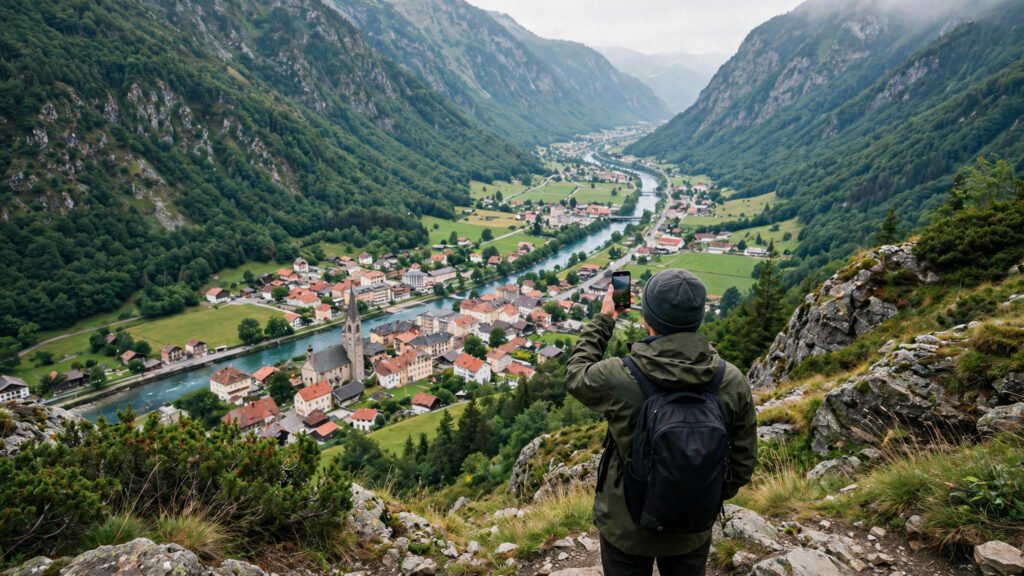
Liechtenstein is a small Alpine principality tucked between Switzerland and Austria, and daily life there rarely stops at its borders. People live in one country, work or study in another, and shop, visit family, or catch a bus across a border that takes only minutes to cross. In a place this connected, the phone has become the tool that holds the day together.
So why do Liechtensteiners run so much of daily life on their phones? The answer lies in the country’s size, its position, and its habits: a small home market, close neighbours on both sides, and services that have moved online. The phone is where banking, timetables, messages, and news meet — and in a country where the next town may be in another country, that matters more than it does in most places.
Key Takeaways
- Liechtenstein sits between Switzerland and Austria, so work, school, shopping, and family life often cross a border during an ordinary day.
- Phones bring together banking, transport timetables, messages, and local services in one place, which suits a small country with close neighbours.
- The same phone also keeps mountain villages, valley towns, and people living abroad in touch with home.
A Country You Can Cross in a Short Drive
Liechtenstein is one of the smallest countries in the world, a narrow strip of Rhine valley and Alpine slopes. Its towns and villages sit close together, and the borders with Switzerland to the west and Austria to the east are part of everyday geography rather than distant lines on a map.
That closeness shapes how people plan a day. A morning might start in a village in the mountains, continue with work in Vaduz, the capital, and end with shopping or a visit to friends just across the border. Phones make that kind of day easy to organise: a message confirms a meeting, a map checks the route, and a timetable shows the next bus.
Small countries often depend on their neighbours for things a larger country provides at home, from specialist shops to larger hospitals and universities. In Liechtenstein, the phone is the bridge to those services — a way to book, check, and stay in touch without making a separate trip for every small task.
Banking and Bills on a Small Screen
Banking is a large part of Liechtenstein’s economy, and everyday banking has moved firmly onto the phone. People check balances, pay bills, and move money between accounts from an app, rather than visiting a branch for routine tasks. In a country where branches are few and distances are short, the app still wins on convenience — it is open when the branch is closed, and it travels with its owner.
The same habit covers ordinary payments. Splitting a meal, paying a club fee, or sending money to a family member can all be done from the phone, and receipts and records stay in one place. Across the border, neighbours have built their own phone-payment habits too: the Swiss pay with TWINT instead of cards or cash for many everyday purchases, while Austrians still pay cash for a surprising share of daily spending. Liechtensteiners, living between the two habits, often switch between them depending on which side of the border they are on.
For a small, open economy, that flexibility matters. The phone does not replace cash or cards entirely, but it gives people one more way to pay, and one place to keep track of it all.
Crossing the Border Every Day
Cross-border life is normal in Liechtenstein. Many people who live in the principality work in Switzerland or Austria, and many people who live in those countries come into Liechtenstein to work. School runs, deliveries, and family visits cross the same borders in both directions.
Phones smooth out the friction of that routine:
- Work messages: Shifts, meetings, and last-minute changes arrive by message, so a commuter can adjust before leaving home.
- Two networks, one phone: A phone that works on both sides of the border keeps the same number and the same contacts, wherever the day takes its owner.
- Family contact: Relatives who have moved away for study or work stay in daily touch through calls and messages, not only on special occasions.
- Local news: Road works, weather warnings, and event notices reach people wherever they are, not only when they pass a noticeboard.
In a larger country, a commute might mean a long train ride within one system. In Liechtenstein, the commute often means crossing into another country before breakfast — and the phone is what makes that feel ordinary rather than complicated.
In Liechtenstein, the commute often means crossing into another country before breakfast — and the phone is what makes that feel ordinary rather than complicated.
Buses, Timetables and Small-Town Services
Public transport in a small country runs on tight timetables, and phones carry those timetables in a pocket. Checking the next bus, planning a connection, or seeing whether a service is delayed is a quick glance rather than a trip to a station. For villages in the mountains, where services are less frequent, that check can decide whether to leave now or wait.
The same logic applies to other small-town services. Booking an appointment, ordering from a local shop, checking opening hours, or signing up for a club event can all happen from the phone. Small countries do not always have an app for everything, but the combination of a website, a message, and a call covers most daily needs — and it saves a journey for every small question.
Other small European countries have taken similar paths in their own ways: Luxembourg made its public transport free, changing how residents think about getting around. Liechtenstein’s answer is less about one big policy and more about the everyday habit of checking, booking, and confirming from the phone.
Language and Staying in Touch
German is the everyday language of Liechtenstein, but daily life brings other languages into play: English at work, and the languages of neighbouring regions and of the many people who have moved to the country from elsewhere. Phones help people switch between these worlds, with messages, translation tools, and calls that keep conversations going across languages and borders.
That matters for families spread across countries. A Liechtensteiner studying abroad, working in Zurich, or visiting relatives in Austria can stay part of family life at home through group chats, photos, and video calls. In a small country, where many people know each other, those threads of contact are part of the social fabric, not an extra.
Mountain Weather and Outdoor Life
Liechtenstein’s mountains are part of its identity, and phones play a practical role outdoors too. Walkers and skiers check weather forecasts before heading up, and mountain conditions can change quickly with height and season. A phone carries the forecast, the map, and a way to call for help — three things that matter more on a mountain path than they do on a city street.
At the same time, the phone records the outdoor life that many residents value: photos from a valley walk, a route shared with friends, or a message arranging the next outing. The device that organises the working week also organises the weekend.
What to Watch Next
Liechtensteiners run daily life on their phones because their lives cross borders, juggle two neighbours’ habits, and depend on small, well-timed services. Banking, timetables, messages, and news all fit in one device, and that device travels with its owner from a mountain village to a workplace across the border and back again.
What comes next is likely to be more of the same, done more smoothly: more services available online, more payments and bookings from the phone, and more ways for a small country to stay connected to its neighbours without losing its own character. The phone will not make Liechtenstein bigger, but it will keep making its small size feel like an advantage — everything close, everyone reachable, and the border just another part of the day.