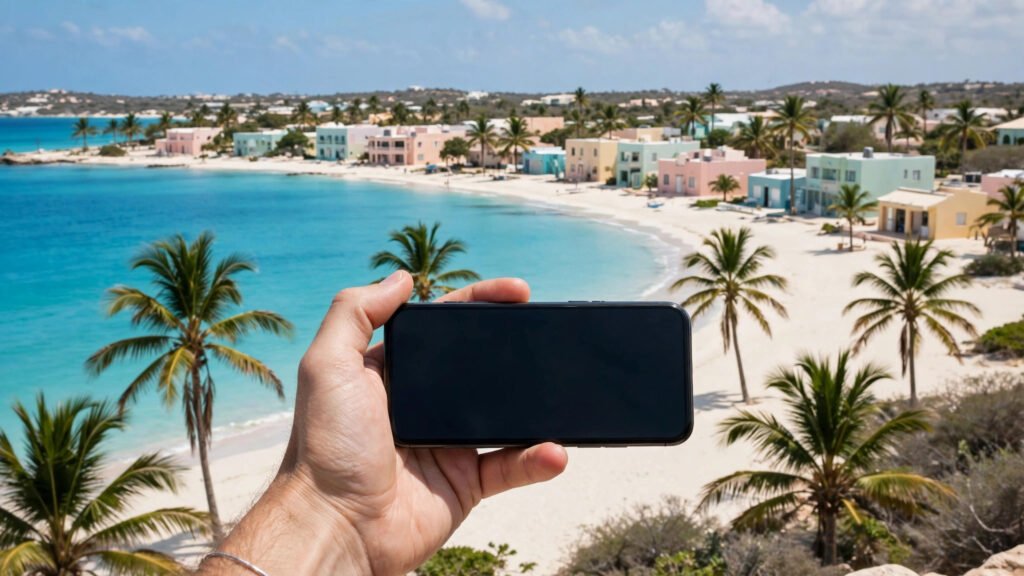
Aruba is a small Caribbean island, but its daily life runs on a very modern habit: almost everything happens through the phone. Visitors land, unlock their phones and start booking, navigating, translating and paying. Residents do the same for work, banking, school updates and family news. The phone is not a luxury here. It is the island’s pocket-sized office, travel desk and town square rolled into one.
So why do Arubans run tourism, work and daily life on their phones? The answer is a mix of geography, economy and everyday common sense. Aruba is compact, tourism-driven and deeply connected to the outside world, and the phone fits that way of life better than any other tool.
Key Takeaways
- Tourism is the heart of Aruba’s economy, and visitors plan, book and pay for almost everything on their phones.
- Small businesses, from tour operators to food stalls, win customers through messaging apps and social media rather than shopfronts alone.
- For residents, the phone handles banking, bills, school news and family contact in one place, saving trips across the island.
A Small Island With a Big Visitor Economy
Aruba is a constituent country of the Kingdom of the Netherlands, sitting in the southern Caribbean off the coast of South America. Its capital is Oranjestad, its official languages are Dutch and Papiamento, and its currency is the Aruban florin, although United States dollars are widely accepted in tourist areas. The island is small enough to cross by car in well under an hour, yet it welcomes far more visitors each year than it has residents.
That imbalance shapes everything. Hotels, restaurants, tour companies, car rentals and shops all compete for the attention of people who arrive with a phone in hand and limited time on the island. A business that cannot be found, messaged or booked from a phone is easy to skip. A business that answers quickly on WhatsApp or Instagram often wins the booking before a visitor has even left the airport.
For residents, the same logic applies in reverse. Many Arubans work in tourism or in services that support it, so their working day follows the visitor’s schedule: messages in the morning, bookings through the day, and changes of plan in the evening. The phone keeps that rhythm manageable.
The Phone Is the Tour Guide
For a visitor, the phone replaces a whole shelf of travel tools. Flights and hotels are booked online, boarding passes live in an app, and maps guide the drive from Oranjestad to the beaches of the north-west coast or the desert-like landscapes of the east. Translation apps help with Dutch and Papiamento, while review sites and social media decide where to eat tonight.
Unlike a paper guidebook, the phone updates itself. A restaurant’s opening hours, a tour’s availability or a sudden change in the weather can be checked in seconds. Visitors share photos as they go, and those photos become advertising for the next wave of travellers. In a place where word of mouth travels fast, a single well-shared sunset picture can do more than a brochure.
This pattern is familiar across the Caribbean. On other Caribbean islands where tourism runs on phones, visitors lean on the same mix of maps, messaging and mobile booking to shape their trips.
In Aruba, the phone is not just a gadget for visitors; it is the thread that ties the whole visitor economy together.
Small Businesses Run on Messaging Apps
Aruba’s economy is full of small operators: independent tour guides, boat captains, taxi drivers, beach vendors, guesthouses and family-run restaurants. Most do not have large marketing budgets, and many do not need one. A phone, a messaging app and a social media page are often enough to reach customers.
A tour operator can confirm a sunset cruise by message, send a meeting point by map pin, and take payment through a link. A restaurant can post the day’s catch on social media and fill its tables by evening. A taxi driver can build a list of regular visitors who message directly on their next trip, skipping the need for a dispatcher altogether.
This is also why speed matters so much. Visitors compare options quickly, and a reply that arrives in minutes beats a reply that arrives tomorrow. For small businesses, the phone is not only a way to communicate; it is the shopfront, the cashier and the reception desk.
- Bookings, directions and payments happen in the same chat thread.
- Social media photos from visitors act as free advertising for tours, beaches and restaurants.
- Repeat visitors often message the same driver, guide or guesthouse directly on their next trip.
Banking, Bills and Everyday Services
For residents, the phone’s role goes well beyond tourism. Mobile banking apps handle transfers and bill payments without a trip to a branch. Utility bills, government updates and school announcements increasingly arrive digitally. Parents follow school news in messaging groups, and families coordinate pick-ups, shopping and weekend plans in the same chats they use for work.
That matters on an island where many people juggle more than one job or work shifts tied to hotel and restaurant hours. Saving a trip across town to pay a bill or check a balance is not a small convenience; over a week, it adds up to real time back. The phone compresses errands that once took half a day into a few minutes between shifts.
Aruba’s close ties to the Netherlands, the wider Caribbean and the Americas also mean many families have relatives abroad. Calls, video chats and money transfers through the phone keep those ties alive across long distances, in much the same way that island nations spread across many islands use phones to hold far-flung communities together.
Staying Connected Across the Island
Aruba’s size helps. Mobile coverage reaches most of the island, and hotels, cafes and public spots commonly offer Wi-Fi, so visitors and residents are rarely far from a connection. Visitors often pick up a local SIM card or an eSIM on arrival, or simply rely on hotel and restaurant Wi-Fi between outings.
That easy connectivity also supports safety. A traveller can share a live location with family, call for help, or check conditions before heading to a remote beach or a hiking trail. A resident can warn neighbours about a road closure or a sudden downpour in a group chat. On a small island, news travels fast, and the phone is how it travels.
The same story plays out wherever island life meets a scattered map. From the Atlantic to the Pacific, life across scattered islands leans on the phone to close distances that boats and roads cannot close quickly.
What to Watch Next
Aruba’s phone-first way of life is unlikely to slow down. Visitors will keep booking, navigating and paying from their phones, small businesses will keep winning customers through messaging apps, and residents will keep handling banking, bills and family news from one device. The island’s size, its visitor economy and its far-flung family ties all point the same way: the phone stays at the centre of daily life in Aruba. What changes next will be the services built around it, from faster mobile payments to more digital public services, all arriving through the same small screen.