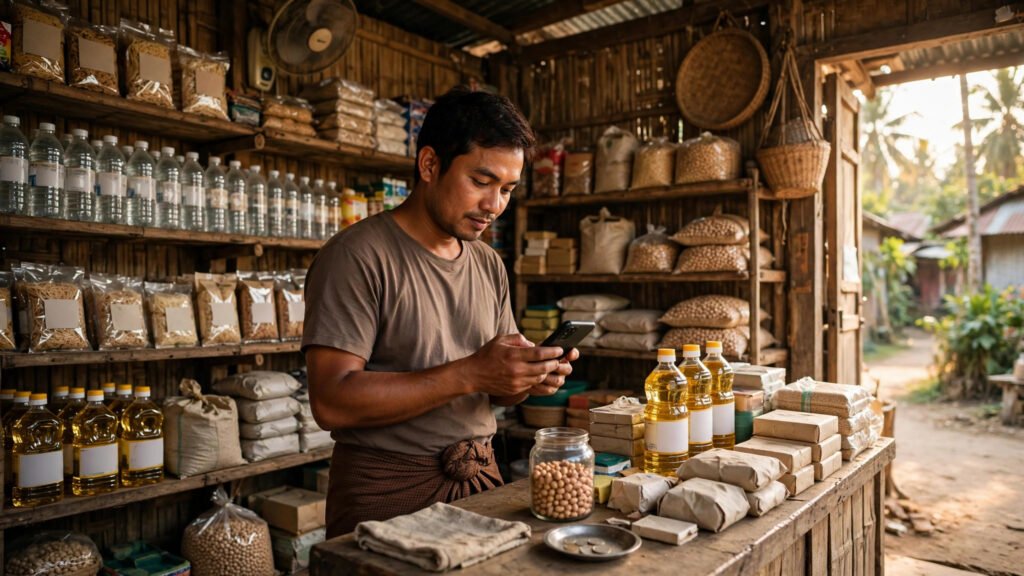
Walk past a small shop in a town in Myanmar and you may find its real shopfront is not only the counter and the shelves. It is also a Facebook page, updated from a phone, where new stock is photographed, prices are asked about in comments, and orders arrive as messages. For many small shopkeepers, that page does the job a website is supposed to do, without the extra cost, skills, or upkeep a website usually needs.
This is not about shopkeepers rejecting technology. It is about choosing the technology that customers already use every day. When buyers are already scrolling, chatting, and sharing on Facebook, a shop that meets them there does not have to teach them a new habit first. The shop simply shows up where attention already is.
Key Takeaways
- A Facebook page works as a shopfront because customers are already there, so a small shop does not have to attract visitors to a separate website first.
- Photos, messages, and comments let a shopkeeper show stock, answer questions, and take orders from one phone.
- A website can still help later, but for a small shop the simpler Facebook-first setup often fits daily work, low budgets, and changing stock better.
Why a Facebook Page Feels Like a Shopfront
A shopfront has a simple job: it tells people what is for sale, where to find it, and how to buy it. A Facebook page can do all three in a format that feels familiar. A photo shows the item. A short caption says whether it is in stock. A comment or message starts the sale. Nothing about that process needs a customer to learn a new website layout or remember a new address on the web.
For a small shop, that familiarity matters more than fancy design. Stock changes often, sometimes daily. A shopkeeper can photograph a delivery in the morning and post it before lunch. If an item sells out, a reply in the comments can say so straight away. A website, by contrast, usually needs someone to edit a page, update a product list, and check that everything still looks right. That is manageable for a larger business with staff, but it is a lot of extra work for one person who also has to serve customers, manage stock, and keep the shop open.
When buyers are already scrolling, chatting, and sharing on Facebook, a shop that meets them there does not have to teach them a new habit first.
Why a Website Can Feel Like Extra Work
A website is not a bad idea. It can give a business a stable address, a clear catalogue, and a professional impression. The problem for a very small shop is the gap between building a website and keeping it alive. A domain has to be renewed, pages have to be updated, and a site that is out of date can mislead customers about stock or prices. A Facebook page, on the other hand, is updated in the same few taps used to post a photo or reply to a message.
Cost is part of the same story. A website may need design help, hosting, and ongoing maintenance, even before it brings in a single extra sale. A Facebook page can be started and run from a phone the shopkeeper already owns. For a business working with tight margins, that difference is not a detail. It can decide whether an online presence is worth keeping at all.
- Customers find the shop where they already spend time online, instead of being asked to visit a separate site.
- Photos and short posts match how small shops actually work: stock arrives, it is shown, it sells, and the next delivery replaces it.
- Messages and comments turn a simple post into a conversation, an order, and a repeat customer.
- A phone-first setup keeps updates quick, which matters when one person runs the whole shop.
How Customers Actually Find and Order
The typical journey is short and social. A customer sees a post shared by a friend, or searches for a shop name, and lands on the page. They look at recent photos to judge whether the shop is active and trustworthy. Then they ask a question in a comment or send a message: is this in stock, what sizes are available, can it be collected today? The shopkeeper answers, and the sale moves forward without a checkout page.
This pattern is familiar across the region, even when the tools differ. In Indonesia, shoppers have embraced a single QR standard that lets many wallets and bank apps pay at one code, as explained in why Indonesians pay with QR codes instead of cash and cards. In Senegal, many people have turned to a phone payment service that fits small everyday transactions, as explained in why Senegalese pay with Wave instead of cash and bank cards. And on a small island economy, daily work, tourism, and family life are increasingly run from the phone itself, as explained in why Arubans run tourism, work, and daily life on their phones. The details change from country to country, but the principle is the same: people use the tool that is already in their hand and already part of their day.
Trust also travels socially. A recommendation from a friend, a shared post, or a reply from the shopkeeper can matter more than a polished catalogue. Customers can see that a page is active, that questions get answers, and that other buyers have ordered before them. For a small shop with no advertising budget, that visible activity is a form of marketing in itself.
What This Means for a Small Shop
Running a business on Facebook does have limits, and honest shopkeepers know them. A page belongs to a platform, not to the shop, so its rules and reach can change. Posts can be missed, messages can pile up, and keeping track of orders in a chat inbox is harder than using a proper order system as sales grow. A shop that grows beyond a handful of daily orders may eventually need a catalogue, a booking form, or a website to stay organised.
That does not make the Facebook-first choice a mistake. It makes it a starting point that fits the size of the business. A shop can begin where customers are, learn what sells, build a name, and add more formal tools only when the volume justifies them. Starting simple also means the shopkeeper can stop, change, or expand the online presence without having paid for a website that nobody visits.
There is also a practical point about language and access. A short post in the language customers speak, with a clear photo, is easier to understand than a long website page. Voice messages and short replies can help when typing is slow or awkward. The phone, in other words, is not just a sales channel. It is the shop’s counter, noticeboard, and telephone, all in one device.
What to Watch Next
The Facebook-first model will keep working as long as customers keep meeting shops there, and it will keep evolving as shops grow. The question for each small shopkeeper is not whether Facebook or a website is better in the abstract. It is which tool fits the shop’s size, stock, and customers right now. For many small shops in Myanmar, the answer remains the page they can update from their phone, where buyers already are, with photos, messages, and comments doing the work of a shopfront. As sales grow, a catalogue or website may join it, but the simple, social shopfront is likely to stay at the centre of how these businesses are found, trusted, and ordered from.