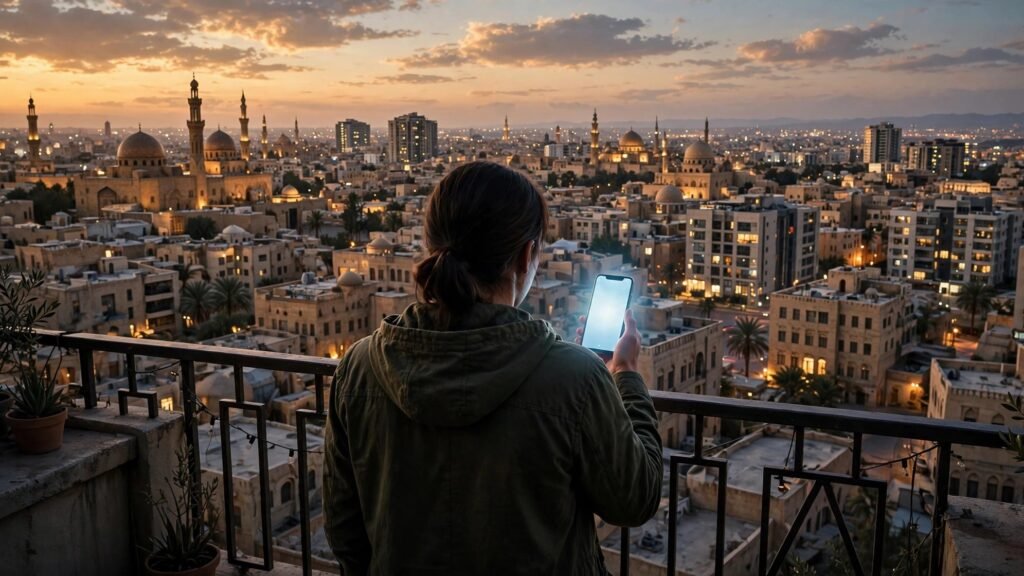
Open a phone in Tehran, Mashhad or Isfahan and the home screen can look familiar and different at the same time. There is a messaging app, a ride-hailing app, a food delivery app and a shopping app — but many of them were built inside Iran, for Iranian users, rather than arriving from abroad. For a visitor, the natural question is simple: why do Iranians use domestic apps for so much of daily phone life?
The short answer is that the phone had to adapt to local conditions. When some global services are restricted, unavailable or hard to use, local developers step in to fill the gap. Over time, those home-grown apps stop being a second choice and become the normal way people chat, travel, order food, pay and shop. That is how a whole everyday app ecosystem grows up around one country and its own rules, habits and needs.
Key Takeaways
- Domestic apps grew up because some global services are restricted or hard to use in Iran, so local developers built alternatives for everyday tasks.
- Messaging, rides, food delivery, shopping and banking now sit side by side on Iranian phones, often inside a small number of familiar local apps.
- The result is a phone life that works locally first: it fits Iranian language, payment habits and daily routines, even as access and options keep changing.
When global apps are not the default
In many countries, the same handful of global apps covers almost everything. In Iran, that picture is different. Access to some well-known global platforms has been restricted at various times, and even when a service is technically reachable, payments, language support or local features may not fit Iranian users well. That creates an opening, and Iranian developers have filled it again and again.
The pattern is easy to follow. People still need to message friends, book a ride, order lunch and buy groceries. If the app they would use elsewhere is not available or not practical, they turn to the app that is. Once friends, family, drivers, shops and restaurants are all on the same local platform, there is little reason to leave it. Network effects do the rest: the app becomes more useful precisely because everyone else is already there.
Once friends, family, drivers, shops and restaurants are all on the same local platform, there is little reason to leave it.
One phone for messaging, rides, food and shopping
For many Iranians, the phone is the remote control for the day. A messaging app keeps family groups, work chats and neighbourhood news in one place. A ride-hailing app replaces the need to flag down a taxi on a busy street. Food delivery apps bring restaurants to the door, and shopping apps cover everything from groceries to household goods.
What stands out is how much of this runs through apps designed for Iran itself. They work in Persian, they understand local addresses and neighbourhoods, and they are built around how people in Iranian cities actually move, eat and shop. A visitor trying the same tasks with only global apps would quickly feel the difference — and so would a local user trying to do without the domestic ones.
- Messaging apps carry family, work and neighbourhood life in one place
- Ride-hailing and delivery apps fit Iranian cities, streets and daily routines
- Shopping and banking features are built around local habits and language
- Local platforms gain value as more people, drivers and shops join them
Why local apps fit local life so well
Language is one part of the story. An app written first for Persian speakers, with local place names, local products and local customer support, feels natural in a way a translated global app often does not. Payment habits matter too. Where cards, bank transfers and local payment methods work differently from other markets, an app built for those methods has a clear advantage.
Local knowledge matters just as much. A ride-hailing service needs to know how a city actually flows at rush hour. A food delivery service needs to know which restaurants deliver to which neighbourhoods. A shopping service needs to know what people buy week after week. Developers living in the same cities as their users can build for those details from the start, rather than adapting a product designed for somewhere else.
This is not unique to Iran. Around the world, countries with their own languages, payment systems or rules often grow strong local apps alongside global ones — just as Jordanians pay with CliQ instead of cash and cards through a system built for their own banks, and Estonians run much of life online through e-services designed for their own state and society. The difference in Iran is how far the local layer reaches, covering so many daily tasks at once.
The trade-offs of a home-grown app world
A domestic app ecosystem has clear strengths, but it also brings trade-offs. Choice can be narrower: if one local app dominates messaging or rides in a city, switching to another option may mean leaving friends, drivers or favourite shops behind. Updates, features and reliability depend on local companies rather than global giants with huge engineering teams.
Access can also shift. Rules around the internet and apps change over time, and users sometimes find that an app they rely on works differently from one period to the next. That uncertainty is part of why many Iranians keep more than one option on their phones: a main app for daily life, and alternatives ready when something changes. Flexibility becomes a habit, not just a preference.
For businesses, the same logic applies in reverse. A restaurant, shop or driver that wants customers has to be where customers already are — which means joining the local platforms, learning their rules and keeping a presence there. In that sense, domestic apps are not just tools for users; they are the marketplace itself, shaping how small businesses reach people in Iranian cities and towns.
What daily phone life looks like in practice
Put it together and a typical day is easy to picture. Morning messages arrive in a local messaging app. A ride across town is booked in a local ride app. Lunch is ordered from a nearby restaurant through a delivery app. An evening shop for groceries or household items happens on a phone, with payment through a familiar local method. None of this requires a global platform at any step — and for many users, that is simply normal.
Visitors notice the difference most when they arrive without those apps installed. Suddenly, tasks that feel automatic at home — hailing a ride, ordering food, paying a small bill — need a local workaround. That gap is the clearest proof of how central domestic apps have become: they are not a curiosity, but the infrastructure of everyday life, in the same way that Comorians rely on their phones across three islands to bridge distance that would otherwise be hard to cross.
What to Watch Next
The story of domestic apps in Iran is still being written. Local developers will keep building for messaging, rides, food, shopping and payments, and users will keep choosing the apps that fit their language, habits and daily routines best. Access rules may shift, new local services may appear, and existing apps may add features or change how they work.
What is unlikely to change quickly is the basic pattern: a phone life built locally first, around Iranian cities, language and habits, with flexibility as a everyday skill. For anyone trying to understand Iran through its phones, the home screen itself tells the story — local apps, for local life, used every single day.