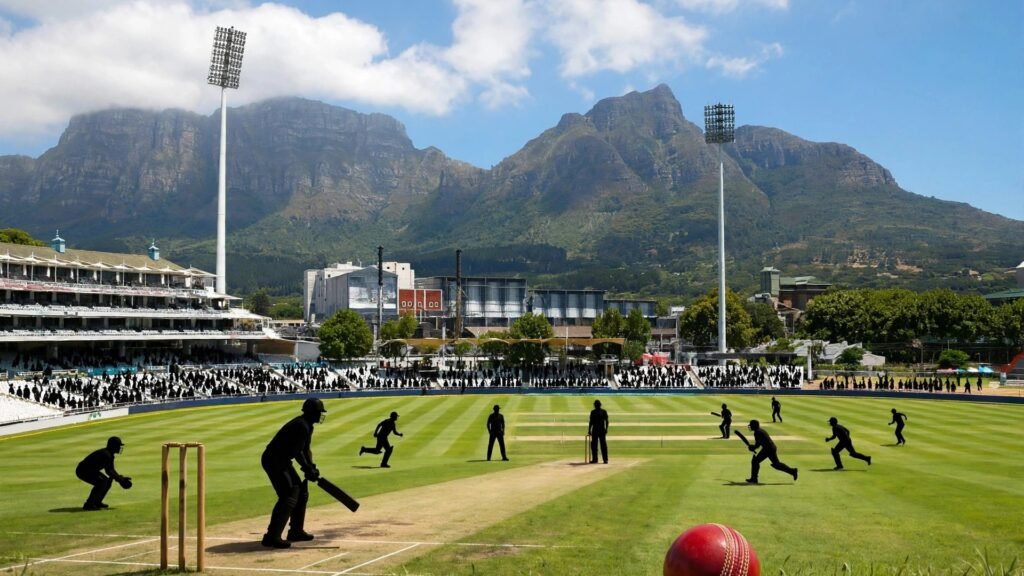
South Africa beat Australia by 176 runs in the third Test at Newlands in Cape Town on Saturday, October 31, 2026, to seal the three-match series 2-1 and complete a remarkable comeback after losing the first Test.
The hosts bowled Australia out for 111 in the second innings on the final day, after setting the visitors 288 to win. Australia, who had taken a 100-run first-innings lead, could not withstand a sustained spin-led attack on a wearing fifth-day pitch, and the series that had swung back and forth ended in a single, decisive session.
Simon Harmer was the central figure on the final day, taking six wickets for 16 runs in the second innings and completing his first 10-wicket haul in a Test match. Kagiso Rabada supported him with three wickets, and the pair shared the decisive breakthroughs as Australia lost wickets in clusters and never built the partnership the chase required.
Key Takeaways
- South Africa won the third Test by 176 runs at Newlands and took the series 2-1.
- Simon Harmer took 6 for 16 in the second innings for his first 10-wicket Test match haul.
- Kagiso Rabada became the fastest bowler to 350 Test wickets in terms of deliveries bowled.
The final day at Newlands
The match had been set up by South Africa’s second innings. After Australia posted 429 in reply to South Africa’s 329, the hosts were under pressure, but a 154-run partnership between Ryan Rickelton and Wiaan Mulder changed the course of the game. Both players made centuries, and a useful 62 from Marques Ackerman helped South Africa reach 387 in their second innings.
That left Australia needing 288 to win the Test and seal the series. Instead, the chase unravelled quickly. Australia were bowled out for 111, with Harmer taking 6 for 16 and Rabada taking three wickets, as South Africa registered a memorable series win in Cape Town.
Australia were bowled out for 111, and a series that had swung back and forth ended in a single, decisive session.
Australia were bowled out for 111, and a series that had swung back and forth ended in a single, decisive session.
The result was especially significant because of how the series had developed. South Africa lost the opening Test, then won consecutive Tests to complete what reports described as a sensational comeback. Winning the deciding Test at home, in front of a Newlands crowd that was given free entry at lunchtime to witness the finish, gave the victory an extra sense of occasion.
Harmer’s day, and a series turned by spin
Harmer’s second-innings figures of 6 for 16 were career-best figures, and they capped a match in which his control and persistence wore Australia down. On a fifth-day pitch, he found turn and bounce, and Australia’s batters struggled to rotate the strike or build a lasting stand against him.
Rabada’s early blows also mattered. Reports of the final day highlighted a twin strike from Rabada that left Australia in trouble after a poor start, and from that point the visitors were always chasing the game. Harmer then took over, and Australia’s last wickets fell without the kind of resistance that might have saved the match or taken it deeper into the day.
- Match: South Africa 329 and 387 beat Australia 429 and 111 by 176 runs at Newlands, Cape Town.
- Series result: South Africa won the three-match series 2-1 after losing the first Test.
- Final-day star: Simon Harmer took 6 for 16 in the second innings.
- Milestone: Kagiso Rabada reached 350 Test wickets in 13,808 deliveries, faster than Dale Steyn’s 14,719.
- Second-innings turning point: Ryan Rickelton and Wiaan Mulder added 154 runs, both making centuries.
Rabada’s record, in context
Rabada also reached a personal milestone during the third Test at Newlands. He became the fastest bowler to take 350 Test wickets in terms of deliveries, reaching the landmark in 13,808 balls and breaking the record previously held by fellow South African Dale Steyn, who took 14,719 deliveries.
Rabada reached the milestone by dismissing Travis Head, and he achieved it in his 75th Test. The record is a measure of sustained strike power over a long career, rather than a single match, and it underlines why South Africa have been able to rely on him as the leader of their attack in home and away conditions.
For Australia, the defeat will prompt questions about their batting on the final day and about how a 100-run first-innings lead became a 176-run loss. The visitors had secured a comfortable advantage after the first innings, but South Africa’s second-innings batting and then their bowling on the final day reversed the match completely.
What the win means for the standings
Reports described South Africa as returning to the top of the Test rankings for the first time since January 2016, after toppling Australia from the summit. In the World Test Championship points table, the picture reported after the match was slightly different: New Zealand led with 72.22 percent of points won, followed by South Africa on 71.43 percent and Australia on 69.23 percent, with India fourth on 51.52 percent.
That distinction matters. The rankings and the championship table measure different things, but both pointed in the same direction after Cape Town: South Africa are firmly in the race at the top of Test cricket, while Australia have lost ground after leading the championship table before the final Test.
The win also continued a strong day for Test cricket elsewhere. West Indies beat Bangladesh by eight wickets in Mirpur to take a 1-0 lead in their two-match series, with Brandon King striking an unbeaten 81 in the chase. It was a reminder that, even as white-ball cricket dominates much of the calendar, Test matches in different parts of the world can still produce decisive, dramatic finishes on the same day.
Elsewhere on a crowded sporting Saturday, Fiji Bulikula reached a first-ever World Cup semi-final with a 54-6 win over France, a result that showed how wide the day’s sporting story stretched beyond Cape Town.
What to Watch Next
What to watch next is simply what the article has already set out: whether South Africa can carry this comeback form into their next Test series, whether Australia respond after a final-day collapse that turned a first-innings lead into a series defeat, and how the World Test Championship table develops with New Zealand narrowly ahead of South Africa and Australia close behind. Until those next matches arrive, the verified picture from Cape Town remains the one reported on Saturday: South Africa 329 and 387 beat Australia 429 and 111 by 176 runs, Harmer took 6 for 16 on the final day, Rabada reached 350 Test wickets in record time, and South Africa sealed the series 2-1.