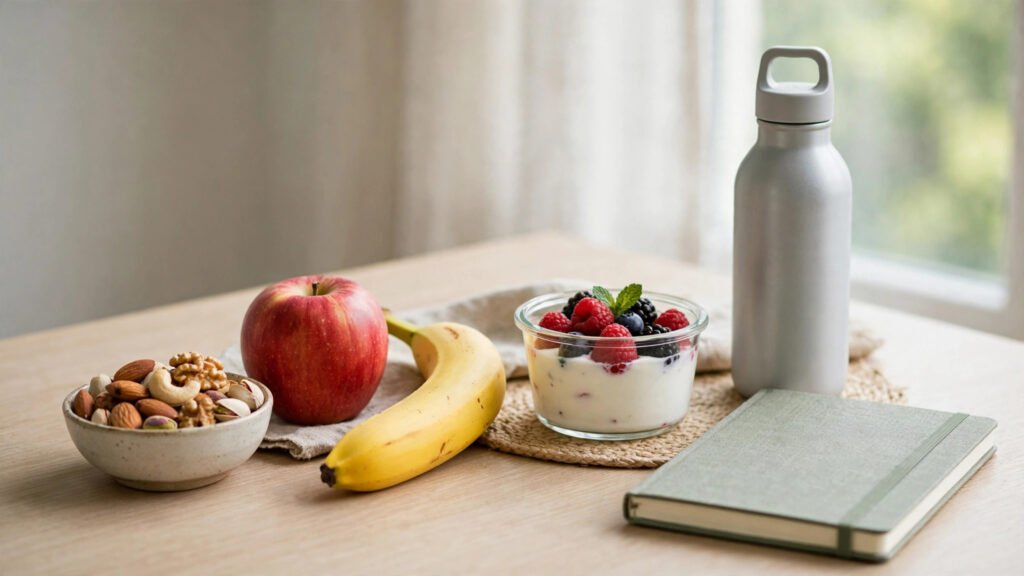
Choosing healthy snacks for work sounds simple until the middle of the afternoon arrives. You are busy, a little tired, and the nearest option is usually the sweetest or saltiest one in reach. A small amount of planning changes that pattern completely. When your snack is already packed, filling, and easy to eat at your desk, you do not have to make a rushed decision when hunger strikes.
Key Takeaways
- A filling work snack usually pairs a protein or healthy fat with fruit, vegetables, or whole grains.
- Packing snacks the night before removes the hardest part: deciding while you are already hungry.
- Keeping portions small and water nearby helps a snack support your day instead of replacing a meal.
Why Work Snacks So Often Go Wrong
Most work snack problems start long before hunger appears. If nothing is packed, the choice is whatever is in a vending machine, a shared biscuit tin, or a nearby shop. Those options are convenient, but they are often high in added sugar or salt and low in the foods that help you feel full for longer. The result is a quick lift followed by another dip, and then another snack.
Skipping a snack altogether is not a better plan for everyone either. Going too long without eating can leave you distracted, irritable, and more likely to eat a very large meal later. A planned snack sits in the middle: enough to steady your energy, but not so large that it becomes a second lunch.
A planned snack sits in the middle: enough to steady your energy, but not so large that it becomes a second lunch.
What Makes Healthy Snacks for Work Actually Work
The best healthy snacks for work share three qualities. First, they are portable and do not need much preparation at the office. Second, they are filling enough to last a couple of hours. Third, they are foods you genuinely enjoy, because a snack you dislike will simply stay in your bag.
A useful rule is to pair foods rather than relying on one item alone. A piece of fruit on its own may not keep you full for long, but fruit with a small handful of nuts or a pot of yoghurt feels more complete. The same idea applies to vegetables with hummus, or wholegrain crackers with cheese. You do not need a complicated recipe, just a combination that covers more than one food group.
- Pair a protein or healthy fat with fruit, vegetables, or whole grains.
- Choose snacks that travel well and need no heating or cutting at your desk.
- Keep the portion snack-sized, roughly what fits in one small container or your hand.
- Drink water with your snack, especially if your day involves a lot of talking or screen time.
Simple Snack Combinations That Travel Well
Start with options that need almost no cooking. An apple or banana with a small handful of mixed nuts is quick, quiet to eat, and easy to carry. A small pot of plain yoghurt with berries works well if you have access to a fridge, and it feels more like a treat than a chore. Carrot or cucumber sticks with hummus are crunchy, refreshing, and simple to pack in a sealed container.
Wholegrain crackers with cheese, a small wrap filled with salad and beans, or leftover roasted vegetables from dinner can also work as work snacks. The key is to pack them in a container that does not leak and to keep them cool when needed. If a snack needs a knife, a plate, or a long preparation at work, it is less likely to become a habit.
It also helps to think about your whole day, not just one snack. Learning how to build a balanced plate at meals makes snack choices easier, because you already have a sense of what a satisfying mix of foods looks like. Snacks then fill the gaps between meals instead of doing all the work on their own.
How to Pack Snacks Without Adding a Morning Chore
The easiest time to pack a work snack is the evening before, when you are already in the kitchen. Put fruit in your bag, portion nuts into a small container, and set out anything that needs to go in the fridge. In the morning, you only need to grab the container and go.
A weekly approach works even better for many people. Choose two or three snack combinations you like and repeat them through the week, changing one item when you get bored. Buying a larger bag of nuts and dividing it into daily portions, or washing and cutting vegetables on a Sunday, can save repeated effort. Variety matters, but it does not have to mean a different snack every single day.
Small swaps can make a familiar snack more satisfying too. Adding more vegetables to your day, for example through carrot sticks or a small salad, adds crunch and volume without a large portion. And if you often reach for a sweet drink in the afternoon, learning how to cut back on sugar in drinks can help your snack feel more balanced overall.
What to Keep at Your Desk, and What to Leave Out
A desk drawer stash can help on days when you forget to pack something, but it needs the same care as a packed snack. Small packs of nuts, plain oatcakes, or dried fruit without added sugar keep better than chocolate or crisps, which tend to disappear quickly and leave you wanting more. Keep portions small and sealed, and check dates now and then so nothing goes stale.
It is also worth thinking about foods that suit your workplace. Strong-smelling snacks, noisy packaging, or anything that needs to be eaten with both hands during a call can be awkward at a shared desk. Quiet, tidy, and simple snacks are easier to enjoy without disturbing anyone else, and they are more likely to become part of your routine.
Finally, remember that snacks are general everyday food choices, not a treatment for tiredness, low mood, or any health condition. If you regularly feel unwell, very tired, or hungry despite eating regular meals, it is worth speaking to a health professional rather than trying to fix it with snacks alone.
What to Watch Next
The next time you pack for work, try one filling combination, pack it the night before, and keep the portion snack-sized. Notice whether it keeps you comfortable until your next meal, and whether you reach for the vending machine less often. If one combination works, repeat it for a week, then change a single item to keep it interesting. Over time, that small routine is what turns healthy snacks for work from a good intention into an ordinary part of your day.