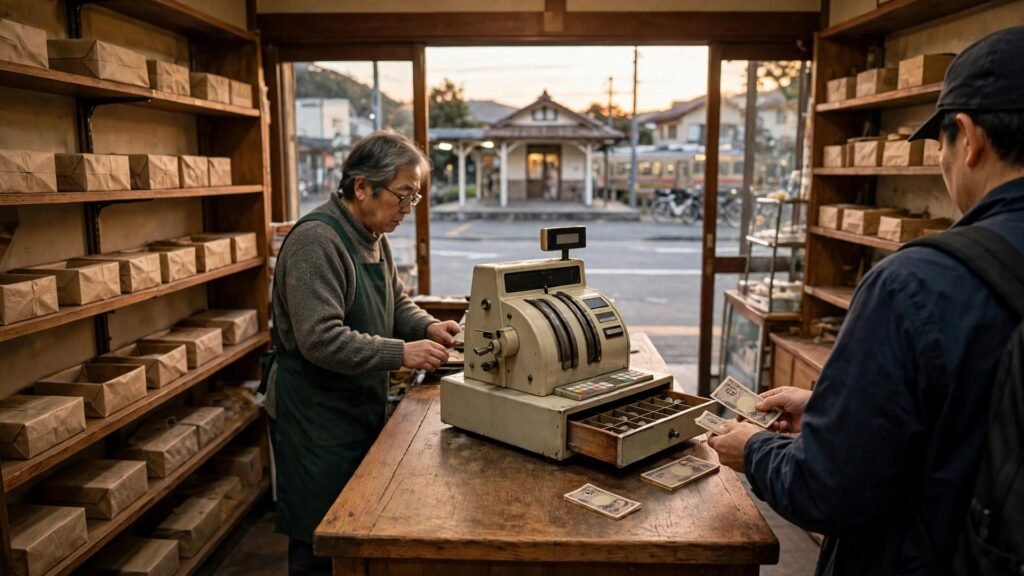
Japan gave the world the bullet train, advanced robots and some of the most reliable electronics ever made. Yet walk into a small ramen shop in Tokyo, a family-run inn in Kyoto or a market stall in a rural town, and you may still be handed change in coins and paper notes. For many visitors, this is the first real surprise of a trip to Japan: a country famous for the future still loves cash.
So why do Japanese people still use cash so much? The answer is not that Japan missed the digital revolution. It is that cash fits daily life in Japan in ways that cards and phones do not always replace — and that trust, habit and everyday practicality have kept it alive alongside modern payment options.
Cash Has Always Just Worked
One simple reason is that cash in Japan works extremely well. Banknotes and coins are clean, widely accepted and easy to understand. A payment is finished the moment the notes change hands. There is no app to open, no battery to worry about and no signal needed. For small, everyday purchases — a coffee, a train ticket from a machine, a snack from a convenience store — cash feels fast and effortless.
Japan also has a long history of safe, low-crime daily life in most neighbourhoods, which makes carrying cash feel normal rather than risky. People commonly carry notes and a coin purse, and shopkeepers handle cash with care and precision, often counting change back on a small tray rather than pressing it into a customer’s hand. The whole ritual feels orderly and polite, and that matters in a culture where small courtesies carry real weight.
Small Shops and Local Life Still Run on Cash
Another reason is the shape of Japanese daily life itself. Japan is full of tiny businesses: family restaurants with a handful of seats, neighbourhood bars, vegetable stalls, shrines and temples, and local festivals where stalls sell food and crafts. For many of these small sellers, cash is simpler and cheaper to handle than card machines, monthly fees and settlement waits.
Some places do accept cards and mobile payments, and big cities offer more choice than ever. But in smaller towns and older shopping streets, a “cash only” sign is still common. Visitors who arrive expecting to tap a card everywhere quickly learn to keep yen in their pocket, just as locals do.
Cash fits daily life in Japan in ways that cards and phones do not always replace.
Technology Did Not Replace Cash — It Grew Around It
It is a mistake to think Japan rejected payment technology. In fact, Japan built its own digital payment world early. Contactless travel cards, used for trains and buses, can also pay at convenience stores and vending machines. QR code payments and phone wallets have grown fast in recent years, especially among younger shoppers in big cities.
What happened instead is that new options joined cash rather than replacing it. Many Japanese people use a mix: a travel card for the train, a phone payment for online shopping, and cash for lunch, local shops and gifts. This layered approach means cash survives not because nothing better exists, but because it still earns its place for certain kinds of spending.
The contrast is striking when compared with neighbours. While South Koreans pay with their phones instead of cash and cards in much of daily life, and Kazakhstanis use the Kaspi app instead of cash and cards, Japan has moved more gradually — adding digital tools without abandoning the old ones.
Trust, Privacy and Control Matter
Trust plays a quiet but powerful role. Cash spending is private and easy to track by hand. You can see exactly what you spent, and there is no statement, notification or data trail to review later. For people who value privacy, or who simply like to budget with physical money, that control is a real advantage.
Cash also avoids a worry that comes with purely digital money: what happens when the system fails. During a power cut, an earthquake or a network outage, a phone payment may stop working while cash keeps working. In a country that takes disaster readiness seriously, keeping a payment method that needs no electricity or signal is not old-fashioned — it is practical.
Older generations add another layer. Many older Japanese people grew up entirely with cash and prefer to stay with what they know. Younger people may pay by phone most of the time, but they still grow up watching parents and grandparents use cash for rent envelopes, school fees, gifts and local shopping. Habits passed down at home are hard to break, and in Japan they are rarely forced to break.
Key Takeaways
- Cash remains common in Japan because it is fast, simple and accepted almost everywhere, especially by small shops.
- Japan did not reject digital payments — travel cards, QR payments and phone wallets grew up alongside cash.
- Trust, privacy, disaster readiness and everyday habit all help explain why cash still earns its place.
Gifts, Envelopes and the Culture of Cash
Cash also has a cultural role that cards cannot easily copy. In Japan, money is often given as a gift in a special decorated envelope on occasions such as weddings, New Year and graduations. The envelope, the crisp new notes inside and the care taken in presenting them are part of the gift itself. A bank transfer, however convenient, would lose that meaning entirely.
Similar customs appear in everyday generosity: tipping is uncommon in Japan, but cash gifts and small money offerings at shrines are part of social and spiritual life. These traditions keep physical money present in moments that matter, reinforcing its place far beyond shopping.
What About Visitors to Japan?
For travellers, the lesson is simple: bring cash and use it without worry. Keep notes for small restaurants, rural transport, temple offerings and market stalls, and use cards or travel cards where they are accepted. Most visitors find the mix easy once they stop expecting one single way to pay.
It also helps to remember that paying by cash in Japan is not a sign of a place being behind the times. A tiny shop with a cash-only sign may sit a short walk from a station served by driverless trains and robots. Both are Japan at the same time — and that mix is part of what makes the country so interesting. Just as Uzbeks use Telegram for almost everything in their own digital culture, Japanese people have built a payment culture that blends the old and the new on their own terms.
- Small shops, rural towns and festivals still run largely on cash
- Travel cards and QR payments grew alongside cash, not instead of it
- Privacy, disaster readiness and gift traditions keep cash meaningful
- Visitors should carry yen for small purchases and local transport
What to Watch Next
Cash is unlikely to disappear from Japan soon, but its role will keep shifting. Phone and QR payments are growing in cities, younger shoppers use them more, and more small businesses are trying digital options. The likely future is not a sudden cashless Japan, but a Japan where cash remains one trusted choice among several — used for small shops, gifts and emergencies, while phones and cards handle more of the rest. The real story is not that Japan is behind, but that it chose a slower, steadier path — keeping what works while adding what helps.