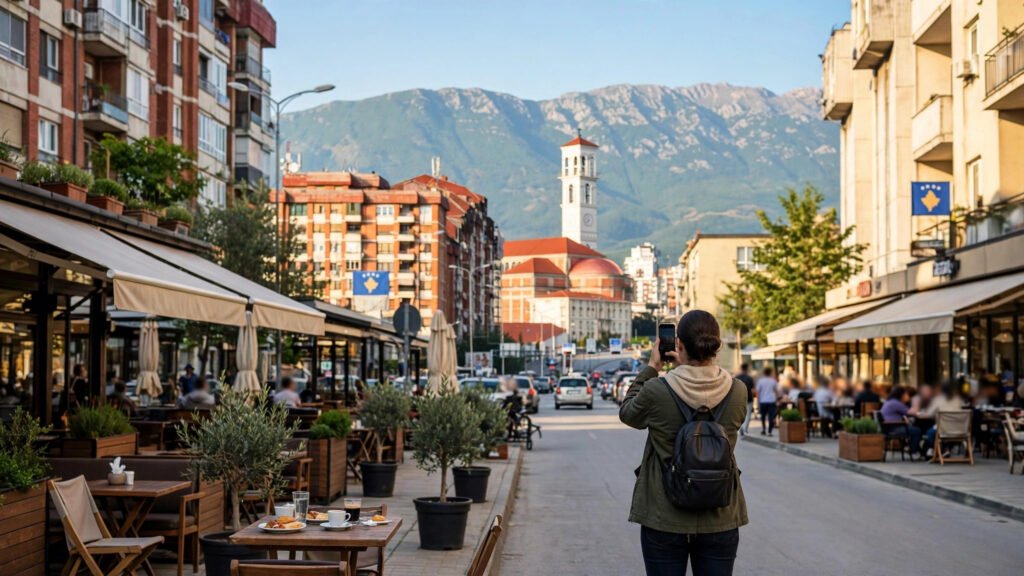
In Kosovo, the phone is rarely just a phone. For many people, it is the place where daily life gets organised: a document is requested, a bus time is checked, a payment is sent, and a video call home begins, all from the same small screen. That habit did not appear overnight. It grew out of a young population, a large diaspora, and a steady move of everyday services onto the internet.
This explained guide looks at why Kosovars use their phones so much, what they actually use them for, and what the shift means for people who still prefer to do things in person.
Key Takeaways
- Kosovars use phones for government services, money, travel, and staying in touch with family abroad.
- Online services such as e-Kosova reduce queues and paperwork for routine requests.
- Phones also bridge distance, linking people in Kosovo with relatives living in other countries.
Why the Phone Comes First
For a lot of people in Kosovo, the phone is the easiest tool at hand. It is always charged, or nearly always, it travels everywhere, and it can do in a few taps what once took a trip across town. When a form can be filled in at home, when a timetable can be checked before leaving, and when a message can reach a relative abroad in seconds, the phone naturally becomes the first choice.
That is especially true for younger Kosovars, who have grown up with smartphones and social media. Many are comfortable managing their lives through apps, and they often help older relatives do the same. A grandparent who does not use an app may still benefit, because a son, daughter, or neighbour can check something on their behalf.
The phone also fits Kosovo’s size and shape. It is a small, landlocked country, but its people are spread out, between towns, villages, and cities such as Pristina, Prizren, and Peja, and far beyond its borders. A device that works everywhere helps keep those connections alive.
For many people in Kosovo, the phone is the easiest tool at hand, and it can do in a few taps what once took a trip across town.
e-Kosova and Everyday Services Online
One of the clearest reasons phones matter so much is the move of public services online. Through platforms such as e-Kosova, people can reach a range of government services and documents without always standing in a queue. The idea is simple: routine requests should not need a whole morning.
That pattern is familiar in other countries too. Estonians run much of their lives through online services, and Italians use a digital identity system for government services. In each case, the phone or computer becomes a doorway to the state, rather than a building people must visit.
In Kosovo, this matters for practical reasons. A person living in a village may not want to travel to a city office for a simple document. A worker may not want to lose a day of work for a routine request. An online service, checked on a phone, can save both time and travel, even when the final step still needs an office visit.
Digital services are not perfect, and not everyone uses them with the same confidence. Some people still prefer paper, face-to-face help, or a phone call. But for routine tasks, the online route has become a normal option, and for many Kosovars it is now the first one they try.
Staying Close to Family Abroad
Another reason phones are central in Kosovo is family. A large number of Kosovars live abroad, in countries across Europe and beyond, and many families have members in more than one country. Phones keep those families in daily contact.
Video calls, voice messages, photos, and group chats mean that birthdays, weddings, school news, and everyday worries are shared in real time. A parent can see a grandchild’s first steps on a screen, even if the child lives hundreds of miles away. A relative abroad can join a family discussion without buying a plane ticket.
That closeness has a practical side too. People in other countries also rely on phones to receive money from relatives abroad, and in Kosovo phones play a similar role in keeping money, messages, and support moving between households. The phone is not only a social tool; it is part of how families look after each other across borders.
Money, Shopping, and Travel on a Small Screen
Beyond services and family, phones help with the ordinary business of life. People check prices, order goods, compare options, and arrange rides or bus journeys. Students follow lessons and assignments. Workers follow job notices and messages from employers. Small business owners reach customers through social media and messaging apps, without needing a large shop or advertising budget.
Travel is another everyday example. Before a journey, a person can check a route, a departure time, or a place to stay. On the road, the phone becomes a map, a ticket holder, and a way to tell family that the journey is going well. For a country where many people travel to visit relatives, study, or work, that is a real convenience.
- Government services: routine requests and documents through e-Kosova, checked on a phone.
- Family abroad: video calls, messages, and photos keeping households connected across borders.
- Daily life: shopping, travel, study, work messages, and small-business customers, all in one place.
- Help at hand: younger relatives often guide older family members through apps and online forms.
What Phones Cannot Replace
None of this means the phone replaces everything. Some services still need a visit, a signature, or a conversation in person. Some people have limited internet access, an older phone, or simply less confidence with technology. In those cases, offices, banks, and local help still matter, and they should remain available.
There is also a balance to keep. A phone can make life easier, but it can also take up a lot of attention. Families in Kosovo, like families everywhere, are still working out when the phone should be put down, especially at meals, in school, and late at night.
The point is not that every part of life should move onto a screen. It is that, for many Kosovars, the phone has become the most practical way to handle the tasks that used to take the most time.
What to Watch Next
What to watch next is whether online services in Kosovo keep getting simpler and easier to use, especially for older people and those in rural areas. If routine requests become clearer on a phone, more people may choose the online route. If help remains available in person, those who prefer it will not be left behind.
Also worth watching is how families keep using phones to stay close across borders, and how small businesses keep reaching customers through them. Those habits already shape daily life in Kosovo, and they are likely to keep growing as services, connections, and devices improve.