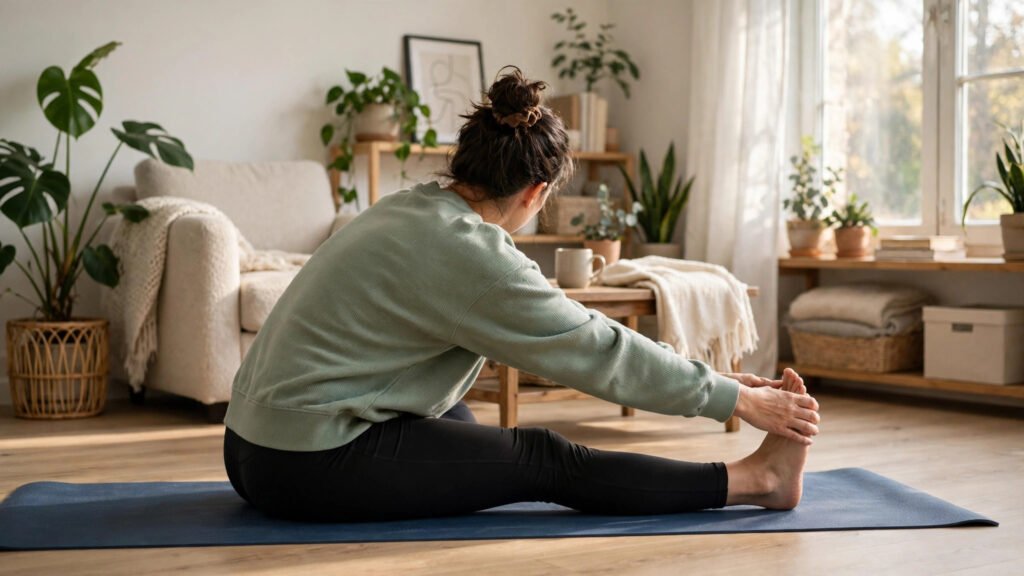
Flexibility is not about touching your toes on the first try. It is about moving a little more freely in everyday life: reaching a high shelf without strain, sitting comfortably for longer, or getting up from the floor without a struggle. If you want to learn how to improve flexibility at home, the good news is that you do not need a gym, special equipment, or an hour of spare time. A short, gentle routine done regularly will do far more than one long, painful session done once in a while.
- Flexibility improves with short, regular practice, not with forcing a stretch.
- A simple 10-minute routine covering the neck, shoulders, hips, and legs is enough to start.
- Gentle, steady stretches done most days beat intense sessions that leave you sore and discouraged.
How to Improve Flexibility at Home: Start Slow and Stay Consistent
The biggest mistake beginners make is treating flexibility like a test. They push hard, hold their breath, and bounce at the end of a stretch, then wonder why they feel stiff the next day. A better approach is to move into each stretch only until you feel a mild, comfortable pull, then breathe normally and hold it there. Your muscles relax when they feel safe, and that relaxed state is what lets you move a little further over time.
Consistency matters more than intensity. Ten minutes a day, or even ten minutes four or five days a week, builds a habit your body can adapt to. It also helps to stretch when your body is already a little warm, for example after a shower, a short walk, or a few minutes of gentle movement around the house. Cold muscles are tighter, so a brief warm-up first makes the whole routine feel easier.
If you spend most of the day at a desk, it also helps to break up long sitting periods during the day. A guide to stretch at your desk shows how small movements between tasks can keep your shoulders and hips from tightening up while you work.
Warm Up First, Even for Ten Minutes
Before you stretch, spend two minutes waking your body up. Walk around the room, roll your shoulders slowly, circle your ankles and wrists, and take a few easy steps in place. You are not trying to get out of breath. You are simply telling your body that movement is coming, so it can loosen up gradually.
Warm muscles respond better to stretching, and a gentle start also lowers the chance of pulling something by going too far too fast. Think of the warm-up as part of the routine, not a step you can skip when you are in a hurry. Even on busy days, two minutes of easy movement is worth it.
A Simple 10-Minute Flexibility Routine
You can do this whole routine on a mat, a rug, or a soft floor. Move slowly, breathe normally, and hold each stretch for about 30 seconds on each side. If a stretch feels sharp or painful, ease out of it straight away and try a smaller movement instead.
Start with your neck: sit tall, drop one ear gently toward one shoulder, and hold. Repeat on the other side, then look slowly from side to side. Next, roll your shoulders forward and backward a few times, then reach one arm across your chest and hold it lightly with the other hand. These upper-body stretches are especially useful if you sit at a computer most of the day.
For your hips and legs, try a seated stretch: sit with one leg straight and the other foot against the inner thigh, then lean forward gently from the hips, keeping your back long rather than rounded. Switch sides. Follow it with a simple standing calf stretch, holding a wall or chair for balance, and a gentle quad stretch, holding your ankle behind you if that feels comfortable. Finish by lying on your back and hugging one knee at a time toward your chest.
For a fuller morning version of this kind of movement, a morning stretch routine pairs well with this flexibility work and can help you start the day feeling looser.
Flexibility improves with short, regular practice, not with forcing a stretch.
Small Habits That Keep You Flexible
One routine on its own will help, but small daily habits make the difference over months. Here are a few that cost almost no extra time:
- Stand up and move for a minute or two every hour instead of sitting all day without a break.
- Stretch while you wait, for example while the kettle boils or during a television advert break.
- Keep your routine in the same place and at the same time each day, so it becomes automatic.
- Notice which areas feel tightest, and give those a little extra attention without forcing them.
- Pair stretching with something you already enjoy, like music or a podcast, so you look forward to it.
It also helps to keep the rest of your movement varied. A flexibility routine works best alongside ordinary activity like walking, light housework, or a simple home workout without equipment, rather than as a replacement for moving altogether. The goal is a body that moves well in daily life, not just during the ten minutes you stretch.
What Progress Really Looks Like
Progress in flexibility is usually quiet and gradual. One week you may notice that reaching for something on a low shelf feels easier. A few weeks later, sitting cross-legged may feel less awkward, or your shoulders may feel less tight at the end of the workday. These small changes are real progress, even if you never manage a dramatic stretch.
It is normal for flexibility to vary from day to day. Some mornings you will feel stiff, especially in cold weather or after a long day sitting down. That does not mean you have lost your progress. A gentle session on a stiff day still counts, and it often leaves you feeling better than you started. If you miss a day, simply pick the routine up again the next day instead of trying to make up for it with a much longer session.
As a general note, stretching should feel like a gentle pull, not pain. If you have an injury, ongoing pain, or a health condition that affects how you move, check with a qualified professional before starting a new routine. This article is general information only, not medical advice for any individual situation.
What to Watch Next
Learning how to improve flexibility at home comes down to three things: a short routine you can actually repeat, gentle stretches held without forcing, and small daily habits that keep you moving. Start with the 10-minute routine above, keep it regular, and let progress build quietly over the coming weeks. The most flexible version of you is not built in a single session. It is built by showing up, gently, day after day.