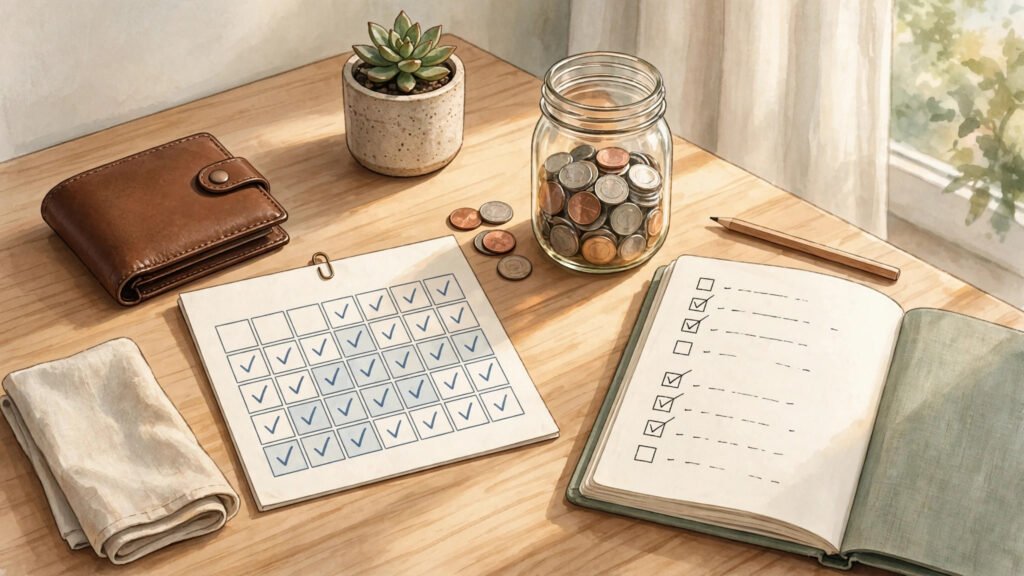
If your money seems to disappear a little every day, a 30-day no-spend challenge can show you exactly where it goes. The idea is simple: for one month, you stop spending on non-essentials and only pay for the things you genuinely need. It is not about punishing yourself or living on nothing. It is about pressing pause, noticing your habits, and resetting the way you spend.
Most people do not overspend on one big purchase. They overspend in small, forgettable amounts — a takeaway coffee here, a late-night online order there, a subscription nobody uses. A 30-day no-spend challenge makes those small amounts visible, because every time you reach for your wallet you have to ask one question: do I actually need this?
Key Takeaways
- A 30-day no-spend challenge means paying only for essentials for one month, while cutting non-essential spending completely.
- Set clear rules and a short list of allowed exceptions before you start, so you do not have to decide in the moment.
- Track what you do not buy each day — the list itself becomes the motivation to keep going.
What a 30-Day No-Spend Challenge Actually Means
During a 30-day no-spend challenge, essentials stay in your budget. Rent, bills, groceries, transport to work, and necessary medicines are all essentials. Everything else — new clothes, takeaways, streaming add-ons, impulse online orders, and nights out — goes on pause for the month. The point is not to feel deprived. It is to prove to yourself that a month without those extras is possible, and often easier than expected.
Before you begin, write your own rules down. Decide what counts as essential for your household and what does not. If you share money with a partner or family, agree the rules together, because a challenge only works when everyone in the household understands it. Keep the rules short enough to remember and realistic enough to follow for a full month.
A month without those extras is possible, and often easier than expected.
Set Your Rules and Exceptions Before Day One
The hardest part of any no-spend month is the moment of temptation, and that is exactly when rules help. Decide your exceptions in advance: a birthday gift for a close family member, a replacement for something that breaks, or a planned medical cost are reasonable exceptions. Write them down so you are not inventing excuses in the shop aisle.
It also helps to remove the easy triggers. Unsubscribe from marketing emails for the month, delete shopping apps from your phone’s home screen, and avoid browsing online stores out of boredom. You are not banning shopping forever — you are giving yourself one month of breathing room to see which purchases you actually miss and which ones you forget about within a day.
- Pay for essentials only: housing, bills, groceries, work transport, and necessary health costs.
- Pause non-essentials: takeaways, new clothes, gadgets, subscriptions you can live without, and impulse buys.
- Agree a short exceptions list in advance, and write it down where you can see it.
- Remove temptations: unsubscribe from sale emails and move shopping apps off your home screen.
How to Get Through the Month Without Giving Up
Start by checking what you already own. Many no-spend months fail in the first week because people buy things they already have at home — extra toiletries, snacks, or a book they forgot they owned. A quick look through your cupboards and shelves before day one can prevent several unnecessary purchases.
Next, replace spending with free alternatives rather than sitting at home feeling bored. Cook the meals you already know, walk instead of paying for a ride when the distance is short, borrow books from a library, and meet friends for a walk or a home-cooked meal instead of a paid night out. If you are trying to save money on groceries, planning meals around what is already in your kitchen is one of the simplest places to start.
Keep a daily note of what you chose not to buy and roughly what it would have cost. You do not need a complicated spreadsheet — a note on your phone is enough. By the second week, that list becomes surprisingly motivating. It also shows you your personal spending patterns: the same kinds of purchases tend to appear again and again, and those are the habits worth changing for good.
What to Do With the Money You Save
Money that is not spent is easy to absorb back into everyday spending, so give it a job as soon as the month ends. Move whatever is left into a separate place before it disappears. If you do not yet have one, learning how to build an emergency fund on a small income is a sensible first use for the money you saved, because it turns one good month into a safety net that lasts.
Then review your list of skipped purchases and sort it honestly. Some items you genuinely missed — those can come back into your normal budget. Others you never thought about again, and those are the easiest permanent cuts. If your income changes from month to month, the same review habit works well alongside budgeting for irregular income, because both approaches start with knowing what you truly need.
Common Mistakes That Break a No-Spend Month
The most common mistake is making the rules too strict. If you ban every small pleasure, including a coffee with a friend that matters to you, the month feels like a punishment and you are more likely to quit. A challenge you finish with a few planned exceptions teaches you far more than a perfect week followed by giving up.
Another mistake is stockpiling before day one. Buying a month of extras in advance defeats the purpose and just moves the spending earlier. Start from what you already have, and let the month show you how much is already enough. Finally, do not judge the challenge by a single slip. If you break a rule once, note it, learn from it, and carry on — one purchase does not cancel thirty days of better awareness.
What to Watch Next
A 30-day no-spend challenge works best as a reset, not a permanent rule. Once the month ends, keep the habits that helped: the written rules, the daily note of skipped purchases, and the free alternatives you enjoyed. Review what you missed and what you forgot, give the money you saved a clear job, and carry the calmer spending habits into the next month. The real win is not one month of saving — it is knowing, from your own experience, how little you actually need to feel comfortable.