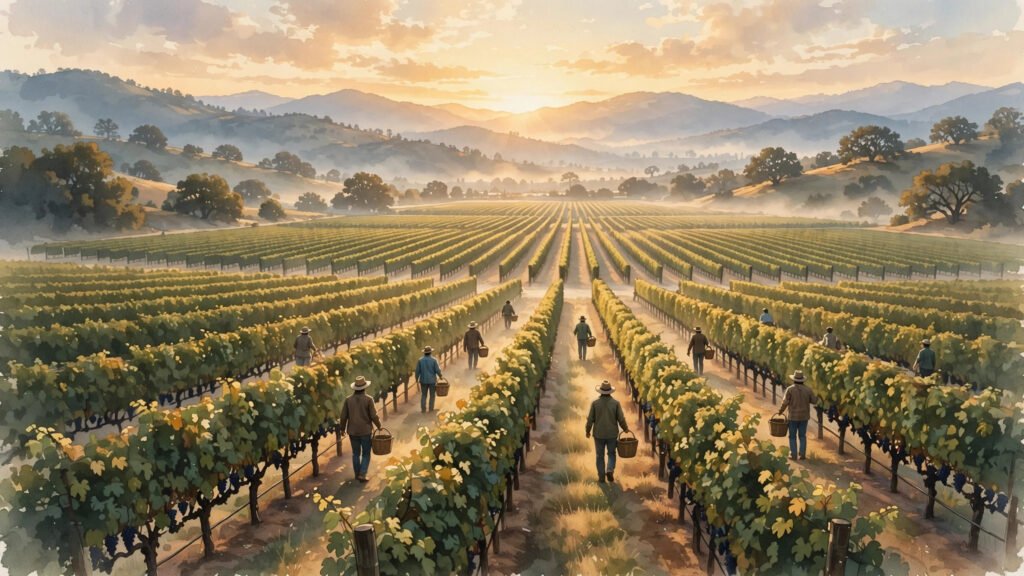
Dolores Huerta, the labour leader who co-founded the United Farm Workers and gave the American farmworker movement its enduring rallying cry, has died at the age of 96. Her family announced on Wednesday that she died at her home in Bakersfield, California, surrounded by family. A family spokesperson said the cause was cancer.
Huerta was one of the foremost women in United States labour history. As the United Farm Workers’ chief negotiator, strike organiser and lobbyist during the movement’s heyday in the 1960s and 1970s, she helped transform the lives of farmworkers in California’s agriculture-rich Central Valley, a workforce that had long been among the country’s most powerless.
Key Takeaways
- Huerta co-founded the organisation that became the United Farm Workers and served as its chief negotiator, strike organiser and lobbyist.
- Union contracts won farmworkers job security, healthcare, retirement plans, rest periods, clean drinking water and protection from pesticides.
- Her slogan “Sí, se puede” outlived the fields where it was born, becoming a rallying cry for social justice movements and a presidential campaign.
From the Classroom to the Fields
Born Dolores Clara Fernandez in Dawson, New Mexico, in 1930, Huerta grew up in Stockton, California, where her mother ran a restaurant and hotel. She began her working life as an elementary school teacher in the San Joaquin Valley, but the poverty she saw in her classroom changed her path: children arrived hungry and without shoes because their parents worked long hours in the fields for wages that kept families in poverty. She later recalled that she could not stand seeing children come to class hungry and needing shoes, and decided to organise farmworkers instead.
Through civil rights work she met labour organiser César Chávez. In 1962 the two founded the National Farm Workers Association, which later became the United Farm Workers of America. Huerta became one of the few women lobbyists of the late 1950s and early 1960s, pressing Sacramento for changes that included Spanish-language driver’s licence exams, extended aid for families with dependent children and disability insurance protections for agricultural workers.
What the Movement Won
Huerta was the union’s principal negotiator, and the contracts she helped win delivered concrete gains: job security, healthcare, retirement plans, a credit union and job-specific protections such as guaranteed rest periods, toilets in the fields, clean drinking water and protection from pesticides. The grape boycotts she helped lead brought national attention to conditions in California’s fields, and the movement’s campaigns ultimately helped pass the landmark California Agricultural Labor Relations Act of 1975, which established collective bargaining rights for farmworkers. The fight she joined has never fully ended: workers’ strikes still make headlines around the world today.
She remained a regular on the college lecture circuit into her 90s, and during elections she travelled the country endorsing candidates and registering voters. In her later years she also spoke out about race, poverty, women’s rights and LGBTQ+ rights, and against the immigration policies of President Donald Trump.
‘Sí, Se Puede’ and a National Stage
Huerta is credited with giving the union its slogan, “Sí, se puede” — “Yes, we can”, or “Yes, it can be done”. Her three-word slogan travelled far beyond California’s fields, into presidential campaigns and protest movements around the world. Barack Obama used the phrase during his successful 2008 presidential campaign, and when he awarded Huerta the Presidential Medal of Freedom in 2012 — the nation’s highest civilian honour — he praised her as a tenacious leader and joked that she had let him off easy for borrowing her slogan.
Her three-word slogan travelled far beyond California’s fields, into presidential campaigns and protest movements around the world.
The Bakersfield-based Dolores Huerta Foundation, which she founded in 2002, carried her work forward through grassroots organising and civic engagement. The foundation held a sold-out celebration of her 96th birthday in Los Angeles in June 2026, and Huerta was still marching in protests last fall, including one in Watsonville, and still urging activists to keep speaking out.
- 1962: Co-founds the National Farm Workers Association with César Chávez.
- 1975: The movement’s campaigns help pass California’s Agricultural Labor Relations Act.
- 2002: Founds the Dolores Huerta Foundation in Bakersfield.
- 2012: Receives the Presidential Medal of Freedom from Barack Obama.
- 2026: Celebrates her 96th birthday in Los Angeles in June; dies at home in Bakersfield in October.
A Painful Revelation in 2026
This year Huerta also revealed a painful secret she had kept for six decades: that Chávez had sexually assaulted her in the 1960s, in encounters that resulted in two pregnancies, with the babies raised by others. She said she had stayed silent to protect the farmworker movement. The revelation, first shared publicly earlier in 2026, sent shock waves through the Latino community and added a painful coda to a partnership that defined her public life. From the early 1970s on, her life partner was Richard Chávez, César’s brother, and together they had four children; she also had seven children from two earlier marriages.
What to Watch Next
Huerta’s family said they will follow up with plans to recognise and celebrate her life, and that many around the world share in their mourning. The United Farm Workers’ president said Huerta left farmworkers and the Latino community stronger and more organised than she found them. The foundation she built continues its grassroots organising and civic engagement work, carrying forward the cause she chose in a San Joaquin Valley classroom more than sixty years ago.