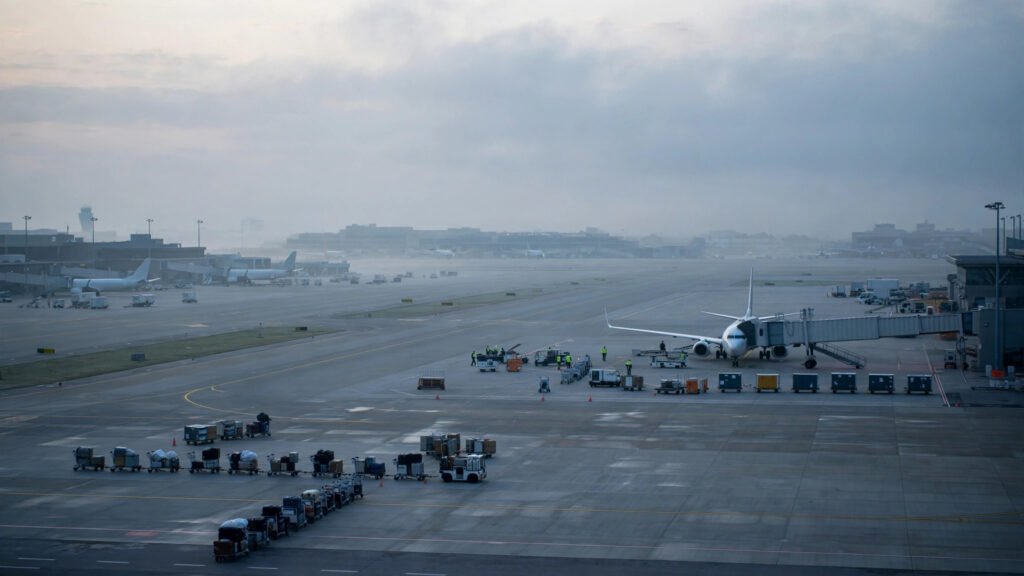
Hundreds of Qantas ground workers are on a 24-hour strike at five major Australian airports on Wednesday, October 28, 2026, in a dispute over pay, working conditions and job security. The stoppage covers Sydney, Melbourne, Adelaide, Brisbane and Perth airports, and the workers involved handle freight operations and some QantasLink passenger operations in Sydney.
The action was organised by the Transport Workers’ Union (TWU), which represents the workers employed across three Qantas subsidiaries: Qantas Airways Limited (QAL), Qantas Ground Services (QGS) and Australian Air Express (AAE). The union says the workers are seeking pay in line with industry standards, more full-time jobs and more hours, and it wants the workforce brought back under one Qantas banner.
Qantas, for its part, says it does not expect the strike to disrupt customers. The airline says the workers taking part do not service Qantas domestic or international flights, or QantasLink services outside Sydney, and it says it has contingency plans in place. That gap between the two sides’ accounts is the central fact for travellers today: the union is staging a visible stoppage at five airports, while the airline insists the effect on passengers will be minimal.
Key Takeaways
- Hundreds of Qantas ground workers are on a 24-hour strike on October 28 at Sydney, Melbourne, Adelaide, Brisbane and Perth airports.
- The workers handle freight and some QantasLink operations in Sydney, and Qantas says it does not expect disruption for customers.
- The TWU is seeking pay in line with industry rates, more full-time jobs and a workforce brought back under one Qantas banner, while Qantas points to pay rises of up to 26 per cent over the life of its proposed agreement.
Who Is Striking, and Where
The striking workers are ground staff, not pilots or cabin crew. Their roles include moving freight, including freight for Australia Post, and supporting QantasLink passenger operations. According to reports of the dispute, fewer than 600 Qantas employees were eligible to take the protected industrial action, and most of those taking part work in freight operations.
The five airports in the stoppage are the country’s largest gateways: Sydney Kingsford Smith, Melbourne Tullamarine, Brisbane, Adelaide and Perth. The Sydney element matters most for passengers, because it is in Sydney that the striking workforce also handles some QantasLink operations. Outside Sydney, Qantas says, the workers do not handle QantasLink services, and they do not handle Qantas domestic or international flights at all.
Travellers on QantasLink services from Sydney were advised in advance to check their flight status before heading to the airport. That advice is worth repeating generally: in any airport dispute, the airline’s own flight-status page is the fastest check, and airport disruption elsewhere has the same lesson, as covered in our report on travel disruption during Storm Boelo in Scotland, where checking before travelling saved passengers wasted journeys.
What Each Side Says
The TWU’s case is that the current structure leaves workers worse off. The union says the employees were divided between three companies after restructuring under former Qantas chief executive Alan Joyce, and it argues that splitting the workforce reduced experience at airports and contributed to unsafe conditions for staff and passengers. It also refers to the death of a Qantas freight worker on Father’s Day last year, and to the airline’s unlawful outsourcing of about 1,800 workers in 2020, which the union says left the remaining ground workforce smaller and less secure.
TWU national secretary Michael Kaine was quoted as saying workers were being forced once again to strike because the alternative was an industry of dangerously unsafe standards for them and passengers. That is the union’s framing, and it should be read as such: a claim about safety and standards, not a finding about today’s flights.
Qantas rejects the idea that customers will be affected. A Qantas spokesperson was quoted as saying the airline has strong contingency plans in place and does not expect the action to cause any disruption to QantasLink customers. The airline has also put a new enterprise agreement directly to QGS employees, offering pay rises of up to 26 per cent over the life of the agreement, back pay to September 2025, more full-time opportunities and guaranteed part-time hours. The dispute is about more than one day’s pay claim: it is about who employs the workers, and on what terms.
The dispute is about more than one day’s pay claim: it is about who employs the workers, and on what terms.
Why This Dispute Has Run So Long
Wednesday’s walkout is not the first in this dispute. An earlier strike in September saw Qantas ground staff walk out alongside Sydney Airport security screeners, and the current action follows months of bargaining without an agreement the union can accept. The pattern is familiar across aviation: after the pandemic-era restructuring, airlines and unions have spent years renegotiating who does ground work, on what contract, and with what security of hours.
The timing also matters for the wider Australian aviation market. With Virgin Australia cabin crew moving towards a strike ballot of their own, unions are pressing both of Australia’s major airline groups ahead of the holiday season. Aviation businesses are sensitive to exactly this kind of pressure, because a freight delay or a regional delay spreads quickly through schedules, as covered in our report on JetBlue’s earnings-driven share surge, where investor attention turned on how an airline manages costs and operations together.
For freight customers, the stakes are more concrete than for most passengers. Freight moved through the five airports includes parcels and business cargo, and any bottleneck in baggage sorting or freight loading can delay deliveries even when passenger flights operate normally. Qantas says its contingency plans cover this, but freight customers with time-critical shipments should confirm their delivery status directly rather than assume a normal timetable.
- 24-hour stoppage: the strike runs for a full day on October 28 at five airports.
- Freight first: most striking workers handle freight, including for Australia Post, with passenger impact concentrated on some Sydney QantasLink operations.
- Pay offer on the table: Qantas points to rises of up to 26 per cent plus back pay to September 2025; the union wants industry-rate pay, more full-time roles and one employer banner.
- Check before you travel: QantasLink passengers from Sydney should check flight status before heading to the airport.
What It Means for Travellers
For most Qantas passengers today, the airline’s message is that nothing changes: domestic and international flights are not serviced by the striking workforce, and QantasLink outside Sydney is also outside the stoppage. For QantasLink passengers departing Sydney, the position is less categorical, and the practical advice is to check flight status, allow extra time at the airport, and keep an eye on airline messages during the day.
Airport reopenings and closures elsewhere show how quickly the picture can change during a single day, as covered in our report on Riyadh airport reopening after a two-week closure. A stoppage that starts with no disruption can still produce knock-on delays if freight backlogs build, so the sensible approach for anyone with a connection or a tight schedule is to monitor updates rather than rely on a morning statement alone.
What to Watch Next
What to watch next is whether the 24-hour stoppage ends as a one-day protest or becomes the start of further action. The union has already shown it will strike more than once, and the Virgin Australia ballot shows the pressure is not limited to one airline group. The next signals will be the union’s response to Qantas’s direct agreement offer, any report of freight delays at the five airports during the day, and whether QantasLink services from Sydney operated normally. If the agreement offer is accepted, the dispute narrows quickly; if it is rejected, further stoppages before the holiday season become more likely, and travellers should expect more days like today.