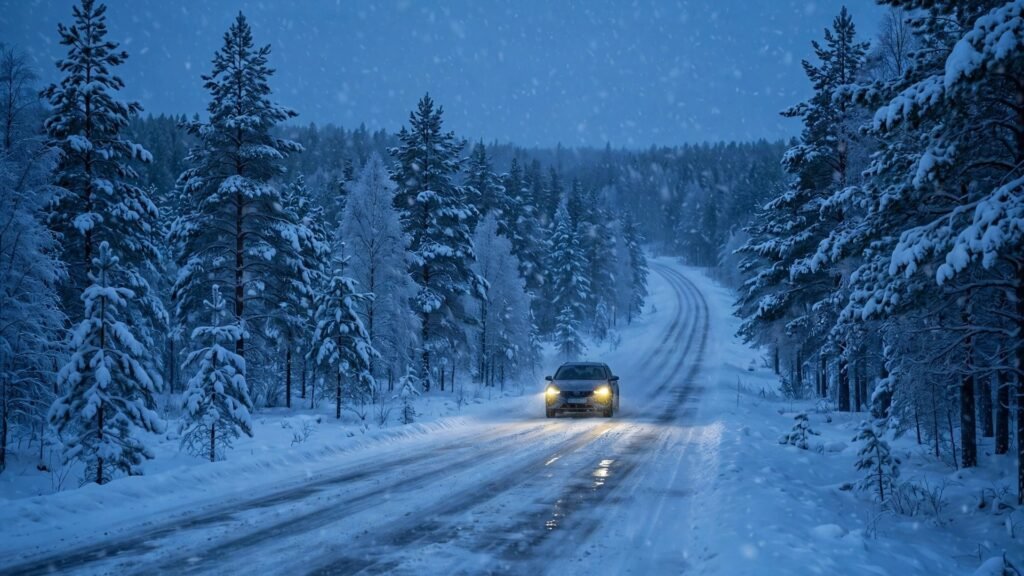
Why do Finns check their phones for road weather before winter driving? In Finland, winter is not a short season. It is a long stretch of snow, ice and darkness, and the road you drive on in the morning can feel very different by the afternoon. That is why a quick phone check has become part of getting ready to drive, just like warming up the car and clearing snow from the windows.
For many Finnish drivers, the check happens before the keys even come out of a pocket. A glance at road weather, traffic cameras and route conditions tells them whether the journey ahead is straightforward, slow, or better delayed. It is a small habit, but on a winter road it can make a real difference.
Key Takeaways
- Finnish winters bring ice, snow and long hours of darkness, so road conditions can change quickly during a single journey.
- Road weather data and traffic cameras help drivers see what is waiting on their route before they leave home.
- The phone check helps drivers slow down, choose a safer route, or wait out the worst of the weather.
Why Winter Roads in Finland Need a Check First
Finland stretches far to the north, and winter arrives early and stays late in many parts of the country. Snowfall can be heavy, temperatures can stay below freezing for weeks, and daylight can shrink to just a few hours in the middle of winter. Each of these factors changes how a road behaves.
Ice is the biggest worry. A road can look clear and still be slippery, especially on bridges, shaded stretches and quiet country roads where the sun rarely reaches. Fresh snow can hide lane markings and make it hard to judge where the road ends and the verge begins. Strong wind can blow snow across open fields and cut visibility in seconds.
Darkness adds another layer. When most of the drive happens in twilight or full dark, a driver has less time to spot a patch of ice, a snowdrift or a slow-moving vehicle ahead. Checking conditions before leaving means fewer surprises once the journey has started.
A quick phone check has become part of getting ready to drive, just like warming up the car and clearing snow from the windows.
What Road Weather Actually Tells a Driver
Road weather is more specific than a general weather forecast. Instead of just saying it will snow in a region, road weather information describes what is happening on the road surface itself: whether it is dry, wet, icy or snow-covered, and how the temperature is behaving. Finland’s road authority publishes this kind of data from weather stations along the road network, together with images from traffic cameras.
That detail matters because two roads in the same area can be very different. A busy main road that has been gritted and ploughed may be fine, while a smaller side road nearby is still icy. A camera image can show whether snow is settling, whether ploughs have passed, and how heavy the traffic looks.
Drivers also watch the trend, not just a single moment. If the temperature is falling and snow is expected to keep coming, a road that is passable now may be much worse in an hour. If the forecast shows conditions easing, waiting a little while can turn a difficult drive into an ordinary one.
- Road surface conditions: dry, wet, icy or snow-covered stretches along the route.
- Traffic camera views: real pictures of the road, snow cover and visibility.
- Temperature trends: whether the road is getting colder, icier or easier to drive on.
- Route differences: main roads and quiet side roads can behave very differently in the same weather.
How the Phone Check Fits Into the Journey
The habit is simple. Before leaving, a driver opens a road weather or traffic app, looks at the route, and checks the worst stretches first. If the route crosses an exposed area where wind and snow are usually worst, that section gets extra attention. If an alternative main road looks clearer, it may be worth the longer drive.
This kind of checking before travelling is not unique to Finland. In Canada, many drivers check winter storm and snow alerts on their phones before getting behind the wheel, and in Lithuania travellers check bus and train times on their phones before setting off, because connections and schedules shape the whole trip. The Finnish version is built around the road itself: surface, ice and visibility.
The phone is also useful during a stop. A driver who pulls over at a service station can recheck the road ahead before continuing, especially on a long journey across regions where the weather may be changing. The point is never to check while driving. The check happens before departure or during a proper break, when it can actually change the plan.
What to Do When Conditions Look Bad
When road weather looks poor, Finnish drivers have a few sensible options. The simplest is to slow down and leave much more space to the vehicle ahead, because stopping distances grow sharply on ice. Another is to take a main road instead of a shortcut, since main roads are usually treated first and carry more traffic to keep the surface clearer.
Sometimes the right call is to wait. Delaying a trip by an hour or two can mean the difference between driving through the heaviest snowfall and driving after ploughs have cleared the road. For journeys that cannot wait, winter tyres, a charged phone, warm clothing and a full tank or charge are part of the preparation, not an afterthought.
It is also worth remembering that road weather information is a guide, not a guarantee. Conditions can change between weather stations, and a camera shows one spot at one moment. Careful driving still matters most, and no app replaces attention, speed suited to the road, and respect for ice.
What to Watch Next
The Finnish winter driving habit comes down to one idea: look before you leave. Icy roads, snow and darkness can change a journey fast, and road weather data plus traffic cameras give drivers a clearer picture of what is ahead. Used before departure and during stops, that picture helps drivers slow down, pick a safer route, or wait out the worst of the weather.
As winter goes on, the same check stays useful week after week, because every cold snap brings a new combination of ice, snow and light. The drivers who check first are not being cautious for its own sake. They are giving themselves the information they need to arrive safely, and that is a habit worth keeping all winter long.