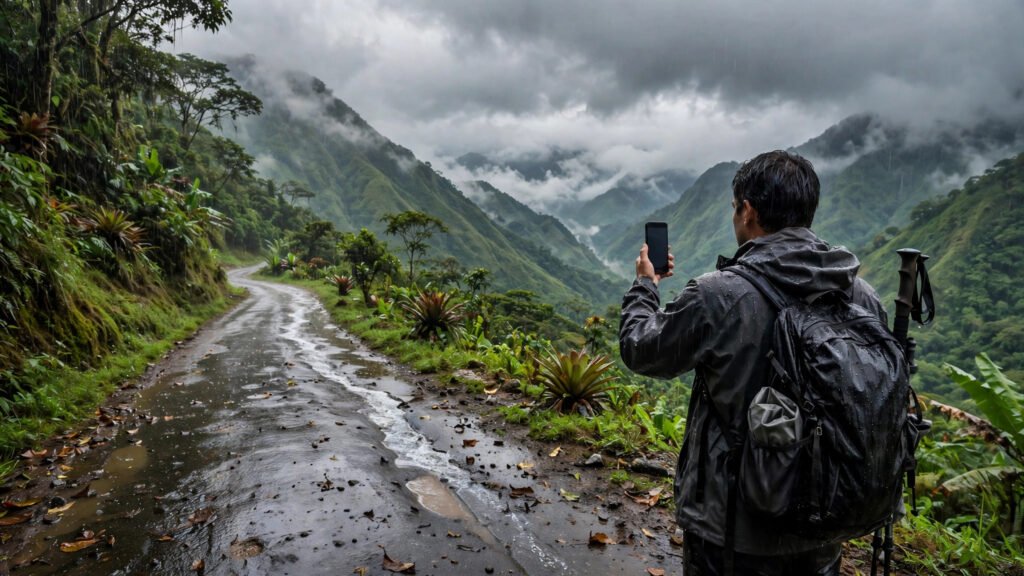
In Honduras, a journey often starts with a simple habit: look at the sky, then look at the phone. Rain that seems light in one town can be heavy a few valleys away, and a road that was clear in the morning can become slow, muddy or closed by the afternoon. That is why many Hondurans check their phones for rain and flood alerts before travelling, not after they are already on the road.
The check is not about curiosity. It is about making a practical decision: leave now, wait a little, take another route, or change the plan for the day. For people who travel between cities, visit family, go to work or move goods, that decision can save hours of waiting — and help them avoid a route that is no longer safe to use.
Key Takeaways
- Rain can change Honduran road conditions quickly, so a phone check before travelling helps people decide whether to go, wait or reroute.
- A useful check covers the forecast, flood and road alerts, and conditions along the whole route — not only the weather at the starting point.
- When an alert points to flooding or a closed road, the safer choice is usually to delay the trip or choose another route.
Why Rain Can Change a Journey So Quickly
Honduras has steep mountains, narrow valleys and low-lying coastal plains, and those shapes matter when it rains. Water runs down hillsides, gathers in rivers and can spread across flat ground near the coast. A road that crosses a river valley, follows a hillside or passes through a low area can therefore be affected even when the rain fell somewhere else.
That is why a dry morning at home is not always a reliable guide. A traveller may need to cross several different kinds of terrain in a single trip, and conditions can differ from one stretch to the next. The phone check brings those different places together in one place, so the traveller is not guessing from a single window view.
Rain also affects more than comfort. It can slow traffic, reduce visibility, make surfaces slippery and hide potholes or standing water. In low areas, rising water can make a crossing risky long before a road looks completely flooded. Checking first helps people treat those risks as part of the plan, rather than as a surprise halfway through the journey.
What a Phone Check Actually Tells a Traveller
A good check usually has three parts. First, the forecast: is rain expected, and for how long? Second, alerts: has any authority or local news source warned about flooding, landslides, strong winds or road closures? Third, the route itself: what are conditions like in the towns and valleys the traveller will pass through?
People often compare more than one source. A forecast app may show rain, while a local news update or a message from someone already on the road may explain what that rain is doing to traffic. Together, those pieces give a fuller picture than any single screen. Similar habits can be seen elsewhere, where travellers also rely on storm alerts before severe weather to plan around dangerous conditions.
That is why a dry morning at home is not always a reliable guide.
The check is also useful because it is quick and repeatable. A traveller can look again before leaving, again at a stop, and again if the sky changes. That repeated checking fits journeys where conditions change during the day, and it lets people adjust without needing to find a television or a newspaper on the way.
How Travellers Use the Information
Once the information is in hand, the choices are usually simple. If the route looks clear, the traveller leaves as planned. If rain is expected but no flood warning is in place, they may leave earlier, allow extra time, or pack for wet conditions. If a flood alert covers part of the route, they may wait, take a different road, or postpone the trip.
These decisions matter most for longer trips. On long bus journeys and other intercity travel, a problem many kilometres ahead can still affect the whole day, because turning back is costly and alternative routes may be limited. A phone check at the start reduces that risk, even though it cannot remove it completely.
- Check the forecast for the whole route, not just the departure town.
- Look for flood, landslide and road-closure alerts as well as rain.
- Recheck at stops, because conditions can change during the day.
- If water covers a road, do not try to cross it — wait or reroute.
- Tell family or fellow travellers about a changed plan before setting off.
For many people, the habit also fits how phones are already used in everyday life. Phones are already part of daily life in Honduras, and many people use them to stay in touch, follow news and manage practical tasks — a pattern reflected in how Hondurans receive money from abroad on their phones rather than travelling to a distant office. Checking weather before a journey is a natural extension of that same habit: one device, many everyday jobs.
Why This Habit Matters Beyond One Trip
When many people check before travelling, the benefit spreads. Roads are less crowded with vehicles that would otherwise turn back, and drivers are less likely to arrive at a flooded crossing with no plan. Families also worry less when a traveller has already checked and shared a revised plan.
The habit also encourages a calmer approach to bad weather. Instead of rushing to beat a storm, a traveller who has seen an alert can treat waiting as the sensible option. That shift — from reacting to rain to planning around it — is the real value of the phone check.
None of this means a forecast is always exact. Rain can arrive earlier or later than expected, and a road can change after the last update. The phone is a guide, not a guarantee, which is why travellers still need to watch the road itself and turn back if conditions look unsafe.
What to Watch Next
For Honduran travellers, the lesson of this habit is simple: check the rain and flood alerts before travelling, look at the whole route rather than only the starting point, and be ready to wait or reroute when an alert points to flooding or a closed road. A few minutes with a phone at the start of a journey can make the rest of the trip safer, calmer and easier to plan — and that is why the check has become part of travelling in Honduras.