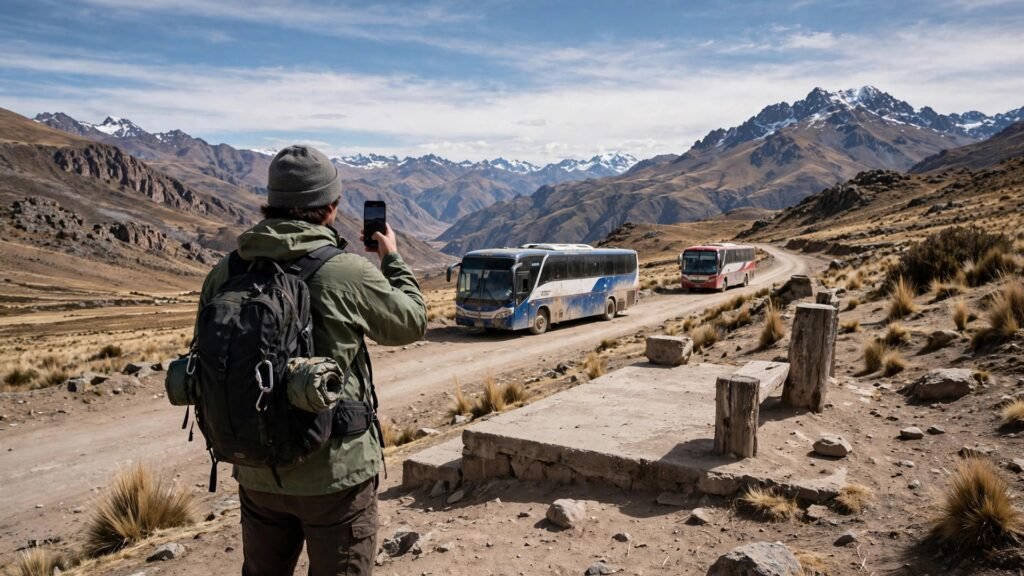
For many Bolivians, a long bus journey does not begin at the bus terminal. It begins with a phone. Before packing a bag or heading out the door, travellers open their phones to check the road ahead: whether the route is open, whether the weather has changed in the mountains, and whether the bus is likely to leave on time. It is a small habit, but on Bolivia’s long and high routes, it can make the difference between a smooth trip and a very long wait.
Bolivia is a country of great distances and dramatic geography. Cities are separated by mountain passes, high plains, valleys and long stretches of open road. A journey that looks short on a map can take many hours, and conditions can change quickly along the way. That is why the phone check has become part of the journey itself, almost like buying the ticket.
Key Takeaways
- Bolivians check their phones before long bus journeys because mountain roads, weather and road blocks can change a trip at short notice.
- A quick check helps travellers choose when to leave, which route to take, and whether to wait before setting out.
- The phone has become a practical travel tool for staying in touch with family and for planning around delays on long routes.
Long Distances and High Roads
Bolivia’s main cities are spread across very different landscapes. La Paz and El Alto sit high in the Andes, while Cochabamba lies in a valley and Santa Cruz de la Sierra is in the lowlands to the east. Travelling between them often means crossing high passes, descending into warmer valleys, and then climbing again. Each change in altitude can bring a change in weather, visibility and road surface.
For people who travel these routes for work, study, family visits or business, the journey is a normal part of life. Students return home for holidays, workers travel to another city for a job, and families visit relatives across the country. Because the trips are long, travellers want to know as much as possible before they start. A phone offers that information in one place, without a trip to the terminal just to ask.
In that sense, Bolivia shares something with other countries where bus travel shapes daily life. In Colombia, for example, many people check their phones before taking buses in Bogotá and other big cities, because timetables and traffic can shift during the day. The habit is similar, even though the landscape is different.
Why Road Blocks Change Plans
One of the main reasons Bolivians check their phones is the possibility of a road block. In Bolivia, road blocks, known as bloqueos, are a well-known form of protest, and they can close a highway for hours or longer. A traveller who sets out without checking may reach a blocked road and have to wait, turn back, or find another route.
That is why news about blocked routes spreads quickly through messages, social media and local updates. A short message from a friend, a post from a local news page, or an update from a transport group can tell a traveller that a particular stretch of road is closed. Checking first does not guarantee a clear road, but it helps people avoid starting a journey that cannot be finished that day.
Checking first does not guarantee a clear road, but it helps people avoid starting a journey that cannot be finished that day.
The effect is practical rather than dramatic. A traveller might leave later, choose a different departure, stay with family for another night, or take a different route if one is available. For people travelling with children, luggage or goods to sell, that kind of early warning matters even more, because waiting on a closed road is harder than waiting at home.
Why Weather Matters on Mountain Roads
Weather is the second reason for the phone check. On high mountain roads, rain, fog and strong wind can reduce visibility and make driving slower and more difficult. In the rainy season, heavy rain can also affect road surfaces and cause delays. A clear morning in one city does not mean the mountain pass will be clear later in the day.
Travellers therefore check weather updates for the places along the route, not just for the city where they start. They look at the forecast for the pass, the valley and the destination, and they compare what different sources say. If the weather looks difficult, they may decide to travel earlier, later, or on another day.
This habit is familiar in other places with difficult driving weather too. In Finland, many drivers check their phones for road weather before winter driving, because conditions can change fast on the road. In Bolivia, the challenge is altitude and mountain weather rather than winter ice, but the idea is the same: know the road before you are on it.
What People Check Before Leaving
The phone check is usually quick, but it covers several questions at once. Travellers want to know whether the road is open, what the weather will be like, and whether their bus is running as planned. They may also check how long the journey is likely to take, and let family know when they expect to arrive.
- Whether the main route is open, blocked, or delayed
- What the weather is like on mountain passes along the way
- Whether the bus departure is on time or has changed
- Which alternative route, if any, is available
- When to message family about arrival time
Bus companies, driver groups and fellow passengers often share updates, and travellers pass them on. A message in a family group or a transport group can reach many people quickly. In this way, the phone is not only a source of information, but also a way for travellers to help each other.
People who travel regularly also learn which sources they trust. Some prefer local news updates, others trust messages from drivers who are already on the road, and many compare more than one source before deciding. Over time, each traveller builds a routine that fits the route they use most.
How a Simple Check Saves Time and Worry
The main benefit of checking is control over time. A long bus journey already takes many hours, and an unexpected delay can turn it into a much longer day. By checking first, travellers can choose a better time to leave, avoid a blocked road, or postpone a non-urgent trip. That choice can save hours of waiting and reduce stress, especially for people travelling for an appointment, an exam, or a family event.
The check also helps families stay connected. When a traveller shares an expected arrival time, family members at the destination know when to wait, when to prepare, and when to worry if the traveller is late. If a delay happens during the journey, a short message can explain what is happening. On long routes where phone signal can vary, even a brief update before leaving is useful.
For people who travel for work, the phone check is also a planning tool. A trader carrying goods, a worker heading to another city, or a student returning to classes all need to plan around arrival time. Knowing about a delay early allows them to inform others, change plans, and avoid missing something important.
As in other countries where public transport times matter, checking bus and train times in advance has become a normal part of travel. In Lithuania, for example, travellers check their phones for bus and train times before travelling, because a missed connection can change the whole day. In Bolivia, the stakes are often higher because the distances are longer and the roads are more exposed to weather and blocks.
What to Watch Next
The habit of checking before travelling is likely to stay part of long bus journeys in Bolivia, because the reasons behind it are not going away. Mountain roads will still bring changing weather, long distances will still make planning important, and road blocks will still be able to close a route at short notice. Travellers will keep using their phones to check whether the road is open, what the weather is like on the passes, and whether their bus is running as planned.
What may change is how easily that information reaches people. As more updates are shared through messages, local news and transport groups, travellers may get earlier and clearer warnings about blocked routes and difficult weather. For now, the simple phone check before leaving remains the most practical way to plan a long journey across Bolivia’s high and varied landscape.