Explained: Why Do Poles Pay With BLIK Instead of Cash and Cards?
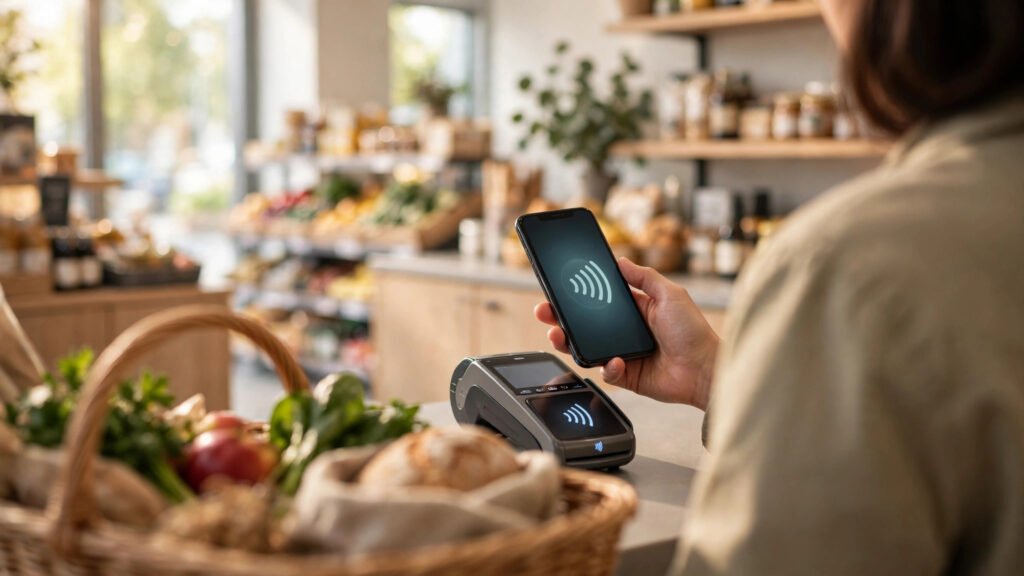
In Poland, paying often starts with a phone rather than a wallet. A shopper at a checkout, a friend splitting a bill, or someone buying a ticket online may all reach for the same thing: a short code shown in their bank app. That code is BLIK, Poland’s home-grown mobile payment system, and for many people it has become the default way to pay.
For many Poles, the phone has quietly become the wallet, and BLIK is the reason why. It does not require carrying cash, and it does not require typing out a long card number for an online purchase. Instead, it connects a payment directly to a bank account through an app most people already use every day.
What Is BLIK?
BLIK is a mobile payment method built around Polish banks. Rather than being a separate wallet that must be topped up in advance, it works inside a participating bank’s own mobile app. A customer opens the app, generates a code, and uses that code to approve a payment. The money then moves from their bank account to the seller or to another person.
The idea is deliberately simple. People already trust their bank app for checking a balance or sending a transfer, so paying through that same app feels familiar. There is no new account to open and no separate card to carry, which lowers the barrier for people who might otherwise stick with cash.
How a BLIK Payment Works
In a shop, a BLIK payment usually works in one of two ways. The customer may show or enter a code at the checkout, or scan a code displayed by the seller, depending on how the terminal or till is set up. Online, the customer selects BLIK at checkout, enters the code from their bank app, and confirms the payment in the app itself.
Payments between people work in a similar spirit. Instead of asking for an account number, a sender can often send money to a recipient’s phone number, provided the recipient has linked that number to their bank account for BLIK transfers. That makes splitting a restaurant bill or repaying a small loan far less awkward than exchanging long account details.
BLIK can also be used for some cash withdrawals at compatible machines, without inserting a card. The customer generates a code in the bank app and enters it at the machine, then confirms the withdrawal in the app. Not every machine supports this, so it is worth checking before relying on it, but where it is available it is one more reason the physical card can stay at home.
Why Poles Reach for It First
Speed is the most obvious reason. A short code is quicker to produce than counting out notes and coins, and quicker than finding a card, entering a PIN, and waiting for a receipt. For small everyday purchases, that saved moment adds up across a week of shopping, travel, and coffee stops.
Security habits play a part too. Because each code is only valid for a short time, a code seen by someone else cannot simply be reused later. Online shoppers also avoid typing their full card details into every new website, since the approval happens inside their own bank app. That combination of speed and control is hard for cash or a typed card number to match.
Availability matters as well. Once a payment method is accepted in supermarkets, small shops, and online stores alike, people stop thinking about whether it will work and simply use it everywhere. BLIK reached that point in Poland because banks, shops, and online sellers adopted it together, so customers rarely have to switch to a backup method mid-purchase. A similar network effect helps explain why Sweden’s Swish became a daily habit, and why Kenya’s M-Pesa spread so widely: once everyone around you uses the same system, using it yourself becomes the easiest choice.
There is also a practical point about everyday life in Poland. Many bills, tickets, and online orders are already handled on a phone, so a payment method that lives on the same device fits naturally into routines people already have. It is not a separate gadget or a separate habit to learn, just one more thing the bank app can do.
Where BLIK Does Not Replace Cards
BLIK is strongest inside Poland. A traveller paying abroad, booking with a foreign seller, or renting a car that requires a card hold will usually still need a debit or credit card. Cards remain the common language of payments across borders, while BLIK is, by design, a Polish system tied to Polish bank accounts.
Some situations also still favour cash. Small markets, older tills, or a seller without a compatible terminal may not accept mobile codes, and a phone with a dead battery cannot generate one at all. That is why most Poles who use BLIK daily still keep a card, and often some cash, as a backup. The shift is real, but it is a shift in first choice rather than a complete replacement.
For visitors to Poland, the lesson is simple: BLIK itself is generally for people with a Polish bank account, so a card remains the practical option for a short stay. For residents, though, the question at the checkout has changed from “cash or card?” to “shall I just use BLIK?” — and increasingly, the answer is yes, much as Singapore’s PayNow has changed the default answer for many Singaporeans.
Key Takeaways
- BLIK is a Polish mobile payment system that works inside a participating bank’s app, using a short-lived code to approve payments.
- It covers shops, online checkouts, payments between people, and some card-free cash withdrawals.
- Its speed, short-lived codes, and wide acceptance in Poland explain why it became many Poles’ first choice, even though cards are still needed abroad and as a backup.
For many Poles, the phone has quietly become the wallet, and BLIK is the reason why.
- A BLIK code is generated in your bank app and is only valid for a short time.
- Online, you enter the code and confirm the payment inside your own bank app.
- Money can be sent to another person using their phone number, where linked.
- Cards and cash remain useful backups, especially when travelling abroad.
What to Watch Next
BLIK’s story in Poland is now less about whether people will try it and more about how far its everyday use will extend. Its strength remains its simplicity: a code from a familiar bank app, approved in seconds, without cash or typed card details. Its limits are equally clear: it is a Polish system, so cards still matter abroad and as a backup when a phone or terminal cannot cooperate.
For anyone watching how countries pay, Poland is a useful example of what happens when banks, shops, and online sellers back the same mobile method. The phone becomes the wallet not because cash and cards disappear, but because one familiar option becomes just a little bit easier than all the rest.