Explained: Why Do Swedes Pay With Swish Instead of Cash and Cards?
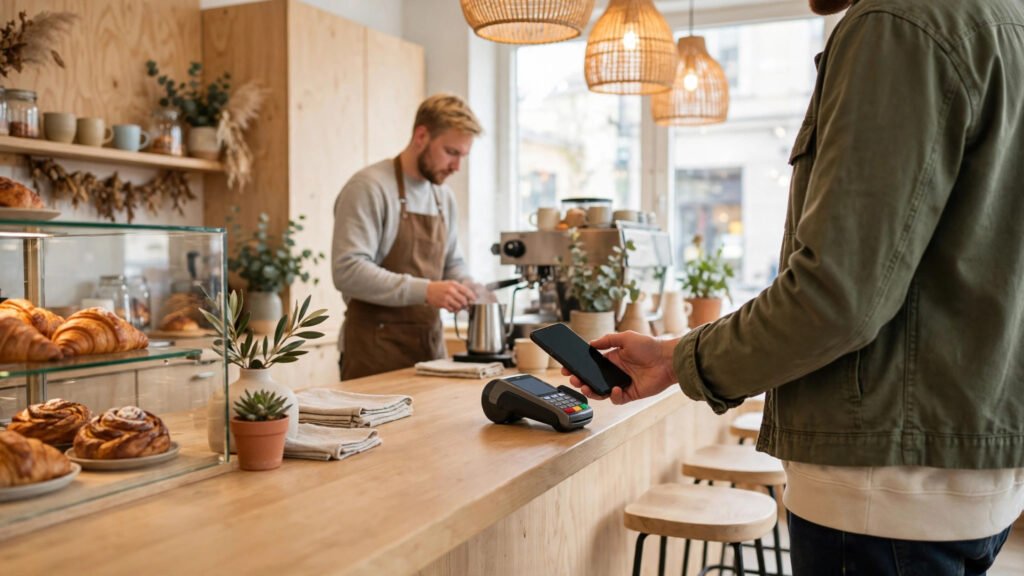
Walk into a café in Stockholm, a market stall in Gothenburg, or a second-hand sale in a small Swedish town, and you will probably see the same thing: a buyer opens an app, types in a phone number, and the payment is done in seconds. That app is Swish, and for many people in Sweden it has quietly replaced both cash and, in everyday situations, even the card terminal.
Swish is a mobile payment service that moves money directly between bank accounts in Sweden. It is run by the country’s major banks working together, and it is tied to a person’s phone number rather than to a card number. That simple idea — pay someone using only their mobile number — is the reason it spread so fast, and why it still fits Swedish daily life so well.
- Swish moves money directly between Swedish bank accounts using just a mobile phone number.
- It took off because Sweden was already moving away from cash and almost everyone had a bank account and a smartphone.
- Cards still matter for shops and online shopping, but Swish wins for person-to-person payments and small everyday transfers.
What Swish Actually Does
At its core, Swish is a way to send money from one Swedish bank account to another in real time. The sender opens the app, enters the receiver’s mobile number or scans a QR code, types the amount, and confirms with their bank’s identification method. The money appears in the receiver’s account within seconds, day or night.
There is no need to ask for a bank account number, no card to insert, and no waiting days for a transfer to clear. For splitting a restaurant bill, paying a friend back, or sending money to a family member, that speed and simplicity is hard to beat. Businesses can use Swish too, through a QR code at the till or a payment option in an online checkout, which means the same app covers both private and commercial payments.
Swish works because it sits on top of Sweden’s existing banking system. The major Swedish banks built it together, so a customer of one bank can pay a customer of another bank without either side needing a new account. That shared foundation removed the usual problem with payment apps: the worry that the other person might not have the same app.
Why Sweden Was Ready for It
Sweden was already one of the least cash-dependent countries in the world before Swish arrived. Card payments were the norm, bank accounts were widespread, and trust in digital banking was high. Swish did not have to convince people to give up cash — it only had to make the remaining awkward payments easier.
The awkward payments were the ones between people. Splitting costs, paying for a used bike, or chipping in for a gift all used to mean cash, a slow bank transfer, or an IOU. Swish solved exactly that problem, and it did so with a tool people already carried everywhere: their phone.
Swish did not have to convince people to give up cash — it only had to make the remaining awkward payments easier.
Timing mattered as well. Smartphones were already common, mobile banking was familiar, and Sweden’s secure digital identification system made it easy to confirm a payment safely. Swish arrived into an environment where every piece it needed was already in place, so adoption could spread by word of mouth rather than by heavy promotion.
Swish Versus Cash and Cards
Cash still exists in Sweden, but it plays a much smaller role than it once did. Many shops, buses, and cafés prefer card or mobile payments, and carrying coins for small purchases feels unnecessary to a growing number of Swedes. Swish goes one step further than a card for private payments, because it needs no terminal, no change, and no physical object at all.
Cards remain strong where Swish is weaker. A card works abroad, works for large in-store purchases, and is accepted almost everywhere in Sweden. Swish, by contrast, is mainly a Swedish system: it is designed for payments inside Sweden, between people and businesses connected to Swedish banks. For a tourist visiting Stockholm, a card is still the practical choice.
- Instant transfers between Swedish bank accounts, any time of day
- No card terminal or cash needed — just a mobile number or QR code
- Built jointly by Sweden’s major banks, so it works across banks
- Best for person-to-person payments, bill splitting, and small everyday transfers
The comparison that matters most is not Swish against cards in shops, but Swish against the old ways of paying another person. Against cash, it removes the need to visit an ATM. Against a traditional bank transfer, it removes account numbers and waiting times. That is why it feels less like a replacement for cards and more like a missing piece that finally arrived.
Where Swedes Use Swish Every Day
Everyday examples show how deeply Swish fits into Swedish routines. Friends split a dinner bill by sending their share on the spot. Parents send pocket money to teenagers. People pay for second-hand clothes, furniture, and electronics sold through local marketplaces. Small clubs and sports teams collect membership fees without handling cash. Street vendors, market stalls, and charity collectors display a Swish QR code instead of a cash box.
It also plays a role in moments that used to be clumsy. A neighbour who lends a tool, a colleague who books a shared taxi, or a family member who covers a grocery run can all be paid back before the conversation ends. That immediacy changes behaviour: debts between friends stop lingering, because settling them takes seconds.
For related everyday payment habits in other countries, see how Norwegians pay with Vipps instead of cash and cards, how Bangladeshis pay with bKash and Nagad instead of bank cards, and how Peruvians pay with Yape and Plin instead of cash and cards.
What Swish Does Not Do
Swish is not a bank account, a credit card, or an international payment network. It moves money that already sits in a Swedish bank account, and it depends on that account and on Swedish mobile identification. Someone without a Swedish bank account cannot simply download it and start paying.
That limitation is also part of its strength. Because it is narrow and focused, it does one job very reliably instead of trying to do everything. Swedes still use cards for shopping abroad, for online purchases from foreign stores, and for situations where a card terminal is simply more practical. Swish has not replaced the whole payment system — it has taken over the part of it that used to be the most annoying.
What to Watch Next
Swish shows no sign of fading from Swedish daily life. The question now is how far its model spreads: whether more businesses build it into their checkouts, whether it stays a Swedish system or connects more closely with payment systems in neighbouring countries, and whether younger Swedes, who have barely used cash at all, keep treating a phone number as the natural way to pay someone. What is already clear is the shift it represents: in Sweden, paying another person no longer means finding cash or exchanging account numbers — it means opening an app and sending money in seconds.