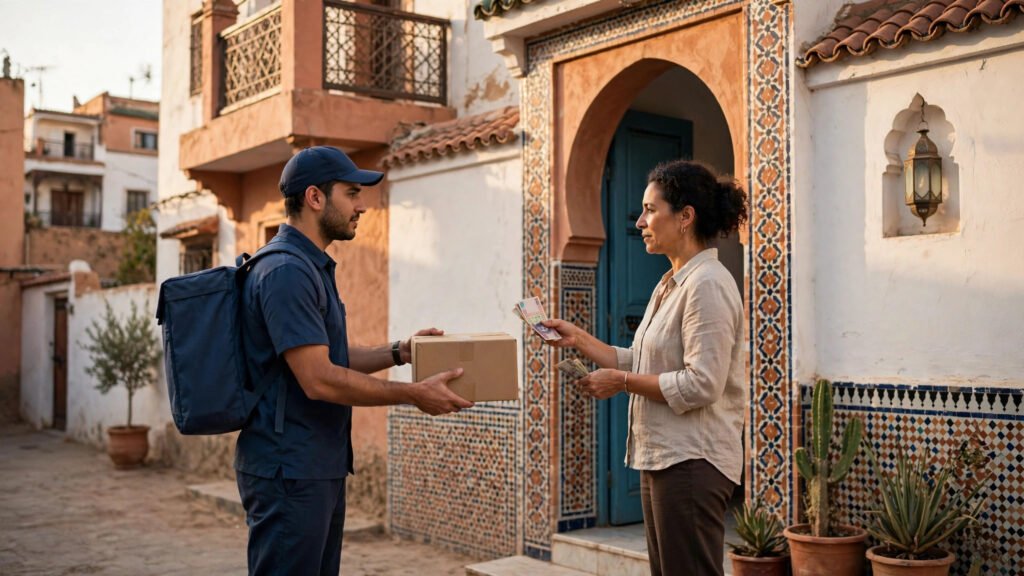
Order a pair of shoes, a phone case or a kitchen gadget online in Morocco, and for many shoppers the payment happens not at checkout, but at the front door. The courier arrives, the parcel is handed over, and cash changes hands. Cash on delivery has become one of the most familiar ways to shop online in Morocco, even as cards and mobile wallets grow. Why does this old-fashioned way of paying survive in a country where smartphones are everywhere? The answer is less about technology and more about trust, habit and everyday practicality.
Key Takeaways
- Cash on delivery lets Moroccan shoppers pay only when the parcel is actually in their hands, which removes the fear of paying for something that never arrives.
- It works for people who do not have a bank card, do not trust online payments yet, or simply prefer handling money the way they always have.
- Cards and mobile wallets are growing, but cash on delivery is likely to fade gradually rather than disappear overnight, as trust in online shopping builds.
Paying When the Parcel Arrives
Cash on delivery is simple to understand. A shopper places an order online, chooses to pay on delivery, and hands over the money when the courier brings the parcel. There is no card number to type in, no online account to top up and no payment to make before seeing anything arrive. For someone ordering online for the first time, that simplicity matters. The risk feels smaller, because the money only leaves their pocket at the same moment the goods arrive in their hands.
This matters most for shoppers who have been disappointed before, or who have heard stories from friends and family about parcels that arrived late, damaged or different from the photos. Paying at the door does not remove every risk, but it changes who carries it. The shopper is not left chasing a refund for an order that never showed up, and that reassurance is often enough to turn a hesitant browser into a buyer.
Trust Comes Before Technology
In many countries, online shopping grew up alongside card payments. In Morocco, the order has often been the other way round. People started shopping online before they fully trusted paying online, so the market adapted to them. Sellers who offered cash on delivery reached customers that card-only stores could not, and shoppers learned to browse, compare and order without ever entering payment details on a website.
Trust is also personal. Many shoppers prefer to deal with a real person at the door rather than an anonymous checkout page. Handing money to a courier, asking a quick question about the parcel and getting a receipt feels concrete in a way that a confirmation email does not. For older shoppers in particular, that human moment at the door can matter more than any app feature.
Paying at the door does not remove every risk, but it changes who carries it.
Not Everyone Has a Card
Another reason cash on delivery stays popular is practical: not every shopper has a bank card, and not every card works smoothly for online payments. Some people manage their money mainly in cash, budgeting week by week and preferring to see exactly what they spend. For them, paying cash for an online order fits naturally into how they already handle household spending.
Mobile habits play a part too. Across the world, people adapt payment methods to what is available to them, as seen in how Nigerians juggle two SIM cards to get the best coverage and deals, or how basic phones became a banking tool in Bangladesh. In Morocco, cash on delivery is a similar kind of workaround: it lets people take part in online shopping without first needing a particular bank product or a particular level of digital confidence.
What Sellers Gain, and What It Costs Them
For sellers, cash on delivery brings in customers, but it also brings headaches. Couriers must carry cash, handle change and keep records of every payment. Some orders are refused at the door, which means the parcel travels all the way back to the warehouse and the seller pays for a round trip that earned nothing. Some shoppers order on impulse and change their minds by the time the courier arrives.
That is why many sellers gently nudge shoppers towards prepaid options, for example by offering clearer return policies, better order tracking or support in Arabic, French or Amazigh. The goal is not to force anyone away from cash, but to make the prepaid route feel just as safe. Where shoppers can track a parcel step by step and know they can return it without a fight, the need to hold the money until delivery starts to feel less urgent.
Why Cards and Wallets Are Growing Anyway
None of this means Morocco is standing still. Card use is rising, mobile wallets are becoming more familiar, and younger shoppers who grew up with smartphones are often comfortable paying online. As more people have a smooth first experience with a prepaid order, whether a small item or a repeat purchase from a store they already trust, their confidence grows. Affordability shapes these habits everywhere, as instalment buying shows in Indonesia, where shoppers stretch payments to fit real budgets rather than skipping the purchase altogether.
- Cash on delivery removes the fear of paying for a parcel that never arrives.
- It opens online shopping to people without cards or with limited trust in online payments.
- It costs sellers more in returns and cash handling, so they are investing in tracking, returns and support to build trust.
- Prepaid options grow as shoppers gain good experiences, not because cash is banned or forced away.
What to Watch Next
Cash on delivery in Morocco is best understood as a bridge, not a dead end. It brought hesitant shoppers into online shopping, gave sellers a wider market, and let trust grow one delivered parcel at a time. As cards and mobile wallets become easier to use, and as tracking and returns become more reliable, more shoppers will likely pay in advance, but the change will be gradual. The shoppers who still prefer cash are not behind the times; they are simply waiting for online payment to feel as safe and as simple as paying at their own front door.